Italy Clears Tesla's Assisted Driving System Ahead of EU-Wide Decision
The Rome government's provisional approval marks the latest national-level green light for the rebranded FSD feature, while France and Germany continue testing.
Italy Moves Ahead of Brussels
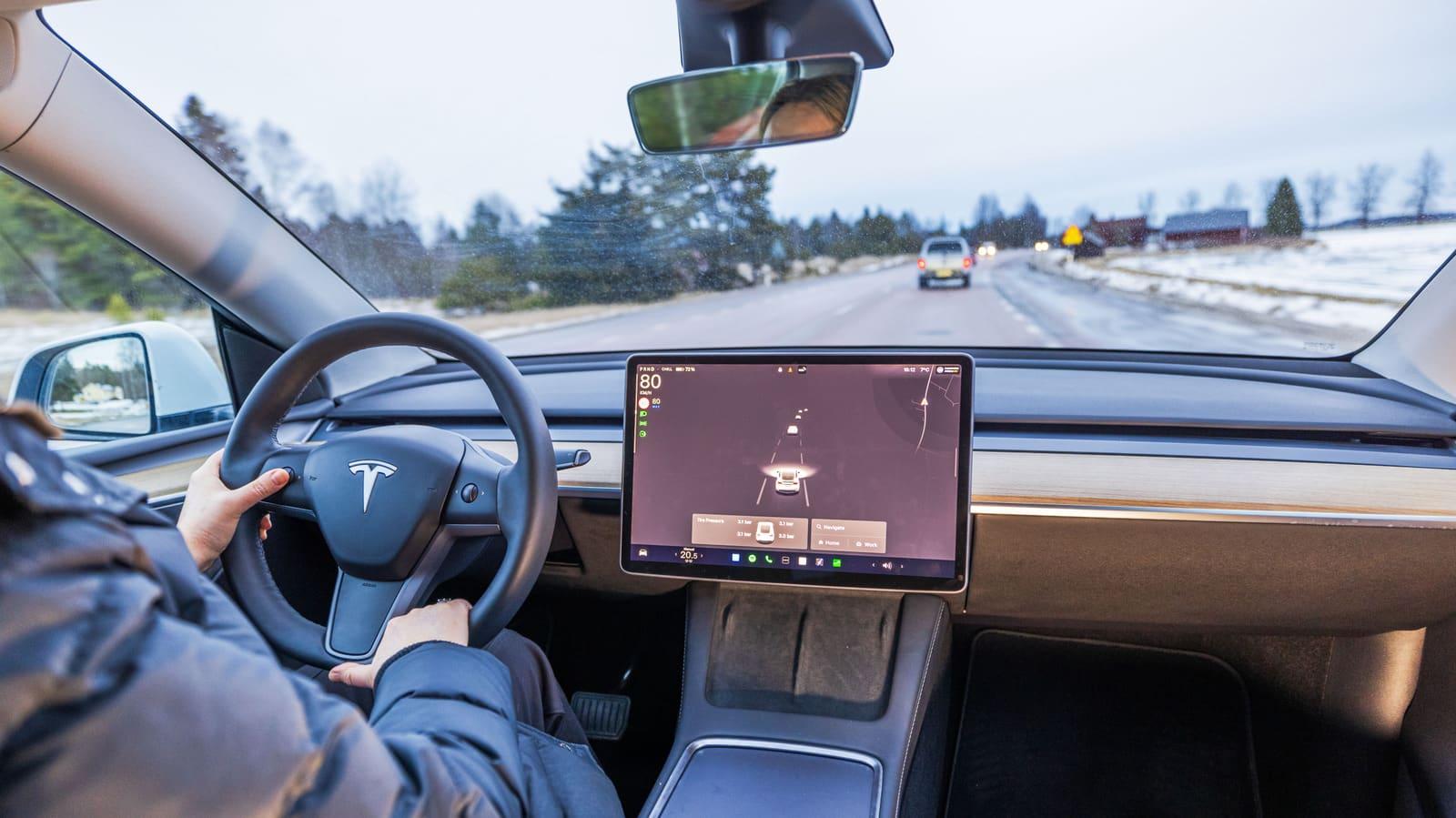
Italy's Ministry of Infrastructure and Transport has granted provisional clearance for Tesla's driver assistance technology, marketed in Europe as Tesla Assisted Driving. The approval positions Italy as the largest EU economy to date authorising the system, which operates under supervision and retains the driver as the responsible party.
Transport Minister Matteo Salvini announced the decision after what he described as a timely technical feasibility review. The rollout is set to begin in the coming weeks, with Tesla demonstrating the system navigating Rome's historic centre and intercity routes. Italy's move comes as the European Union prepares for a broader regulatory decision on advanced driver assistance systems before year-end, a vote that will determine whether a unified framework replaces the current patchwork of national approvals.
A Rebranding for European Regulators
Tesla has rebranded its Full Self-Driving (Supervised) feature for the European market, dropping the "self-driving" language in favour of "Assisted Driving". The shift reflects sensitivity to regulatory concerns over naming that could mislead drivers about the system's capabilities. Under the supervised model, drivers must remain attentive and ready to intervene, with the vehicle's sensors and software handling steering, acceleration and braking within defined parameters.
The Netherlands granted the first European provisional approval in April, opening the door for Tesla to begin rollout across the continent. Since then, Denmark, Belgium and the Czech Republic have followed with their own authorisations. Italy's decision extends that list to a G7 economy with a substantial automotive market and a complex road network that includes narrow urban streets and mountainous terrain.
Germany and France Hold Back
Two of the EU's three largest economies have yet to approve the system. Germany, home to Europe's largest car market and a powerful domestic automotive industry, has not issued a timeline for a decision. France is conducting its own testing programme but has not announced provisional clearance.
The divergence in national approaches underscores the tension between member states eager to permit new technology and those waiting for EU-level harmonisation. Brussels is expected to vote on a common regulatory framework for Level 2+ driver assistance systems later this year, which would establish uniform technical standards and approval processes across the bloc. Until that vote concludes, individual countries retain the authority to grant or withhold access.
Regulatory Fragmentation and Market Access
The current environment creates uneven market conditions for Tesla and other manufacturers deploying advanced driver assistance features. A driver in Amsterdam can activate Tesla Assisted Driving, while a driver in Paris or Berlin cannot, despite owning the same vehicle hardware. This fragmentation complicates product rollout, customer communication and liability frameworks.
For Tesla, the strategy has been to secure national approvals in sequence, building a coalition of member states that may influence the EU-wide vote. Each approval also generates operational data under European road conditions, which regulators can cite in their assessments. Italy's road environment, with high urban density and varied topography, offers a distinct testing ground compared to the flatter, more uniform networks of the Netherlands or Denmark.
What the EU Vote Will Decide
The forthcoming EU decision will determine whether a single set of rules governs the deployment of supervised driver assistance systems across all member states. A unified framework would streamline approvals, reduce compliance costs for manufacturers and establish consistent safety benchmarks. It would also resolve the current situation in which a feature legal in one country remains prohibited in another.
The vote is expected to address technical requirements for sensor redundancy, driver monitoring, data logging and over-the-air software updates. It will also likely define the boundaries of permissible automation under Level 2 classification, where the driver retains full legal responsibility. Whether the final framework will be more permissive or more restrictive than existing national approvals remains an open question, and the outcome will shape how quickly advanced driver assistance technology scales across Europe.
Implications for Tesla's European Strategy
Italy's approval strengthens Tesla's position ahead of the EU vote, adding regulatory momentum and a significant market to its European footprint. The company has framed the rollout as a demonstration of safety and utility, using footage of the system operating near landmarks such as the Colosseum to signal confidence in urban performance.
However, the absence of German and French approval leaves gaps in Tesla's access to the continent's two other largest passenger vehicle markets. Germany's caution may reflect both its regulatory culture and the interests of domestic manufacturers, many of which are developing their own advanced driver assistance systems. France's testing phase suggests a methodical approach, with clearance contingent on satisfactory results rather than competitive pressure.
The broader question is whether national approvals will converge with or diverge from the EU framework once it is finalised. If Brussels adopts stricter standards than those applied by early-approving countries, Tesla and other manufacturers may face a second round of compliance work. Conversely, a permissive EU standard could accelerate rollout in holdout markets and reduce the regulatory advantage currently enjoyed by first movers.