Japan's Sovereign AI Plan Hits $5 Billion Budget Overrun
Noetra initiative faces mounting costs as semiconductor prices climb and currency weakness compounds pressure on Tokyo's domestic intelligence ambitions
Budget Pressure Mounts on Tokyo's AI Ambitions
Japan's domestic artificial intelligence programme is confronting an 800 billion yen ($5 billion) budget overrun, a cost escalation that threatens to reshape the government's role in the Noetra initiative. The surge stems from two parallel pressures: semiconductor prices that have climbed beyond initial projections, and a yen that has weakened substantially against the dollar since the project's inception.
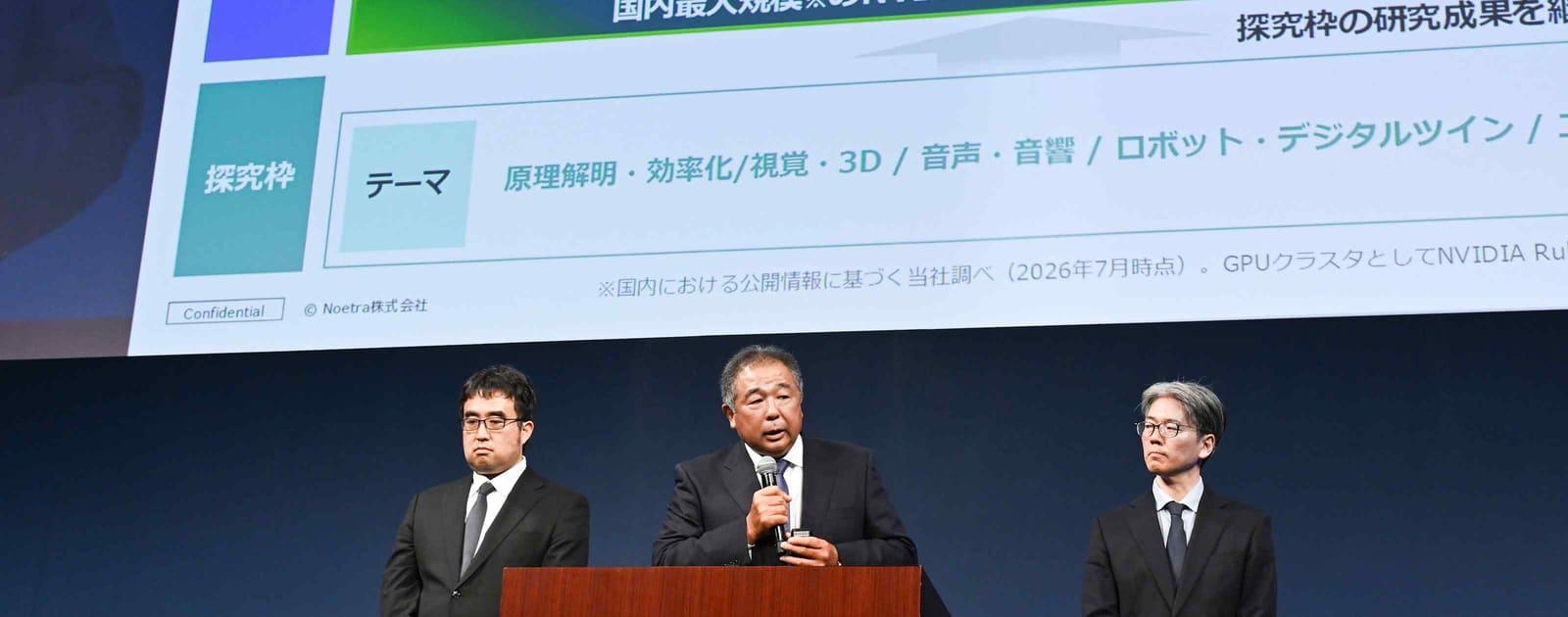
The cost increase represents a significant setback for Tokyo's effort to build sovereign AI capability outside the orbits of US and Chinese technology ecosystems. Noetra, led by president Hironobu Tamba, was conceived as a platform to develop physical artificial intelligence systems grounded in Japanese industrial strengths, particularly robotics and manufacturing automation.
Currency and Component Costs Collide
The twin headwinds of chip pricing and exchange rates have compounded in ways that budget planners did not anticipate. Graphics processing units and other specialised inference chips, essential to training and deploying large AI models, have seen list prices rise as global demand from hyperscale cloud providers and sovereign projects has outstripped supply. Meanwhile, the yen's depreciation against the dollar has magnified the cost of importing these components, most of which are invoiced in US currency.
For a project that depends on assembling compute infrastructure at scale, the combination has proven punishing. Every percentage point of yen weakness translates directly into higher procurement bills, and every uptick in chip pricing feeds through with minimal lag. The 800 billion yen figure suggests that planners are now confronting a funding gap equivalent to more than a quarter of the original budget envelope.
Shifting the Burden to Public Accounts
The cost surge is expected to force a recalibration of the public-private funding mix that underpins Noetra. Initial plans envisaged a blend of government seed capital and private-sector investment, with industrial partners contributing both capital and domain expertise. The new cost reality, however, may require Tokyo to shoulder a larger share of the financial burden if the initiative is to proceed on its current timeline and technical scope.
That shift carries fiscal and strategic implications. A heavier government stake would give Tokyo greater control over the direction of the project, but it would also expose public accounts to technology risk and the possibility of further cost escalation. It may also crowd out private capital that might otherwise have flowed into adjacent AI ventures, concentrating resources in a single state-backed programme.
Physical AI and Industrial Data
Noetra's focus on physical AI distinguishes it from the text-and-image models that dominate the current wave of generative systems. Physical AI refers to models trained on sensor data from industrial machinery, robotics, and manufacturing processes, enabling systems to reason about the material world rather than language alone. Japan's industrial base, rich in precision manufacturing and automation, provides a natural data advantage for this approach.
The government has signalled plans to draw on industrial machinery across sectors to collect the training data required for these models. That data-collection effort, however, depends on participation from manufacturers who may be reluctant to share proprietary operational information, even with a sovereign initiative. The cost overrun may complicate efforts to secure that cooperation, as partners weigh the financial health and long-term viability of the project.
Broader Context in East Asia
Japan's sovereign AI push unfolds against a backdrop of similar initiatives across East Asia. South Korea, Singapore, and Taiwan have each announced programmes to develop domestic AI capabilities, motivated by concerns over reliance on US cloud infrastructure and Chinese model development. Each faces its own version of the cost-scaling challenge, as compute requirements for frontier models continue to grow faster than hardware efficiency gains.
The cost pressures affecting Noetra are not unique to Japan. Across the region, governments are discovering that the capital intensity of AI infrastructure rivals that of semiconductor fabrication plants or national defence programmes. The question is whether sovereign projects can achieve sufficient scale and efficiency to compete with the hyperscale platforms operated by US technology firms, or whether they will remain high-cost, strategically motivated but economically marginal efforts.
What Comes Next
Tokyo has not yet publicly outlined how it intends to bridge the funding gap, but the options are limited. The government can increase its direct contribution, seek additional private-sector partners willing to accept a higher risk profile, or scale back the technical ambitions of the project to fit within the available budget. Each path carries trade-offs between speed, autonomy, and fiscal exposure.
The outcome will shape not only Japan's AI trajectory but also the viability of sovereign AI projects more broadly. If Noetra can navigate the cost surge and deliver on its technical goals, it may provide a template for other mid-sized economies seeking to carve out space in the AI landscape. If it stumbles, it will reinforce the view that only the largest technology firms and the wealthiest governments can afford to play in this domain.