InDrive Plots Astana Robotaxi Launch as Fare-Negotiation Model Meets Autonomous Tech
The ride-hailing platform's partnership with Pony.ai and Nvidia targets Kazakhstan's harsh winter as a proving ground for self-driving systems, with tests slated for mid-2027.
A Capital-Light Bet on Autonomy
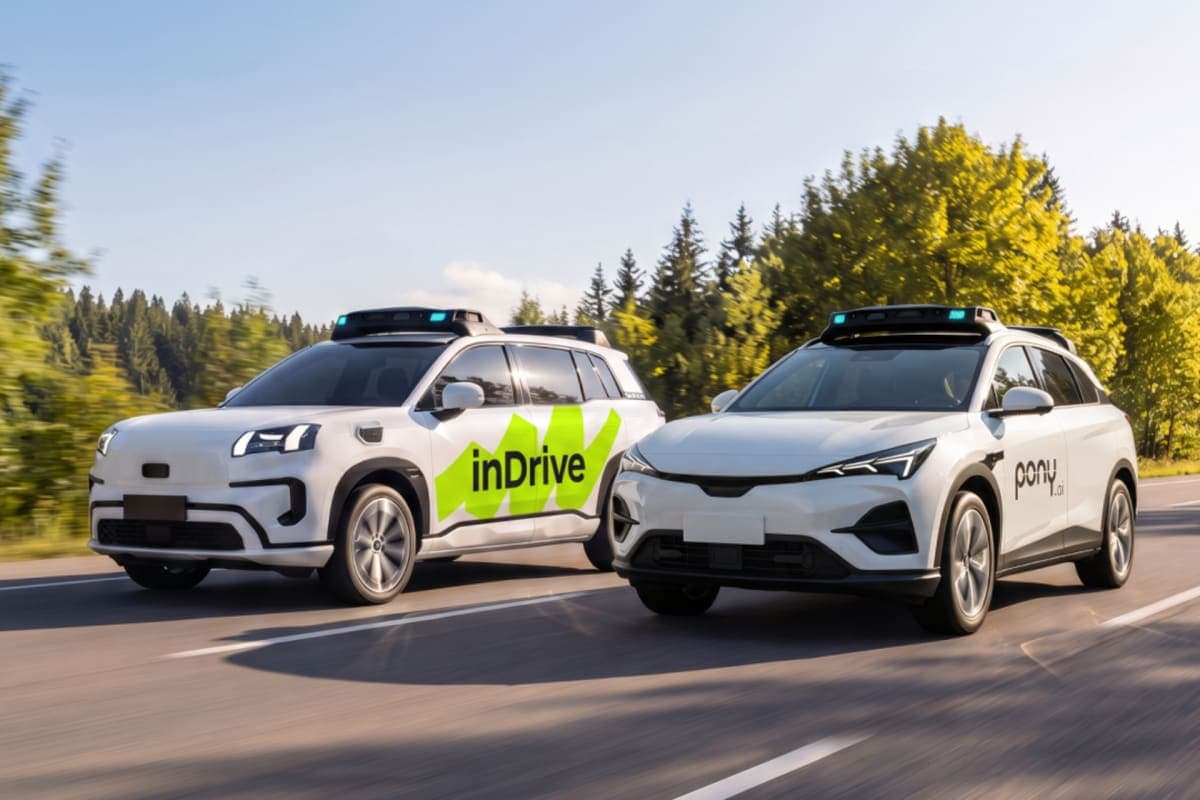
InDrive, the ride-hailing operator that built its user base by allowing passengers and drivers to negotiate fares, has signed a memorandum of understanding with Pony.ai and Nvidia to deploy robotaxis in Astana, Kazakhstan, beginning in the first half of 2027. The partnership reflects a strategic shift for a platform that has long emphasised affordability over technological spectacle: inDrive will integrate Pony.ai's Gen-7 autonomous vehicles into its app, whilst Nvidia supplies the Hyperion sensor and compute platform alongside its Halos safety stack.
Initial trials will feature a safety operator behind the wheel. Fully driverless operation is the declared end goal, though the timeline for removing human oversight remains unspecified. InDrive CTO Yuri Misnik described the approach as capital-light by design, a model that leans on technology suppliers and local regulatory goodwill rather than the balance-sheet intensity of owning and maintaining a robotaxi fleet outright.
The Central Asian deployment adds another data point to a broader pattern: ride-hailing platforms are racing to layer autonomous capability onto their existing networks, often through partnerships that distribute risk and capital burden across multiple parties. Uber has announced trials with Pony.ai in London and is working with Wayve on supervised autonomous rides in the same city. InDrive's move into Kazakhstan, a market where Uber's presence is limited, suggests that the battle for autonomous ride-hailing may unfold along regional lines rather than as a single global contest.
Why Astana, and Why Now
Astana is not an obvious candidate for a robotaxi pilot. The city, home to approximately 1.7 million people, endures months of sub-zero temperatures, snow accumulation, and ice-covered roads - conditions that challenge perception systems, localisation algorithms, and the physical reliability of sensors. Yet those same conditions are precisely what make the location attractive. InDrive founder and CEO Arsen Tomsky framed the deployment as an opportunity to evaluate autonomous driving technology in an environment that few Western pilots have confronted at scale. Success in Astana, he argued, would yield insights applicable to other cold-climate cities.
Kazakhstan announced plans last month to permit autonomous taxi services in 2027, with initial trials planned for Astana and two additional cities. The government has also introduced regulatory provisions allowing autonomous vehicles to operate on designated public roads, a prerequisite for any commercial deployment. The regulatory timeline aligns neatly with inDrive's stated launch window, suggesting that the company has been in dialogue with local authorities for some time.
The choice of Kazakhstan also reflects inDrive's operational footprint. The company operates in more than 1,200 cities across 47 countries, with a presence concentrated in markets where incumbents have been slow to establish dominance. InDrive has expanded beyond ride-hailing into delivery, intercity transport, and financial services, building a portfolio that mirrors the super-app strategies pursued by Grab and Gojek in Southeast Asia. Astana represents a test case for whether that portfolio can accommodate autonomous vehicles without the capital intensity that has constrained other players.
The Economics of Ready-Made Autonomy
Nvidia's role in the partnership centres on its Hyperion platform, a pre-integrated stack of sensors, compute hardware, and reference software designed to accelerate the development of autonomous systems. Ali Kani, Nvidia's vice president of automotive, argued that Hyperion lowers the cost of entry by providing a ready-made foundation, sparing companies the expense of designing and integrating sensors and processors from scratch. Nvidia also offers its Alpamayo model and synthetic data generation tools, which allow developers to simulate driving scenarios without accumulating millions of test kilometres on public roads.
The economic logic is straightforward: in markets where the average ride fare is already low, autonomous services must compete on cost rather than novelty. Hyperion's value proposition rests on the assumption that standardisation - using the same sensor suite and compute architecture across multiple deployments - will drive down per-unit costs faster than bespoke engineering. Whether that assumption holds in practice depends on how well a standardised stack adapts to local conditions, from Astana's ice to Riyadh's dust storms.
Pony.ai, for its part, has set an ambitious target: more than 3,500 robotaxis operating in over 20 cities worldwide by the end of this year, up from 1,975 vehicles at the end of June. The company's Gen-7 platform, which will be deployed in Kazakhstan, represents its latest hardware iteration. Pony.ai's growth trajectory has been shaped by its dual home-market strategy, maintaining operations in both China and the United States whilst expanding into the Middle East and now Central Asia. The partnership with inDrive extends that footprint into a region where Chinese autonomous vehicle suppliers face fewer of the regulatory headwinds they encounter in Western markets.
InDrive's Broader Autonomous Strategy
Kazakhstan is not inDrive's only autonomous bet. In December last year, the company signed a separate agreement with Saudi Arabia's AI Driver to explore deploying autonomous vehicles powered by WeRide, another Chinese self-driving firm, starting in Riyadh. That partnership targeted a pilot in the first half of this year, though it remains unclear whether testing has commenced. Misnik noted that inDrive is evaluating a number of additional markets for future deployments, with regulatory environment and collaborative government posture cited as primary selection criteria.
The multi-partner, multi-market approach reflects a pragmatic reading of the autonomous vehicle landscape. No single technology provider has demonstrated the ability to operate profitably at scale across diverse geographies. By signing non-exclusive agreements with multiple suppliers, inDrive retains optionality: if one partnership stalls, others may advance. The model also allows the company to tailor its technology choices to local conditions and regulatory frameworks, rather than committing to a single vendor's roadmap.
At the same time, the capital-light strategy carries its own risks. InDrive does not own the vehicles or the core autonomy stack, which means it lacks control over the pace of technological improvement and the economics of fleet operations. If Pony.ai or WeRide struggle to achieve the cost and reliability targets necessary for commercial viability, inDrive's autonomous ambitions will be constrained accordingly. The company is effectively outsourcing not just technology development but also the most critical variable in the autonomous ride-hailing equation: unit economics.
The Competitive Context
InDrive's moves come as the global ride-hailing industry confronts a structural question: will autonomous vehicles be a feature that incumbents bolt onto their platforms, or will they enable new entrants to undercut established players on price? Uber's partnerships with Pony.ai, Wayve, and others suggest that the company views autonomy as a feature - one that will reduce driver costs but not fundamentally alter the platform economics that have made Uber dominant in most Western markets. InDrive's approach, by contrast, reflects the calculus of a challenger: autonomous vehicles represent an opportunity to leapfrog incumbents in markets where network effects are weaker and regulatory barriers lower.
The Kazakhstan deployment also highlights a geographic divergence in the autonomous vehicle race. Whilst much of the public and investor attention has focused on San Francisco, Phoenix, and a handful of Chinese cities, the next phase of deployment may unfold in markets where regulatory uncertainty is lower, infrastructure costs are manageable, and ride-hailing penetration is still growing. Central Asia, the Middle East, and parts of Southeast Asia fit that profile. These regions offer fewer of the technological challenges posed by dense urban environments like Manhattan or Tokyo, but they present operational and climatic conditions that have received little attention in Western pilots.
Astana's winter will test whether Pony.ai's perception systems and Nvidia's compute stack can maintain performance when cameras are obscured by snow, lidar returns are scattered by ice crystals, and road markings disappear beneath slush. If the trial succeeds, it will validate a technology pathway that has been largely overlooked by Western developers. If it fails, it will underscore the gap between controlled testing and real-world deployment - a gap that has widened with every delayed timeline and scaled-back launch in the autonomous vehicle industry.
What Comes Next
InDrive has not disclosed the size of the initial fleet in Astana, the duration of the safety-operator phase, or the commercial terms of its agreements with Pony.ai and Nvidia. Those details will determine whether the 2027 launch represents a genuine pilot - one designed to gather data and refine operations - or a demonstration project meant to signal technological ambition without committing significant resources.
The company's broader trajectory suggests that autonomous vehicles are one component of a multi-sided strategy. InDrive has diversified into delivery, intercity transport, and financial services, building a business model that does not depend on any single product line. Robotaxis, in this context, are a hedge: if autonomous technology matures faster than expected, inDrive will have positioned itself to capture a share of the market. If progress stalls, the company retains its core fare-negotiation platform and its portfolio of adjacent services.
For Pony.ai and Nvidia, the partnership offers a different kind of validation. Both companies have staked their growth on the premise that autonomous technology will scale beyond the handful of cities where it has achieved limited commercial traction. Kazakhstan is not a large market, but it is a visible one - a signal to other emerging economies that self-driving systems are no longer confined to California and Guangzhou. Whether that signal translates into additional partnerships and deployments will depend on what happens when the first robotaxis roll through Astana's snow-covered streets in 2027.