India's Chemical Sector Looks Abroad to Meet Chip-Grade Standards
Domestic firms lack purification technology and customer access needed for semiconductor fabrication, driving a wave of international partnerships.
The Quality Chasm
A wave of Indian chemical manufacturers has announced plans to serve the semiconductor industry as the country pours billions into building a domestic chip ecosystem. Yet the gap between industrial-grade chemicals and semiconductor-grade materials is wider than many anticipated. The precision requirements of chip fabrication plants - where even trace impurities measured in parts per billion can ruin entire wafer batches - demand purification capabilities that most Indian firms simply do not possess.
This technical deficit is colliding with a market reality: India's nascent semiconductor sector offers few domestic customers to validate product quality, and global fab operators remain sceptical of untested suppliers. The result is a pivot towards international partnerships, as Indian chemical firms seek both the technology transfer and the customer relationships they need to crack an industry where trust is earned in nanometres.
Tata's Gujarat Fab as Proving Ground
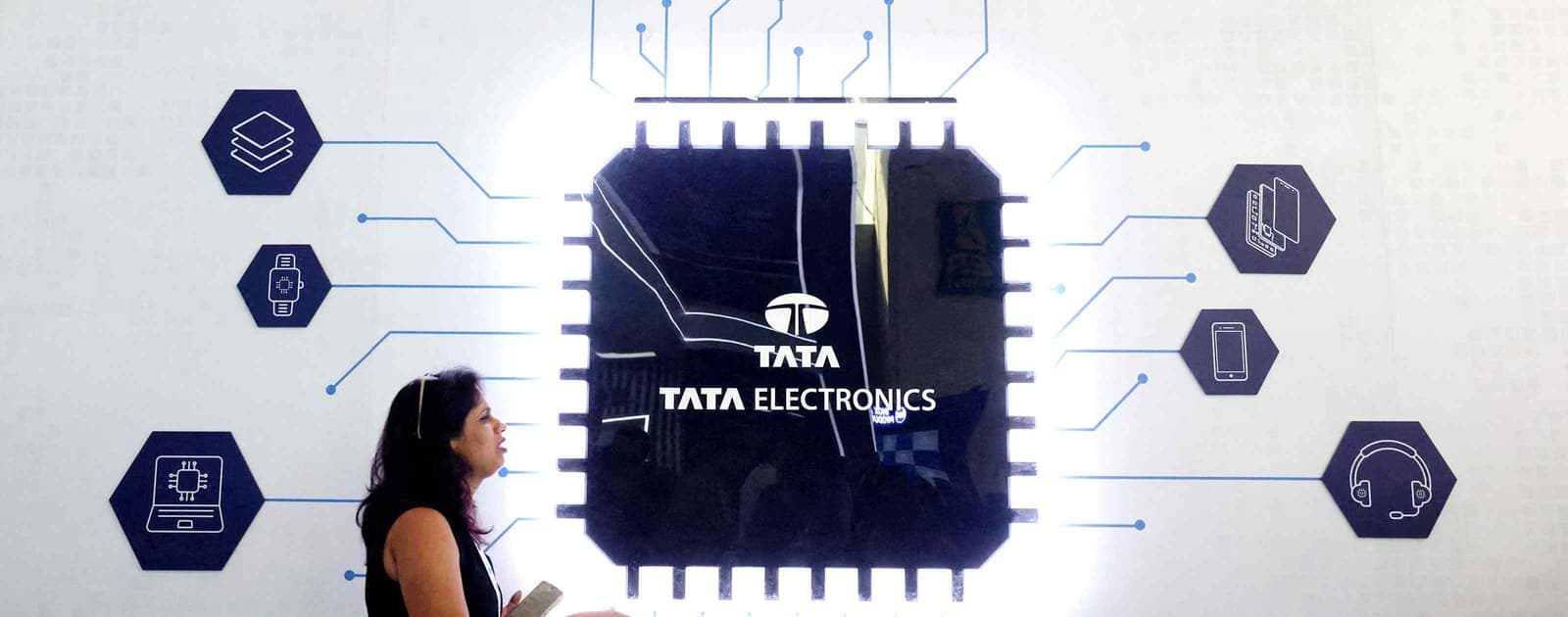
Some companies are betting their entry strategy on proximity. Tata Electronics is constructing a fabrication facility in Gujarat, and a cohort of Indian chemical suppliers view this project as their best opportunity to establish credentials. The logic is straightforward: a domestic customer with government backing provides a lower barrier to initial qualification than trying to break into the supply chains of established fabs in Taiwan, South Korea, or the United States.
Yet even this path requires meeting standards that exceed what Indian chemical companies currently deliver to other industries. Semiconductor manufacturing demands ultra-high-purity gases, solvents, and precursors - materials where contamination levels must be controlled to parts per trillion in some applications. The purification infrastructure, analytical testing capabilities, and quality management systems required represent investments that many firms are unprepared to make independently.
The Foreign Partnership Route
Recognising these constraints, a growing number of Indian chemical manufacturers are opting for joint ventures with established international players. These partnerships offer a faster route to credibility: foreign partners bring proven purification processes, existing relationships with fab operators, and quality certifications that can take years to earn independently.
The arrangement also serves the strategic interests of multinational chemical suppliers. India's semiconductor push, backed by incentive schemes worth several billion dollars, represents a growth market at a time when chip production is diversifying beyond its traditional East Asian centres. For companies based in Japan, Europe, or the United States, partnering with an Indian manufacturer offers a foothold in this emerging ecosystem without the capital outlay of building wholly owned facilities.
At Opentechwire, we've tracked similar dynamics across Southeast Asia, where local firms entering advanced manufacturing sectors have often relied on technology licensing or joint ventures to compress the learning curve. The semiconductor chemicals market is particularly unforgiving: a single quality failure can halt production lines worth hundreds of millions of dollars, making fab operators extremely conservative in supplier selection.
The Customer Access Problem
Beyond purification technology, Indian chemical firms face a second structural challenge: lack of access to the customers who can validate their products. Semiconductor fabrication is a tightly networked industry. Suppliers typically qualify their materials through years of collaboration with fab operators, iterating formulations and refining processes in close coordination. Indian companies entering this market have no such relationships.
Foreign partnerships address this gap directly. A joint venture with a Japanese or European chemical firm that already supplies Samsung, TSMC, or Intel provides immediate access to the qualification processes at those fabs. It also signals to potential customers that the Indian partner has been vetted by an established player, reducing perceived risk.
This dynamic is particularly acute for speciality chemicals used in advanced nodes - photoresists, chemical mechanical planarisation slurries, and high-k dielectrics - where the number of qualified suppliers globally can be counted on one hand. Breaking into these markets without a credible partner is nearly impossible for a newcomer, regardless of location.
India's Broader Supply Chain Ambitions
The chemical sector's struggles reflect broader tensions in India's semiconductor strategy. The government has committed substantial subsidies to attract chip fabrication, assembly, and testing facilities, aiming to capture a larger share of a global market currently dominated by East Asia. Yet building a competitive supply chain requires more than financial incentives; it demands technical capabilities, supplier ecosystems, and the kind of institutional knowledge that accumulates over decades.
India's strength in software and IT services has not translated automatically into hardware manufacturing prowess. The country's chemical industry, while large and diverse, has historically served domestic markets and lower-specification export segments. Semiconductor-grade materials represent a step change in precision and quality control, one that cannot be achieved through incremental improvement alone.
The foreign partnership model acknowledges this reality. Rather than attempting to develop capabilities in isolation, Indian firms are leveraging global expertise to accelerate their entry. Whether this approach will create lasting domestic capabilities or simply embed Indian companies as junior partners in foreign-controlled supply chains remains an open question.
Implications for Regional Competition
India's reliance on international partnerships to build its semiconductor chemicals sector contrasts with China's approach, which has emphasised domestic development through state-backed investment and, in some cases, technology acquisition of contested legality. Both strategies face obstacles: China's semiconductor supply chain has struggled with quality and reliability issues despite years of investment, while India's partnership model may limit the depth of indigenous capability development.
For multinational chemical firms, India's openness to collaboration offers opportunities that China's more restrictive environment does not. Japan's Sojitz, for instance, has announced plans to establish a logistics hub for semiconductor materials serving Tata's Gujarat fab, a move that positions Japanese suppliers as key enablers of India's chip ambitions.
The longer-term question is whether Indian chemical companies can use these partnerships to build genuine competitive advantage, or whether they will remain dependent on foreign technology and customer relationships. The semiconductor industry's complexity and the speed at which it evolves - particularly as advanced packaging and new materials architectures reshape supply chains - suggest that continuous innovation, not one-time technology transfer, will determine success.
The Path Forward
As India's first major fabs move from announcement to construction, the pressure on the domestic supply chain will intensify. Chemical companies that have secured foreign partnerships will face the test of actually delivering materials that meet semiconductor-grade specifications at scale. Those betting on domestic customers like Tata will need to prove they can match the quality and reliability of established global suppliers.
The outcome will shape not just India's position in the global semiconductor landscape, but also the viability of its broader manufacturing ambitions. If local firms can use this moment to develop world-class capabilities in high-precision chemistry, the benefits will extend far beyond chips. If they remain dependent on foreign partners for critical technology and market access, India's semiconductor sector may replicate the pattern seen in other industries: assembly and lower-value activities onshore, while the high-margin, high-skill work stays elsewhere.