Huawei Ships 100 Million Kirin-Powered Devices Since Sanctions Recovery
The Shenzhen giant's proprietary silicon milestone marks a dramatic reversal from its 2019 supply-chain collapse, with next-generation chips already in testing.
A Milestone Built on Adversity
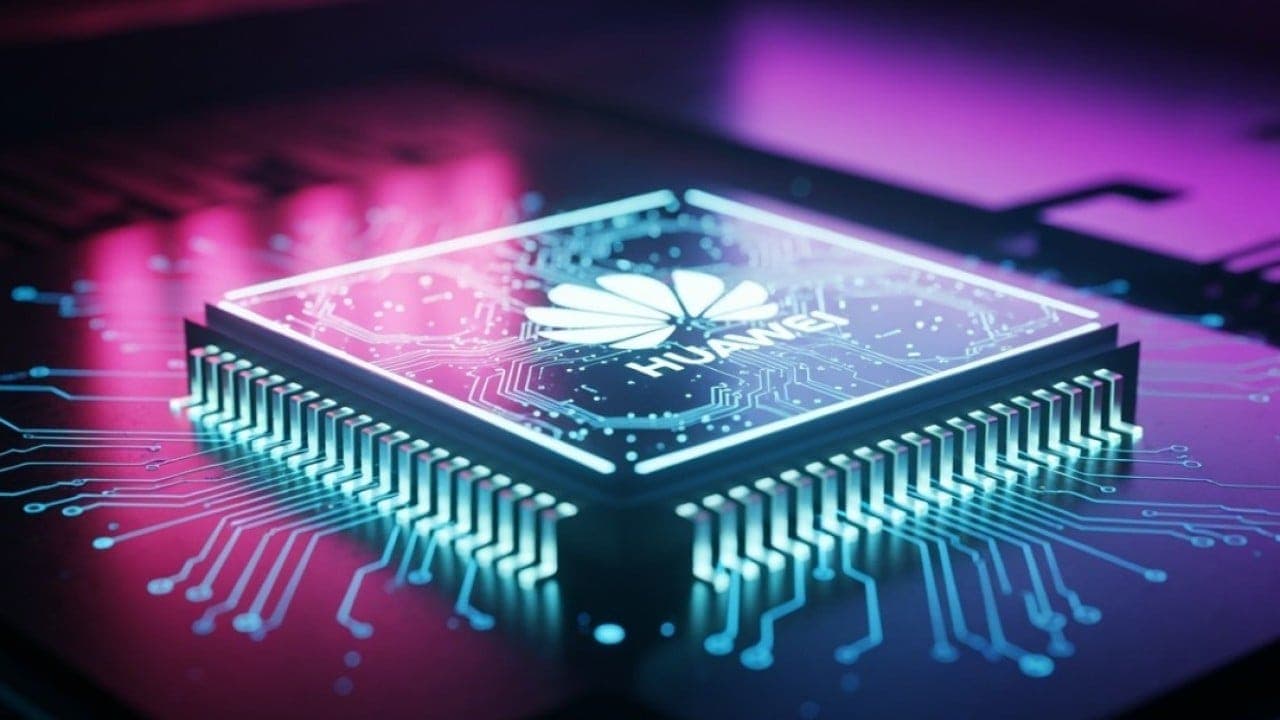
Huawei Technologies announced on Tuesday that it has shipped more than 100 million devices powered by its in-house Kirin processors since 2023, a figure that underscores one of the most striking industrial comebacks in recent memory. The Shenzhen-based company simultaneously disclosed that testing of its next-generation Kirin 2027 chip is proceeding on schedule, signalling confidence in its ability to sustain momentum despite ongoing geopolitical headwinds.
The 100-million unit threshold represents more than a production milestone. It is a tangible measure of how far Huawei has travelled since 2019, when US export controls cut off its access to Taiwan Semiconductor Manufacturing Company foundries and, by extension, to the cutting-edge process nodes that underpin flagship smartphone performance. At Opentechwire, we have tracked the company's efforts to rebuild its semiconductor capabilities through a combination of design innovation, alternative fabrication partnerships, and aggressive vertical integration. This milestone suggests those efforts are no longer experimental.
LogicFolding and the Kirin 9050 Series
Huawei used the announcement to reveal new technical details about its Kirin 9050 series, which it describes as the first mass-produced chip to employ its proprietary LogicFolding architecture. While the company has not published a full technical specification, LogicFolding appears to be a design methodology aimed at extracting greater performance and efficiency from older or constrained process nodes, an approach that aligns with the realities of Huawei's manufacturing ecosystem.
The Kirin 9050 powers the company's latest premium smartphones, including models released over the past year that have re-established Huawei's presence in the high-end segment of the domestic Chinese market. Industry observers have noted that these devices, whilst not matching the absolute performance of rivals built on three-nanometre nodes, offer competitive battery life and computational capability, suggesting that architectural innovation can partially offset process disadvantages.
This is not merely a technical curiosity. For years, the semiconductor industry has operated on the assumption that Moore's Law scaling - shrinking transistors to pack more onto a chip - is the only viable path to performance gains. Huawei's ability to deliver competitive silicon without access to leading-edge fabs challenges that orthodoxy, at least within certain market segments and use cases.
The Supply-Chain Puzzle
The question of where Huawei fabricates its Kirin chips remains a subject of intense scrutiny. US export controls restrict the sale of equipment capable of producing semiconductors below a certain technology threshold to Chinese firms, and the regulations explicitly target Huawei. Yet the company has managed to bring multiple generations of Kirin processors to market since 2023, suggesting it has secured fabrication capacity through domestic foundries operating within or near the technical limits of available tooling.
This capacity is likely concentrated at Semiconductor Manufacturing International Corporation, China's largest contract chipmaker, which has demonstrated the ability to produce seven-nanometre-class devices using deep ultraviolet lithography and other workarounds. SMIC's progress has been uneven, with yield rates and production volumes reportedly lagging behind TSMC's equivalent nodes by several years. Nevertheless, the 100-million unit shipment figure indicates that Huawei has achieved sufficient scale to support a viable product line.
The geopolitical dimension cannot be ignored. Huawei's resurgence has become a test case for the efficacy of technology export controls as a tool of strategic competition. The fact that the company has not only survived but posted a nine-figure shipment milestone suggests that unilateral restrictions, without multilateral enforcement and without addressing the underlying demand for indigenisation, may accelerate rather than prevent the development of parallel ecosystems.
Next-Generation Ambitions
Huawei's disclosure that Kirin 2027 testing is on track offers a glimpse into its roadmap. The naming convention implies a target launch window in 2027, and the company's willingness to discuss it publicly suggests a degree of confidence in overcoming the technical and supply-chain hurdles that have constrained previous generations.
What remains unclear is whether Kirin 2027 will represent an incremental refinement of existing architectures or a more fundamental leap. The broader Chinese semiconductor industry has made substantial investments in advanced packaging, chiplet designs, and heterogeneous integration - techniques that can improve performance without relying solely on smaller transistors. If Huawei incorporates these approaches into its next-generation silicon, it may be able to narrow the gap with rivals even further.
At the same time, the company faces structural challenges that cannot be solved by design ingenuity alone. Access to extreme ultraviolet lithography tools, which enable the production of chips below five nanometres, remains blocked. Memory and storage components, critical to overall device performance, are still sourced from a global supply chain that is increasingly fragmented along geopolitical lines. And the cost of developing and fabricating advanced chips without the economies of scale enjoyed by TSMC or Samsung is substantial.
Implications for the Broader Ecosystem
Huawei's Kirin milestone has reverberations beyond the company itself. For Chinese device makers, it demonstrates that viable domestic alternatives to Qualcomm and MediaTek silicon exist, at least for certain product tiers. For policymakers in Beijing, it validates the enormous sums invested in semiconductor self-sufficiency over the past five years. And for the global industry, it complicates the calculus around technology leadership and market access.
The 100 million units shipped since 2023 also represent 100 million devices that do not rely on US-origin semiconductors, a data point that will not go unnoticed in Washington or Brussels as governments refine their approaches to export controls and supply-chain security. Whether this bifurcation accelerates or stabilises will depend in large part on how Huawei and its peers perform in the coming generation of products.
The Kirin story is ultimately a study in resilience and adaptation under constraint. It is too early to declare the company fully recovered - its global smartphone market share remains a fraction of its pre-sanctions peak, and its reliance on the domestic market leaves it vulnerable to shifts in consumer sentiment and regulatory environments. But the 100-million unit milestone, paired with progress on next-generation silicon, suggests that reports of Huawei's demise were premature. The company has rebuilt a foundation. What it constructs on top of it will shape the competitive landscape for years to come.