Foundries Stand Firm as AI Investment Fears Ripple Across Hardware
S&P stress tests reveal semiconductor manufacturers hold structural advantages over memory, cooling and ODM peers facing slowdown risk
Credit Resilience in a Cooling Cycle
S&P Global Ratings ran stress scenarios across four Asia-Pacific hardware segments this week and found that semiconductor foundries carry meaningfully lower downside exposure than memory manufacturers, thermal component suppliers and original design manufacturers if hyperscaler AI spending decelerates. The analysis, published 18 September, assigns foundries the highest relative insulation against a potential contraction in frontier model investment - a scenario markets have begun pricing following recent commentary from both policymakers and technology executives.
The divergence stems from three structural factors, according to the rating agency's modelling: foundries serve broader end-markets beyond AI accelerators, their long-term capacity agreements lock in utilisation floors, and balance-sheet leverage remains moderate relative to the capital intensity of leading-edge nodes. Memory producers, by contrast, derive disproportionate revenue from high-bandwidth DRAM and NAND tied to training clusters, while cooling suppliers and ODMs face acute concentration risk with a handful of hyperscale customers driving the majority of orders.
At Opentechwire, we've tracked capacity expansion announcements across the region over the past eighteen months. Taiwan Semiconductor Manufacturing Company, Samsung Foundry and United Microelectronics collectively committed more than USD seventy billion to new fabs and advanced packaging lines between January 2025 and mid-2026, much of it earmarked for three-nanometre and below. That scale of outlay typically implies multi-year take-or-pay commitments from fabless clients, smoothing revenue volatility even if one application segment - AI inference chips, for example - softens.
Why Memory and Cooling Face Steeper Drops
Memory manufacturers occupy the opposite end of the risk spectrum in S&P's framework. High-bandwidth memory revenue grew by triple digits year-on-year through the first half of 2026, but that growth is narrowly concentrated: training accelerators from three US-based hyperscalers and two Chinese cloud providers account for the bulk of HBM3E shipments. If any of those buyers delay data-centre builds or stretch refresh cycles, memory ASPs and utilisation rates can swing sharply within a single quarter.
Cooling component suppliers - makers of liquid-cooled cold plates, heat exchangers and immersion tanks - face similar customer concentration. S&P's report highlights that the top five buyers represent more than sixty per cent of order books for several listed suppliers in Taiwan and South Korea. Contract terms in the cooling segment also tend to be shorter than foundry agreements, leaving vendors exposed to abrupt order cuts if rack densities plateau or hyperscalers pivot to air-cooled designs for cost reasons.
Original design manufacturers that assemble servers and storage arrays likewise depend on a small set of hyperscale and enterprise customers. The rating agency notes that ODMs enjoyed record margins in 2025 as AI server ASPs climbed, but operating leverage works in both directions: fixed costs in assembly lines mean that a ten per cent revenue decline can translate to a thirty per cent drop in EBITDA if factories cannot be redeployed quickly.
Balance Sheets and Capex Flexibility
S&P's stress test modelled a scenario in which AI-related hardware revenue falls twenty-five per cent over twelve months while non-AI segments remain flat. Under those assumptions, foundries maintain net-debt-to-EBITDA ratios below three times, preserving investment-grade credit metrics. Memory producers, however, see leverage spike above four times, and several cooling suppliers breach covenant thresholds tied to interest coverage.
The difference lies partly in starting leverage - foundries entered 2026 with lower debt burdens relative to cash flow - but also in capex optionality. Foundry executives can defer or re-phase advanced packaging investments without idling existing fabs, since mature nodes continue to serve automotive, industrial and consumer markets. Memory fabs, by contrast, are purpose-built for specific DRAM or NAND generations, and utilisation below seventy per cent quickly erodes unit economics.
We have observed that several foundries began signalling capex moderation in earnings calls during the second quarter of 2026, even as revenue guidance remained intact. That rhetorical shift suggests management teams are already building in downside buffers, a luxury that memory and ODM peers - locked into multi-year capacity races - may not possess.
Policy Overhang and Export Dynamics
The credit analysis arrives amid fresh debate in Washington and Brussels over whether to slow or redirect public incentives for AI development. If export controls tighten further or subsidies shift from training infrastructure toward edge deployment, foundries stand to benefit from a geographical redistribution of orders: edge inference chips require mature and specialty nodes - fourteen nanometres and above - that non-leading-edge fabs can supply at competitive margins.
Memory and cooling suppliers, conversely, derive limited revenue from edge applications today. HBM is over-specified for edge inference, and liquid cooling remains uneconomical outside hyperscale clusters. A policy-driven pivot toward distributed AI would therefore compress the addressable market for those segments, even if total semiconductor unit volumes rise.
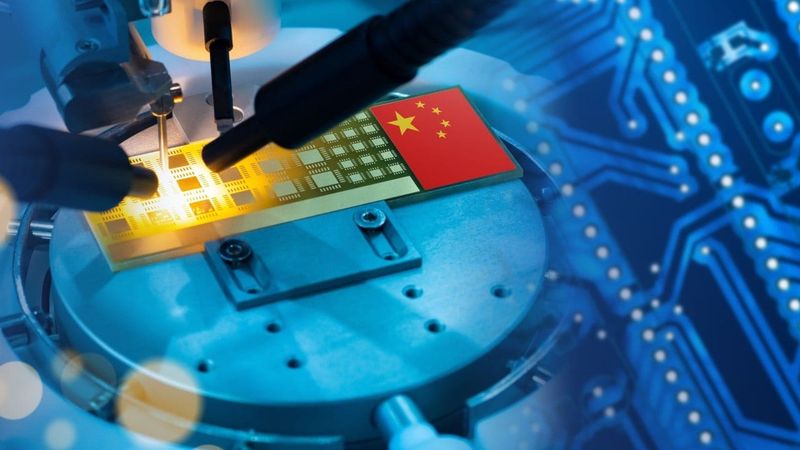
China's domestic foundries occupy an ambiguous position in this scenario. They lack access to extreme-ultraviolet lithography tools required for sub-seven-nanometre production, but that constraint matters less if demand rotates toward mature nodes. S&P's report does not break out Chinese foundries separately, though it notes that any entity reliant on a single geography for more than half of revenue faces heightened policy risk regardless of technological capability.
What the Market Is Pricing
Equity and credit markets have already begun differentiating within the hardware complex. Foundry bonds trade at spreads twenty to forty basis points tighter than memory issuer paper of comparable maturity, reflecting the risk assessment S&P articulates. Cooling component stocks, meanwhile, have underperformed the MSCI Asia Tech index by fifteen per cent since June, when the first hyperscaler flagged a pause in GPU procurement.
The rating agency's framework provides a useful lens for allocators, but it hinges on one critical assumption: that any AI slowdown is cyclical rather than structural. If demand for training and inference capacity resumes growth within eighteen to twenty-four months - driven by new model architectures, enterprise adoption or regulatory clarity - then all four hardware segments recover, and foundries' relative outperformance narrows. If, however, the current deceleration signals a more fundamental re-assessment of AI economics, the balance-sheet and diversification advantages S&P identifies become existential rather than merely tactical.
For now, foundries enjoy the benefits of scale, contract structure and end-market breadth. Whether those attributes suffice in a deeper or more prolonged downturn will depend less on semiconductor physics than on how the hyperscalers themselves navigate the tension between competitive pressure to deploy models and shareholder pressure to demonstrate returns.