AI Lab Chiefs Signal Alignment on Restraint, Then Reality Intrudes
A weekend of rare consensus on slowing development gave way to familiar tensions as the industry's regulatory détente proved fragile
A Rare Moment of Consensus
For a few days in mid-September, the frontier AI community appeared to have stumbled into something uncommon: agreement. Dario Amodei, chief executive of Anthropic, laid out a three-pronged framework over the weekend that called for embedding independent evaluators inside AI laboratories, tighter coordination across the domestic industry, and international agreements - potentially brokered with government involvement. Sam Altman of OpenAI, Demis Hassabis of Google DeepMind, and even Elon Musk of SpaceX weighed in publicly, signalling support for at least parts of the proposal.
The plan itself was not radically new. Anthropic and OpenAI had been hinting for months that cross-lab conversations were underway, though neither had disclosed specifics. What made the moment notable was the speed with which senior figures - often at odds over compute governance, model release schedules, and the role of government - converged on a shared vocabulary. Third-party evaluation, in particular, has gained traction as a mechanism that satisfies both safety advocates and labs wary of heavy-handed mandates.
At Opentechwire, we've tracked similar regulatory alignments in other sectors - semiconductors, telecommunications, cloud infrastructure - and they tend to follow a pattern: a triggering event, a flurry of statements, then a return to the underlying incentive structure. The AI industry's weekend détente fits that arc.
Why the Proposal Gained Traction
Amodei's framework addressed three pressure points that have intensified over the past year. First, the demand for credible safety assurance has grown louder, not just from civil society but from enterprise customers evaluating large-scale deployments. Independent auditors embedded in labs would offer a counterweight to self-assessment, a model borrowed from nuclear facilities and financial clearinghouses.
Second, domestic coordination speaks to a persistent worry among US-based labs: that unilateral restraint on capability development might cede ground to competitors in China or elsewhere. A coordination mechanism - whether voluntary or facilitated by the Department of Commerce - could in theory synchronise release timelines and safety thresholds without requiring statutory intervention.
Third, international agreements acknowledge that frontier models are trained on global data, deployed across borders, and subject to wildly divergent export controls. The European Union's AI Act, China's algorithmic registration regime, and Singapore's model governance framework already pull labs in different directions. A multilateral forum, even a narrow one focused on catastrophic risk, would reduce compliance fragmentation.
The fact that Musk endorsed elements of the plan added an unexpected dimension. His xAI venture competes directly with OpenAI and Anthropic, and he has oscillated between calling for a development pause and dismissing regulatory efforts as regulatory capture. His public alignment, however tentative, suggested that the conversation had moved beyond the usual coalitions.
Where the Consensus Frays
Yet the alignment proved thin. Within days, familiar tensions resurfaced. Smaller labs and open-source advocates objected that embedding evaluators would favour well-capitalised incumbents who can absorb the administrative overhead. Coordination mechanisms, they argued, risk becoming de facto cartels that freeze out new entrants and concentrate power among a handful of San Francisco and London-based organisations.
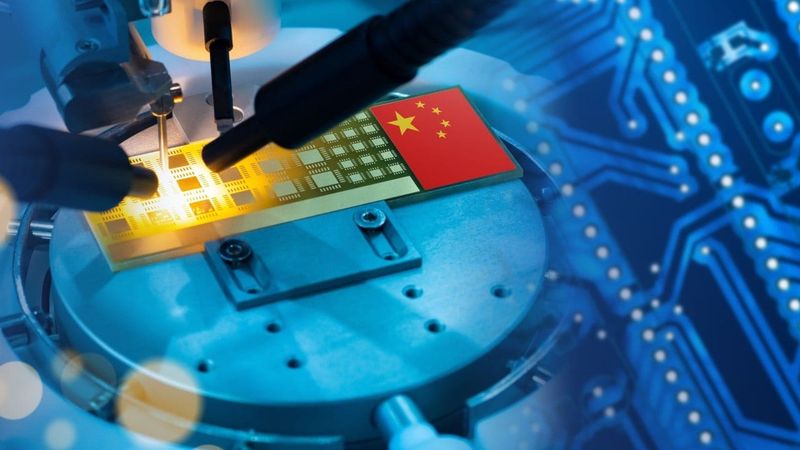
The international dimension is even more fraught. The United States and its allies have spent the past two years tightening export controls on advanced chips, explicitly to slow China's access to frontier compute. Any agreement that includes Beijing - even one limited to safety evaluation - would require a level of transparency that neither Washington nor Chinese regulators have shown willingness to provide. The alternative, a treaty among like-minded democracies, would replicate the same fragmentation it purports to solve.
There is also the question of enforcement. Third-party evaluators need both technical expertise and institutional independence, a combination that is scarce. The AI Safety Institute in the United Kingdom and the US AI Safety Institute Consortium have begun building evaluation capacity, but neither has the statutory authority to compel disclosure or halt deployment. Voluntary participation works only as long as incentives align; the moment a lab perceives competitive disadvantage, the system buckles.
The Broader Pattern
This is not the first time the industry has flirted with self-regulation. In early 2023, after the release of GPT-4 and subsequent open letters calling for a development pause, several labs committed to red-teaming and pre-deployment testing. Those commitments have been unevenly honoured. Model cards and system documentation have improved, but the threshold for what constitutes acceptable risk remains opaque and varies by organisation.
The semiconductor industry offers a useful parallel. In the 1990s, leading fabrication plants adopted voluntary environmental and safety standards under pressure from regulators and insurers. The standards worked because they were enforceable through supply-chain audits and because the capital intensity of fab construction created natural barriers to entry. AI development has neither characteristic. Training runs are expensive but not prohibitively so for well-funded startups, and the supply chain - from data labelling to cloud compute - is diffuse and harder to audit.
What the weekend's alignment does reveal is that the industry recognises the status quo is unsustainable. Enterprise buyers are demanding contractual guarantees around model behaviour. Governments are drafting legislation with or without industry input. And the technical community itself is increasingly vocal about risks that were once dismissed as speculative.
What Comes Next
The next phase will likely involve pilot programmes. Anthropic has already opened its reinforcement learning from human feedback pipeline to external researchers under non-disclosure agreements. OpenAI's preparedness framework includes provisions for third-party review, though the details remain vague. Google DeepMind has discussed frontier safety evaluations in its technical publications but has not committed to external oversight at the pre-deployment stage.
If these pilots succeed, they could form the basis for a broader regime - one that balances innovation incentives with credible assurance. If they fail, or if competitive pressure leads labs to bypass them quietly, the window for industry-led solutions will close. Statutory mandates, with all their rigidity and unintended consequences, would follow.
For now, the regulatory conversation has shifted from whether oversight is needed to what form it should take. That is progress, even if the consensus proves fragile. The challenge is ensuring that the mechanisms designed today can adapt to capabilities that do not yet exist - a problem that every technology governance effort, from aviation to biotechnology, has faced and none has fully solved.
The AI industry's weekend of alignment may not survive contact with quarterly earnings calls and product launch schedules. But it has established a vocabulary and a set of expectations that will shape the debates to come. Whether those debates produce durable institutions or another round of voluntary commitments remains an open question.