Fireworks AI Makes the Case for Open Models After Billion-Dollar Breaches
The company argues that most enterprises don't need frontier intelligence, but two security incidents this autumn exposed customer data and forced it to rebuild trust.

The Pitch Against Frontier Dependence
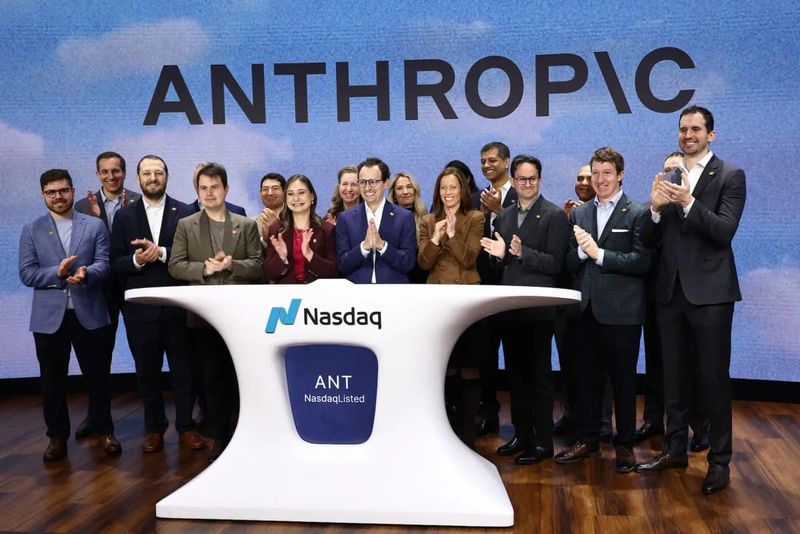
While Anthropic's initial public offering drew headlines for its record size, a quieter conversation unfolded at the Slush conference in Helsinki: whether most companies actually need to pay frontier prices at all. Fireworks AI, a four-year-old platform that runs open-weight models for enterprise clients, contends that the answer is no.
The Bay Area firm helps businesses download open models, fine-tune them on proprietary data, and deploy them at a fraction of the cost charged by Anthropic, OpenAI, and similar labs. Co-founder Chenyu Zhao argues that frontier intelligence is necessary only for a narrow set of use cases requiring the most advanced generalised reasoning. For everything else, specialised models trained on a company's own data deliver faster inference, lower costs, and greater control.
Fireworks has attracted clients including Uber, Shopify, and Notion. Sequoia and Benchmark are among its backers, and the company carried a valuation of $17.5 billion (£13.8 billion) as of this past summer. Early discussions for another funding round are reportedly under way, though Zhao declined to comment on the record.
Yet the pitch for control and independence collided with reality this autumn, when two security incidents exposed exactly how vulnerable even specialised platforms can be.
Two Breaches in Quick Succession
Fireworks disclosed two separate attacks within a matter of weeks. In the first, intruders accessed API keys and authentication tokens stored as secrets for a limited number of accounts. In the second, attackers breached the company's cloud provider, moved laterally into a development system, and extracted customer data including billing records and certain datasets.
The impact was not trivial. Notion confirmed that AI chat transcripts from fewer than one per cent of its workspaces were exposed and subsequently disconnected from Fireworks. Uber disclosed that names, addresses, birth dates, and driver's licence numbers for approximately 150,000 drivers were stolen through a vendor later identified as Fireworks.
Zhao characterised the incidents as part of a broader wave of attacks targeting AI infrastructure providers. He pointed to a trend known as LLM jacking, in which attackers harvest API keys and resell access to large language model tokens on illicit marketplaces. "Every company is probably seeing an unprecedented frequency of attacks," he said at Slush.
Fireworks has long promised zero data retention for inference traffic, meaning that prompts and responses are not stored after processing. That pledge remains intact, according to Zhao, but the breach revealed a gap in how the company handled batch prediction workloads. Notion had been using a feature that required datasets to be uploaded and stored at rest, a design that by definition does not offer zero retention. Fireworks is now migrating those services to an online flow that retains data only for the duration of processing.
The Economics of Specialisation
The security incidents arrive at a moment when the economics of AI deployment are under intense scrutiny. Zhao estimates that open models now lag frontier labs by three to six months, a gap that has narrowed dramatically over the past two years. He credits the release of DeepSeek and a cascade of subsequent open releases with closing the distance.
For companies that have found product-market fit and are spending tens or hundreds of thousands of dollars per month on tokens, the cost differential becomes material. Zhao suggests that businesses initially gravitate towards frontier models because they are low-risk and widely recognised, but that calculus shifts once usage scales.
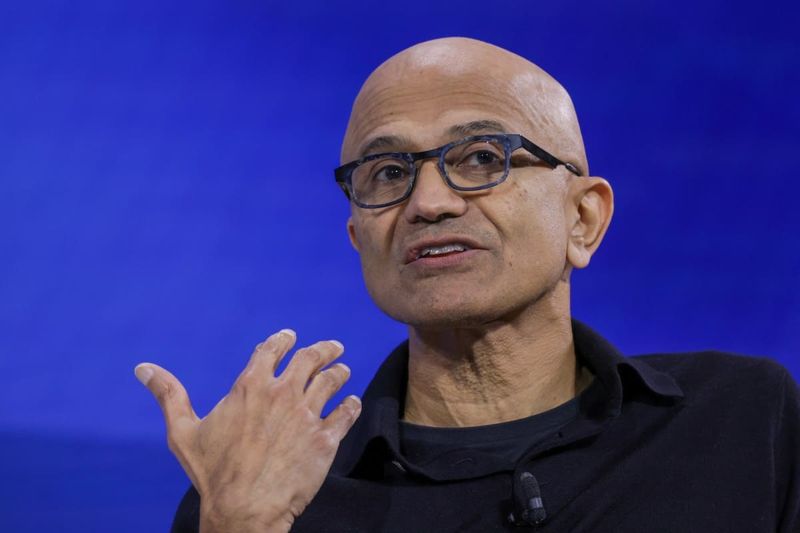
There is also a strategic dimension. In July, Microsoft chief executive Satya Nadella warned that companies relying on proprietary models pay twice: once in fees, and again by ceding operational know-how through the prompts and interactions that flow through those systems. Zhao frames Fireworks as a hedge against that dynamic, allowing enterprises to own their specialised intelligence rather than rent it from a small group of conglomerates.
Still, he acknowledges that the future is likely to be hybrid. Frontier models may be justified for high-level planning or reasoning tasks, while open models handle routine operations such as classification, summarisation, or arithmetic. This has driven interest in routing architectures that direct queries to the appropriate model tier, shifting the unit of analysis from cost per token to cost per task.
A Crowded and Well-Funded Field
Fireworks is far from alone in pursuing this market. Together AI and Baseten have each announced large funding rounds in recent months. On Wednesday, Palo Alto Networks agreed to acquire Applied Compute, a one-year-old startup founded by former OpenAI researchers, for $4.5 billion (£3.6 billion) in stock. Applied Compute, like Fireworks, helps enterprises train and operate custom models on their own data.
The wave of capital reflects both the scale of the opportunity and the infrastructure demands it entails. Zhao describes Anthropic's IPO as a long-term bet on AI usage reaching a fundamentally different scale within a decade, a trajectory that requires access to public markets. He disclosed that he intends to buy shares himself.
Nvidia, which has backed Fireworks since 2024, remains a strategic partner. Jensen Huang's departure from Nvidia last week was described by Zhao as "a blow to the industry," but he expects continuity in the company's support for open-source initiatives, including its Nemotron family of models.
Rebuilding After Exposure
The immediate challenge for Fireworks is operational: demonstrating that the security gaps have been closed and that the platform can be trusted with sensitive workloads. Zhao did not disclose how many customers beyond Notion and Cursor were affected, describing the impacted group as a small subset.
The longer-term challenge is strategic. If open models continue to narrow the performance gap with frontier labs, and if enterprises grow more concerned about lock-in and data exposure, platforms like Fireworks stand to capture a significant share of AI inference spending. But that thesis depends on execution, both technical and institutional. Two breaches in a single autumn do not inspire confidence, regardless of how the broader threat landscape has evolved.
Zhao's argument is that specialised intelligence, owned and operated by the enterprise, will prove more defensible than rented general intelligence. The security incidents have made that claim harder to make, but they have not invalidated the underlying economics. Whether Fireworks can rebuild trust quickly enough to capitalise on those economics remains an open question.