Microsoft's Buyout to 60,000 Staff Signals Shift to AI-Manager Roles
Satya Nadella frames October's voluntary exit offer as structural transition rather than headcount cut, describing engineers who now 'build software factories' instead of code.
The Offer and Its Scale
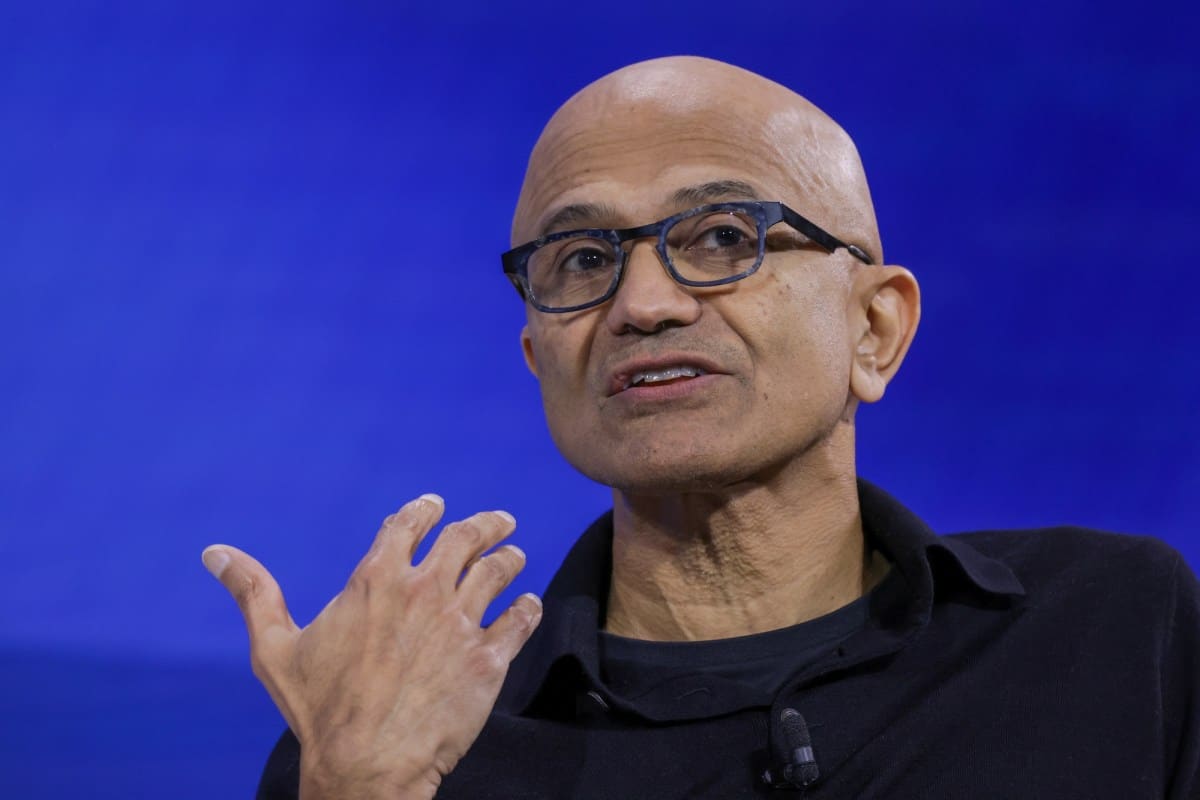
In October 2026, Microsoft extended voluntary buyout packages to approximately 60,000 employees. The move, framed by CEO Satya Nadella as a structural realignment rather than a traditional layoff, arrived without the abruptness of forced redundancies that have marked the tech sector over the past two years. Speaking at the DealBook Summit on 18 November, Nadella described the initiative as ensuring staff "had agency in making choices" amid a fundamental shift in how work is organised inside the company.
The number represents roughly 30 per cent of Microsoft's global workforce. Yet Nadella's rationale diverged from the cost-cutting narratives that have accompanied most large-scale exits in the industry. He positioned the buyout as a bridge, allowing employees to opt out if the coming transformation felt incompatible with their expectations of the role they were hired to perform.
From Direct Execution to Managing Agents
Nadella outlined a progression in internal sentiment around AI capabilities. Initially, scepticism held that automated systems could not handle substantive software tasks. That view flipped abruptly to anxiety that AI might render engineering roles obsolete. The company now operates on a third premise: software engineering endures, but the day-to-day activity has moved to a new "operating point."
Engineers at Microsoft, he explained, are increasingly tasked with orchestrating AI tools rather than writing every line of code themselves. The team responsible for building Copilot, the AI agent embedded in Microsoft 365 applications, comprises just 11 developers. According to Nadella, those engineers construct what he termed a "software factory," a meta-layer that generates the product rather than coding features directly. The implication is that human effort concentrates on architecture, oversight and iteration, while generative models handle implementation.
This shift extends beyond engineering. Nadella envisions every function at the company eventually adopting a similar model, with employees managing fleets of agents instead of executing tasks manually. Marketing, operations, finance and support roles would all pivot toward directing automated systems, curating outputs and making judgement calls that algorithms cannot yet make reliably.
The Incumbent's Dilemma
Microsoft turned 51 in 2026. It grew through decades in which software was written by hand, customer support required phone queues, and sales involved face-to-face pitches. Nadella acknowledged that legacy: the company did not start as an AI-native organisation, and retrofitting workflows across hundreds of thousands of employees and millions of lines of legacy code is neither fast nor frictionless.
He described the challenge as one of pace. Transforming "the work, the workflow, and the work artefact" alongside the wage structures and performance metrics that support them will take longer than public discourse suggests. In that gap, some employees will conclude that the new model does not align with their skills, interests or career plans. The buyout, in this framing, provides an exit that preserves dignity and avoids the optics of mass termination.
Anxiety and Agency
In a separate conversation on The Pragmatic Engineer podcast the previous week, Nadella addressed the psychological dimension. He argued that broad talk of the singularity, the hypothesis that AI will surpass human intelligence and displace entire categories of work, has generated "enormous anxiety" among workers who feel they have lost control over their professional futures.
Rather than waiting for that anxiety to curdle into resistance or attrition, Microsoft opted to make the structural changes explicit and offer a formal choice. Employees could commit to retraining and adapting to agent-led workflows, or they could accept a package and pursue opportunities elsewhere. Nadella characterised this as "walking the hard walk" of transformation, giving people clarity and a decision point instead of prolonged uncertainty.
What the Move Reveals
The buyout illuminates a tension facing large technology employers. AI adoption is no longer a pilot programme confined to a few teams; it is becoming the default mode of operation. That shift changes job definitions faster than hiring, onboarding and performance review cycles can accommodate. For a company of Microsoft's scale, the question is whether to manage that transition through incremental attrition, selective layoffs or a one-time voluntary programme that lets employees self-select.
Microsoft chose the third path. The approach carries risks: high performers may leave, institutional knowledge may walk out, and competitors may gain experienced talent. Yet it also signals to the market and to remaining staff that the company is serious about reorganising around AI, not merely adding it as a feature.
The 11-person Copilot team is a data point, not a universal template. Many products still require larger groups, domain expertise and coordination that cannot yet be compressed into agent-driven pipelines. But the example sets a benchmark, and other divisions will face pressure to demonstrate similar efficiency gains.
Implications for the Sector
Microsoft's move is likely to influence peers. If a legacy enterprise with half a century of accumulated process can execute a voluntary reduction of this scale without reputational damage, other incumbents may consider parallel programmes. The language of "agency" and "choice" provides a narrative alternative to layoffs, even when the underlying dynamic, fewer people doing the work, remains similar.
For employees across the industry, the message is consistent with trends observed over the past 18 months: roles are being redefined around AI tooling, and adaptation is not optional. The question is whether companies will invest in reskilling or rely on attrition and buyouts to reshape the workforce. Microsoft appears to be doing both, offering training while simultaneously opening the exit door.
The October buyout has not been followed by public disclosure of how many employees accepted. That figure, when it emerges, will offer a clearer picture of whether Nadella's framing resonated or whether the offer was seen as a prelude to cuts that would come regardless.