Anthropic Raises $105 Billion in Public Debut, Yet Faces $1 Trillion in Infrastructure Commitments
The AI company's seven founders collectively received $1.95 billion in the largest technology offering on record, while disclosing compute spending obligations that dwarf its new capital reserves.
A Record Offering With Founder Liquidity Built In
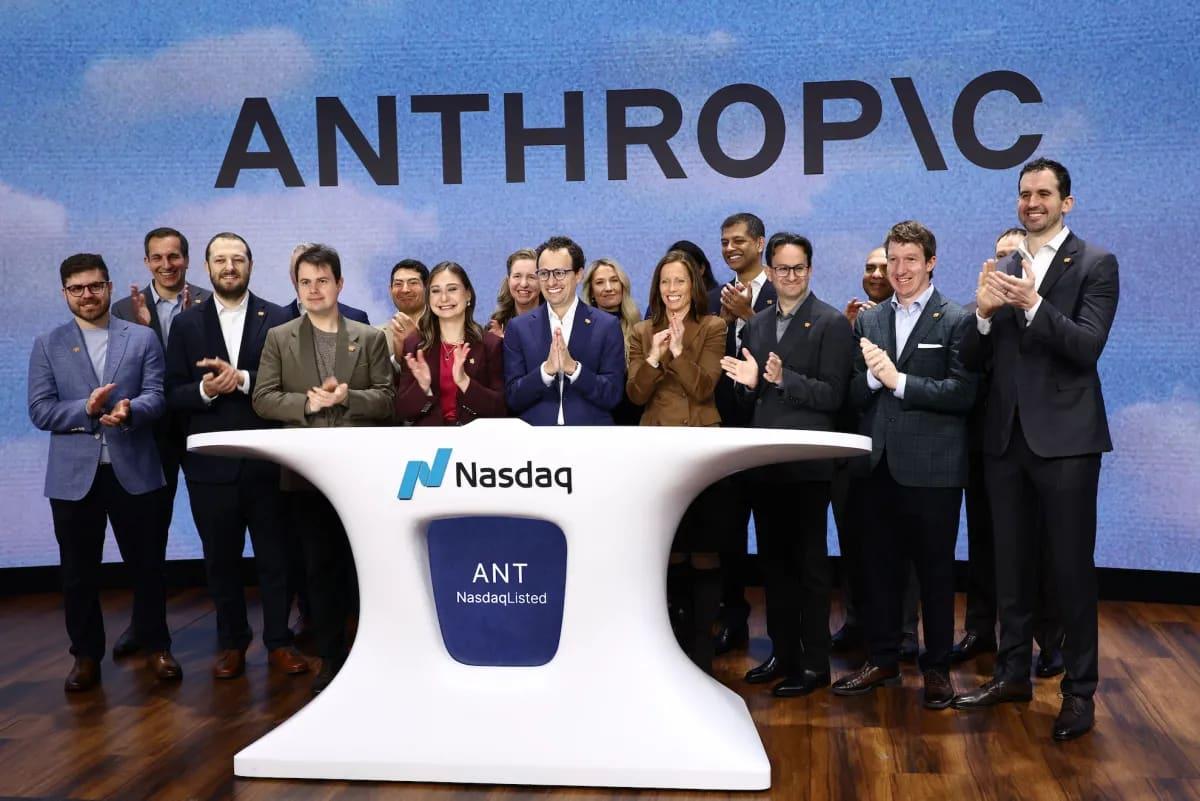
Anthropic completed its initial public offering on Thursday, raising a combined $81.3 billion in Class A common stock and bringing total proceeds to approximately $105 billion when a separate $26 billion non-voting share sale is included. The seven co-founders together sold roughly 3.4 million shares each at the final IPO price of $83 per share, netting about $280 million apiece before fees and taxes.
The founders had originally structured their share sales around a midpoint price of $74, which would have generated roughly $250 million per person. The upgraded pricing added an unexpected $30 million premium for each co-founder. Anthropic's filings note that all seven have pledged 80 per cent of their personal equity to philanthropic purposes, though these commitments remain voluntary and revocable without legal enforcement.
The structure marks a departure from the typical founder lock-up period, allowing immediate partial liquidity while retaining the majority of equity for long-term alignment and stated charitable goals.
Strategic Investors Take Non-Voting Stakes
Beyond the public float, Anthropic executed a parallel sale of Class N non-voting shares to a consortium of semiconductor and cloud infrastructure companies. Nvidia and Google each acquired $10 billion in these shares, while AMD, Broadcom, Micron, Microsoft, and TSMC divided the remaining $6 billion.
The arrangement serves dual purposes. It secures capital from entities deeply invested in AI infrastructure buildout, and it circumvents governance complexity by stripping voting rights from hardware suppliers and cloud rivals. At the IPO price, Google now holds 13.4 per cent of Anthropic, while Amazon converted a portion of previously issued promissory notes to secure a 14.6 per cent stake. Had Amazon converted all outstanding notes, its ownership would have approached 24 per cent. Together, the two hyperscale cloud providers control 28 per cent of the company.
For context, Facebook's 2012 IPO, then a record for a technology company, raised $16 billion on debut day. Anthropic's public offering is more than six times that figure, reflecting both the capital demands of large language model training and the market's current appetite for frontier AI exposure.
$1 Trillion in Forward Commitments
Despite raising close to $105 billion and holding approximately $230 billion in available working capital, Anthropic disclosed compute and infrastructure obligations that extend well beyond its new reserves. The company requires $70.7 billion to meet spending commitments over the next 12 months as of the quarter ended 30 September 2026. Through the end of 2030, those commitments total $451.6 billion.
Additional contractual obligations, some conditional and others not yet priced, push the aggregate figure to between $1.05 trillion and $1.08 trillion. These commitments encompass data centre capacity, chip purchases, power supply agreements, and long-term cloud compute contracts necessary to train successive generations of models and serve inference at scale.
The disclosed figures underscore a reality that has become evident across the AI sector: training runs for state-of-the-art models now require clusters of tens of thousands of accelerators, each consuming substantial power and cooling capacity over multi-month periods. Inference costs, while lower per query, compound quickly at the usage levels Anthropic expects as enterprise adoption deepens.
Capital Intensity as Competitive Moat
The trillion-dollar commitment pipeline also functions as a structural barrier. Few organisations can marshal the capital, supplier relationships, and operational expertise required to compete at this scale. Anthropic's ability to secure non-voting equity from the semiconductor supply chain and cloud incumbents signals confidence in its technical roadmap, but it also binds the company to a capital deployment schedule that offers limited flexibility if model efficiency improves faster than anticipated or if demand softens.
The public markets now bear a portion of that execution risk. Anthropic's valuation, driven by revenue growth projections tied to enterprise API adoption and consumer subscription scale, assumes that compute spending translates into differentiated model performance and, ultimately, pricing power. Any deviation in that translation, whether from algorithmic breakthroughs that reduce training costs or from competitive pressure on API margins, will test the sustainability of the capital structure.
What Comes Next
Anthropic has positioned itself as a research-led organisation with a constitutional AI framework intended to guide model behaviour through explicit principles rather than ad-hoc fine-tuning. That philosophical stance has resonated with enterprise buyers wary of reputational risk, but it has also required the company to invest heavily in safety research, red-teaming infrastructure, and alignment techniques that do not generate immediate revenue.
The IPO proceeds provide runway to continue that dual mandate: scaling compute to maintain competitive model performance while funding the interpretability and safety work that differentiates Anthropic's public narrative. Whether the market rewards that balance, or demands a faster return on the unprecedented capital deployed, will become clear over the next several quarters as the company reports earnings and updates its infrastructure spend against revenue growth.
For now, Anthropic has secured the largest technology IPO on record and a roster of strategic investors whose own fortunes depend on the success of large-scale AI deployment. The challenge shifts from raising capital to deploying it efficiently in an industry where the cost curve remains steep and the competitive landscape continues to evolve.