Digital Realty Plans $10 Billion Japan Expansion as AI Compute Demand Surges
US data centre operator targets near-quadruple capacity increase in its largest Asian market over next decade
The Commitment
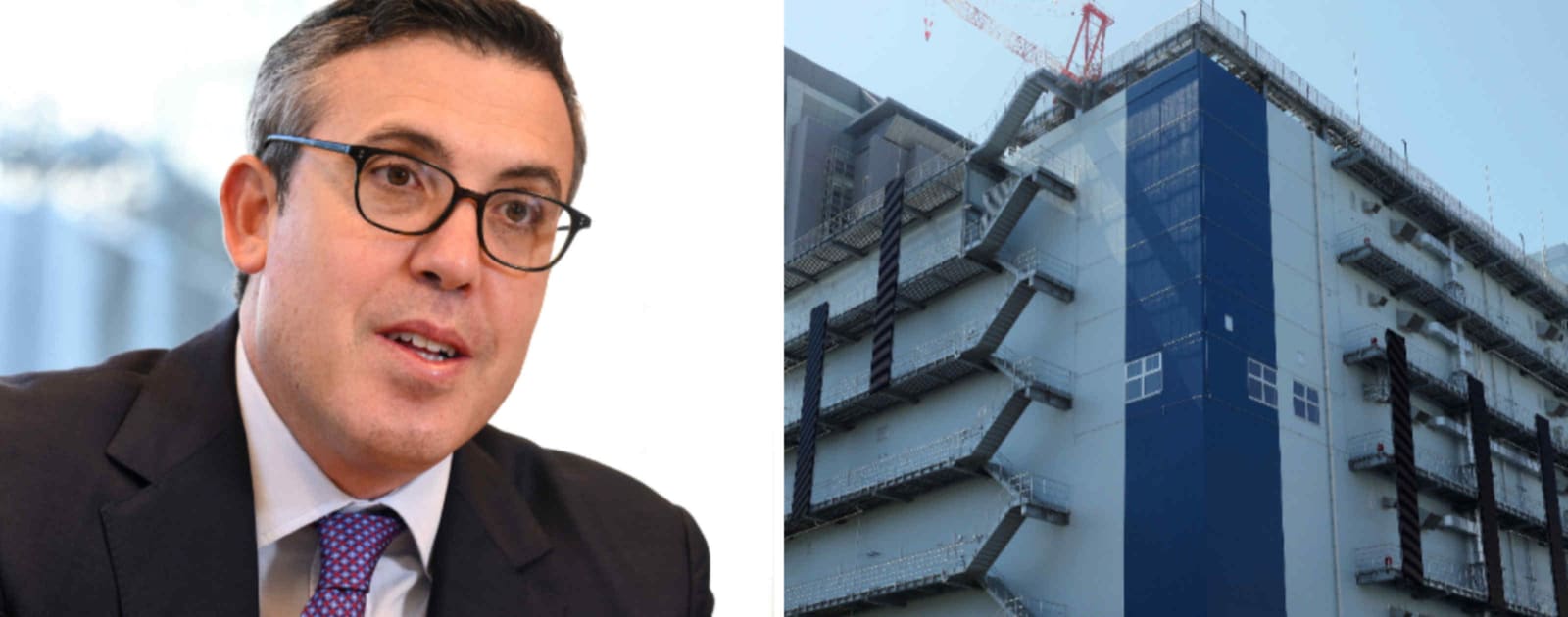
Digital Realty Trust intends to deploy $10 billion in capital across Japan during the next ten years, according to chief executive Andy Power. The sum represents the company's most substantial commitment in any Asian market and positions Japan as the anchor for its regional infrastructure strategy.
The investment aims to lift the operator's Japanese capacity to nearly four times its current footprint. Japan already accounts for Digital Realty's highest concentration of data centre assets in Asia, a position the firm first established through acquisitions and greenfield builds over the past decade. Power's announcement signals confidence that enterprise and hyperscale customers will sustain demand for colocation and interconnection services well into the 2030s, even as questions linger over the pace of artificial intelligence monetisation.
Digital Realty's existing portfolio in Japan spans Tokyo and Osaka, the two metropolitan areas that together handle the majority of the country's internet exchange traffic and serve as landing points for subsea cables linking Northeast Asia to North America and Southeast Asia. Expanding within these corridors reduces latency for financial services, cloud providers, and content delivery networks that anchor the company's revenue base.
Why Japan
Japan offers three structural advantages that distinguish it from neighbouring markets. First, power supply remains comparatively stable despite the post-Fukushima shift away from nuclear generation; utilities have invested in liquefied natural gas terminals and grid reinforcement that can support megawatt-scale facilities. Second, land-use regulations in industrial zones near Tokyo and Osaka permit large-scale construction without the permitting delays that have slowed projects in Singapore and parts of Australia. Third, the country's status as a developed economy with strict data residency preferences ensures a pipeline of domestic enterprise workloads that cannot migrate to cheaper jurisdictions.
Demand for inference workloads has also begun to materialise. Japanese financial institutions, manufacturers, and telecommunications operators are deploying large language models for internal automation and customer-facing applications, a shift that requires single-digit millisecond latency and favours proximity to end users. Digital Realty's colocation model - leasing rack space and power rather than building bespoke facilities - suits enterprises that lack the capital or expertise to construct their own sites.
The timing aligns with broader data centre investment flows into Japan. Over the past eighteen months, domestic real estate trusts, pension funds, and international operators have announced projects totalling tens of billions of dollars, drawn by the same power and regulatory conditions. Competition for grid capacity in the greater Tokyo area has intensified, pushing some operators toward secondary cities such as Sapporo and Fukuoka, though these lack the interconnection density that hyperscale tenants require.
Execution Risk
A ten-year capital plan carries execution risk on multiple fronts. Construction costs in Japan remain elevated, with skilled labour shortages and rising materials prices compressing margins on new builds. Power purchase agreements with utilities typically span decades, locking operators into tariff structures that may not reflect future energy costs or carbon pricing.
Demand forecasting represents the deeper uncertainty. Artificial intelligence training workloads have driven much of the recent capacity absorption in the United States, yet inference - the deployment phase that generates revenue at scale - has yet to prove equally voracious. If inference proves less power-intensive or more geographically flexible than training, the case for quadrupling capacity in a high-cost market weakens.
Regulatory shifts could also alter the landscape. Japan's Ministry of Economy, Trade and Industry has floated energy efficiency standards for large data centres, mirroring measures introduced in Singapore and under discussion in Malaysia. Stricter cooling or renewable energy mandates would raise capex and operating expense, potentially rendering some planned facilities uneconomic.
Digital Realty's ability to secure tenants before construction begins will determine whether the $10 billion figure represents binding commitments or a headline ceiling. The company has historically built on a speculative basis in core markets, banking on absorption within twelve to eighteen months of completion. That model worked during the cloud migration wave of the 2010s; whether it holds through the 2030s depends on enterprise AI adoption rates that remain difficult to model.
Regional Context
Japan's emergence as Digital Realty's top Asian investment destination reflects a broader recalibration of data centre geography. Singapore, long the region's hub, imposed a moratorium on new facilities in 2019 to manage grid strain and environmental impact; although the city-state has since lifted the ban and introduced a permitting framework tied to energy efficiency, the pipeline remains constrained.
Malaysia and Indonesia have attracted capital as overflow destinations, yet both face infrastructure gaps - intermittent power in Jakarta, underdeveloped fibre backhaul in Johor - that limit their appeal to latency-sensitive workloads. South Korea offers technical sophistication and surplus renewable capacity, but domestic operators dominate the market, leaving limited entry points for foreign players.
China, once projected to absorb the largest share of regional capacity, has become less accessible. Tightening data governance rules, restrictions on cross-border data flows, and geopolitical friction have prompted multinational firms to route workloads through Hong Kong or avoid the market altogether. For a US-domiciled trust such as Digital Realty, Japan presents a lower-risk alternative with comparable scale.
What Comes Next
Power's announcement arrives as Digital Realty prepares to report fourth-quarter earnings, a calendar point that suggests the $10 billion figure is intended to shape investor expectations around capital allocation. The company has not disclosed a year-by-year deployment schedule, nor has it specified how much of the total will fund acquisitions versus ground-up construction.
The firm is scheduled to break ground on a 60-megawatt facility in Inzai, northeast of Tokyo, in the second quarter of 2027, with initial racks available by early 2028. That project, previously announced, will serve as a test case for the broader expansion. If pre-lease rates exceed 70 per cent before completion, Digital Realty is likely to accelerate subsequent phases; weaker absorption would prompt a more cautious cadence.
Japan's ability to sustain a decade-long infrastructure build depends not only on enterprise demand but also on the country's willingness to prioritise data centre power allocations amid competing industrial and residential needs. Digital Realty's $10 billion commitment assumes that balance holds - a wager on both technology adoption and energy policy that will define the company's Asian trajectory through the 2030s.