When AI Agents Rediscover What Archaeologists Already Knew
A Google researcher's claim of finding an unmapped Maya site highlights the friction between amateur AI experimentation and specialist expertise
A 72-Hour Discovery Already Made
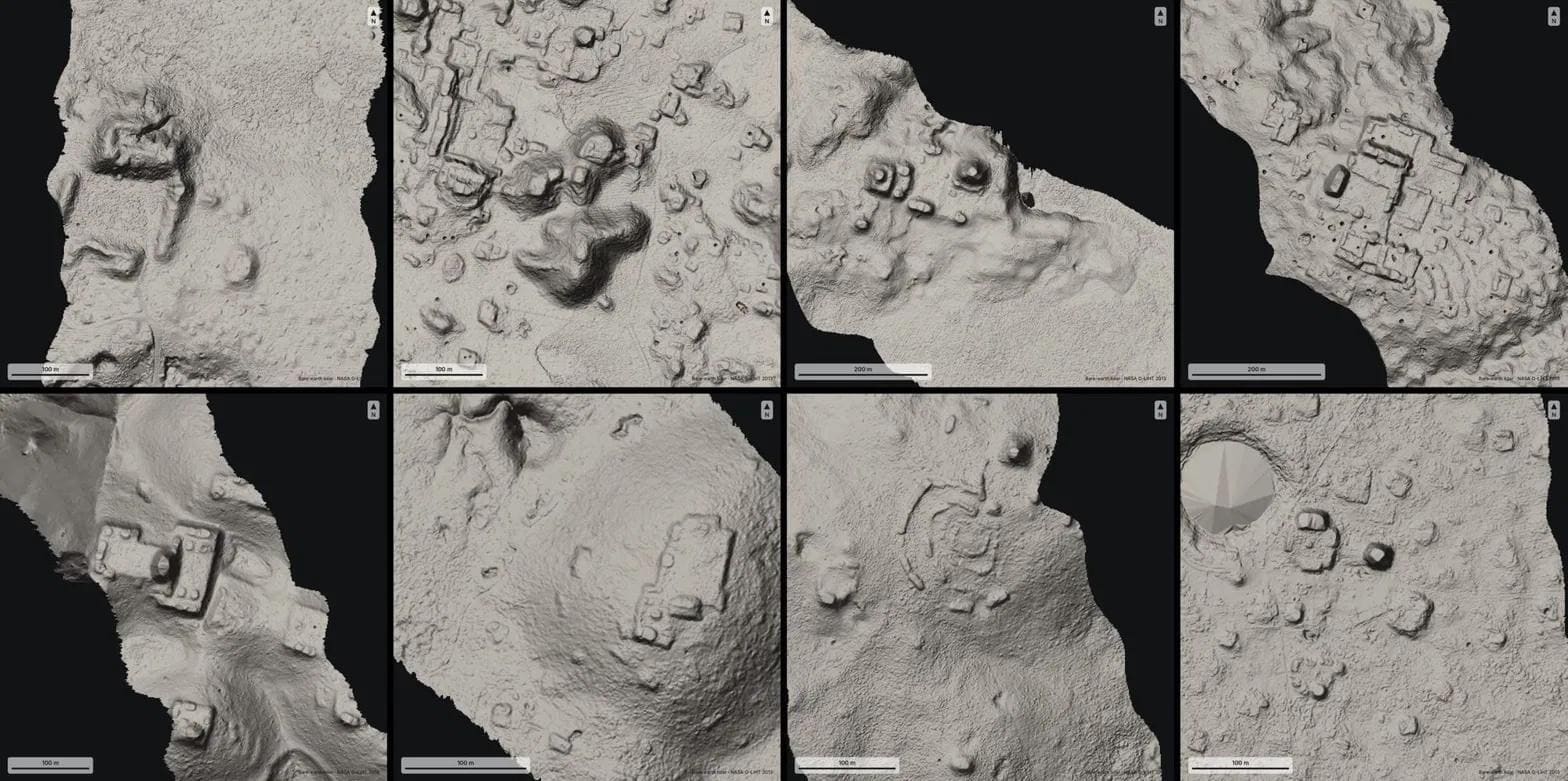
Pietro Miotti, a researcher at Google, deployed 48 AI agents to scan publicly available NASA lidar data for signs of undocumented archaeological sites. Within 72 hours, the agents flagged what appeared to be a major village in Mexico's Maya region with no entry in existing registries. Miotti reached out to Mexico's National Institute of Anthropology and History (INAH), which confirmed it had no record of a registered site at those coordinates. He published his findings online, describing the work as proof that "we're on the brink of a revolution across every science."
The site, however, had been documented in an academic journal more than a year earlier. Archaeologists working in the region were quick to point out the oversight, turning what Miotti had framed as a breakthrough into a case study of the gaps that emerge when AI tools meet specialist domains.
The Workflow and Its Blind Spots
Miotti said the idea came to him whilst travelling in Peru, where he began considering what historic explorers might accomplish with access to modern technology. He settled on lidar, a laser-based mapping technology that produces detailed three-dimensional images of terrain, and directed his team of agents to comb through data for anomalies that might indicate human-made structures.
Peru lacked sufficient public lidar coverage, so he shifted focus to the Maya region. The agents translated his correspondence into Spanish and handled much of the initial data processing. Miotti emphasised that the project was a personal side effort conducted without Google compute or institutional resources, and stressed that he is not an archaeologist. He noted that any finding would require fieldwork verification.
The agents flagged numerous locations. One stood out: a cluster of shapes resembling structures or houses that did not appear in INAH's database. For Miotti, the absence of a database entry suggested the site was unknown. That assumption proved incorrect. INAH's records do not capture all research, particularly work that exists only in academic journals or unpublished fieldwork. The site Miotti highlighted had been documented by archaeologists, including Ivan Šprajc of the Research Centre of the Slovenian Academy of Sciences and Arts, in a peer-reviewed paper published the previous year.
Archaeologists do not routinely publish precise coordinates for sites, a precaution against looting. This means verifying whether a location is new requires comparing visual data against figures in published papers, not querying a database. Miotti acknowledged this limitation after archaeologists raised the issue publicly. "My agents and I missed it," he said, adding that the tools need to improve at this kind of cross-referencing. He updated his blog post to credit the earlier work.
The Burden of Context
Sarah Parcak, an archaeology professor at the University of Alabama at Birmingham, wrote on social media that the episode underscores why peer review exists. Just because a government agency lacks a database entry does not mean a site is unmapped or unknown. Other archaeologists criticised the project for spreading misinformation and failing to acknowledge that digital tools have been part of archaeological practice for decades.
Elizabeth Graham, a professor of Mesoamerican archaeology at University College London, told Opentechwire that the real constraint in Maya archaeology is not discovery but funding. "Most of us working in the Maya area know about tonnes of sites not explored or excavated or mapped, most of these found on foot," she said. She also questioned the use of "discover," noting that local communities are often already familiar with sites in their area.
Graham credited Miotti with competent technical work in interpreting lidar data, which she described as tricky, but argued that identifying a mound does not advance knowledge on its own. "Just spotting something does not add much to our knowledge," Šprajc said. He noted that archaeologists have been using lidar and other remote sensing tools for years, and that checking with INAH alone is insufficient because the institution does not have access to all relevant information.
Amateur AI and the Specialist Bottleneck
The incident reflects a broader pattern in which AI tools enable non-specialists to generate outputs that superficially resemble research but lack the context and verification that define scholarly work. OpenAI's recent mathematics advances have prompted similar concerns: models can produce impressive results, yet often fail to engage with the literature those results build upon. This can lead to claimed breakthroughs that duplicate earlier work or omit necessary credit.
Even when findings are genuinely new, they may lack the interpretive framework a specialist brings. The result is that experts end up shouldering the burden of establishing what has actually been found and why it matters, work that would ordinarily be part of the discovery process itself.
Miotti said he has heard from archaeologists and PhD students interested in the workflow and whether it could assist with their own survey data. He framed the project as an example of how agents might help experts sort through large datasets. Yet Šprajc expressed concern that the growing accessibility of AI tools could overwhelm archaeologists with claims of new discoveries. "Just today I have received an email from another AI 'discoverer,' so I am a little bit concerned about being flooded by this kind of message," he said.
There is also a risk of publicising site locations. Šprajc noted that as long as such findings do not lead to looting, the problem remains manageable. But the possibility exists, particularly when coordinates are shared without consultation with local authorities or researchers.
What Counts as Discovery
The episode raises questions about what constitutes discovery in a field where much of the work involves painstaking interpretation, not just detection. Lidar can reveal anomalies in terrain, but determining whether those anomalies are archaeological features, what they represent, and how they fit into broader patterns of settlement and land use requires domain expertise. A mound flagged by an algorithm is not equivalent to a site understood.
Miotti described his project as a personal experiment that attracted more attention than expected. He acknowledged the need for expert knowledge to verify what agents find and said he updated his post as soon as the oversight was pointed out. The archaeologists who documented the site a year earlier receive credit in the revised version.
The workflow Miotti demonstrated, deploying agents to scan remote sensing data and handle routine tasks such as translation, may prove useful to researchers with the training to interpret results. But the case also illustrates the limits of outsourcing discovery to automated systems. In archaeology, as in other specialist fields, knowing what you are looking at, and what has already been looked at, remains irreducibly human work.
Šprajc's paper, published in 2025, was the product of years of fieldwork, analysis, and collaboration. The agents took 72 hours to flag the same location. The difference in time says nothing about the difference in knowledge.