CrowdStrike Bets $44 Billion on Zero-Trust to Expand Endpoint Dominance
The all-stock acquisition of Zscaler marks the largest deal in cybersecurity history, uniting endpoint protection with cloud access controls as enterprises race to secure AI workloads.
A Defining Consolidation
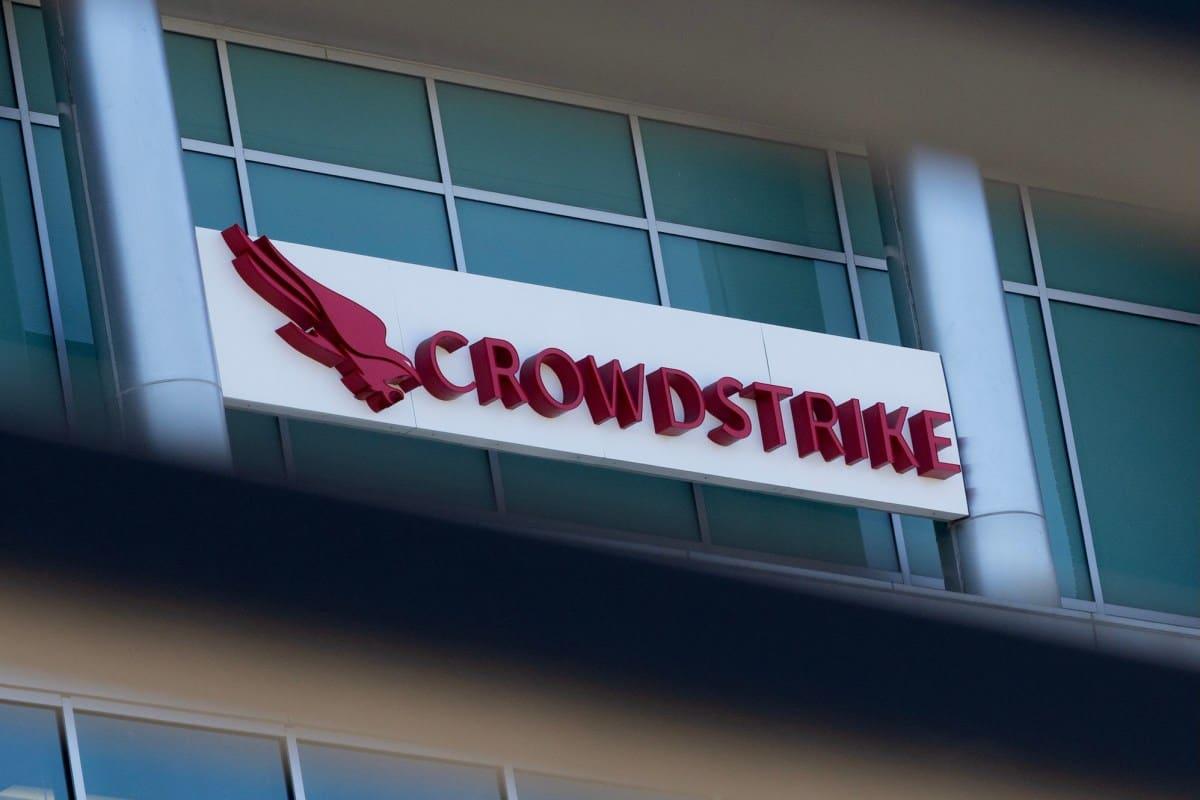
CrowdStrike has agreed to acquire Zscaler for $43.9 billion in an all-stock transaction, according to announcements from both companies on 23 November. The deal represents the largest acquisition in cybersecurity history and signals a strategic pivot toward integrated security architectures as enterprises grapple with the attack surface introduced by generative AI tools.
Zscaler, headquartered in San Jose, California, provides cloud-based security products to approximately 8,000 enterprise customers. Its core offering centres on zero-trust network access, a model that requires continuous authentication for every connection to internal systems. The approach contrasts with traditional perimeter-based defences, which grant broad access once a user passes an initial checkpoint. Zero-trust architectures have gained traction over the past five years as remote work and cloud migration eroded the concept of a defined network boundary.
CrowdStrike built its business on endpoint detection and response, software that monitors computers, mobile devices, and servers for signs of intrusion. The company's Falcon platform has become a reference point in the industry, but its scope has historically ended at the device layer. By absorbing Zscaler, CrowdStrike gains visibility into network traffic and application access, closing a gap that has left room for competitors offering full-stack security operations centres.
The Strategic Rationale
The combined entity will control what the companies describe as the largest single addressable market in cybersecurity. That claim rests on the convergence of endpoint, network, and application security spending, categories that research firm Gartner has tracked separately but which buyers increasingly prefer to consolidate under fewer vendors.
Both companies framed the acquisition as essential to defending AI workloads. Enterprises deploying large language models face a dual challenge: protecting the data used to train and fine-tune those models, and securing the APIs through which AI systems interact with internal databases. Endpoint agents can monitor the devices running inference, but cannot inspect the traffic flowing between cloud services and on-premises repositories. Zero-trust platforms, conversely, enforce access policies at the application layer but lack the forensic depth of endpoint telemetry.
The integration promises to correlate signals across both layers. If an endpoint agent detects anomalous behaviour on a developer's laptop, the zero-trust platform could automatically revoke that user's access to sensitive code repositories or model training pipelines. The technical work required to achieve that level of orchestration is non-trivial, but the architecture offers a clearer path than stitching together products from separate vendors through APIs.
Regulatory and Execution Risks
The transaction is subject to regulatory approval and is expected to close around November 2027. Antitrust scrutiny of technology acquisitions has intensified in the United States, the European Union, and several Asian markets over the past three years. CrowdStrike and Zscaler together serve a significant share of the Fortune 500, and competition authorities will likely examine whether the merger reduces choice in markets where both companies already hold leading positions.
All-stock deals carry execution risk tied to share price volatility. The $43.9 billion valuation is based on CrowdStrike's closing price on 22 November 2026; any material decline in the acquirer's stock between now and the deal's completion will dilute the effective payout to Zscaler shareholders. Both companies have exposure to enterprise IT budgets, which remain sensitive to macroeconomic conditions despite the current spending cycle around AI infrastructure.
Integration complexity is another variable. CrowdStrike and Zscaler operate distinct go-to-market models: the former relies heavily on channel partners and managed service providers, while the latter has historically emphasised direct sales to large enterprises. Aligning those sales organisations without triggering partner conflicts or customer churn will require careful choreography.
Implications for the Security Landscape
The acquisition accelerates a consolidation trend that has reshaped cybersecurity over the past eighteen months. Palo Alto Networks, Fortinet, and Microsoft have all expanded their portfolios through acquisition or internal development, betting that customers prefer integrated platforms over best-of-breed point solutions. The shift reflects both buyer fatigue with managing dozens of disparate tools and the technical reality that modern threats move laterally across endpoints, networks, and cloud services faster than siloed products can coordinate responses.
For smaller security vendors, the deal narrows the path to independent scale. Startups that offer niche capabilities in areas such as API security, identity governance, or cloud workload protection now face a choice: pursue an exit to one of the remaining platform vendors, or accept a role as a feature within a larger stack. The venture capital model that funded hundreds of security companies over the past decade assumed multiple paths to liquidity; that assumption is under pressure as the number of viable acquirers contracts.
Customers, meanwhile, will watch whether the integration delivers on the promise of simplified operations and improved threat detection. Previous platform consolidations, including Symantec's ill-fated acquisition of Blue Coat in 2016 and Cisco's absorption of Sourcefire in 2013, have produced mixed results. The technical debt of merging disparate codebases, combined with the organisational friction of integrating competing product roadmaps, has often delayed or diluted the strategic vision that justified the deal.
CrowdStrike and Zscaler have set a high bar. The companies have pledged what they term "superior protection" for customers navigating AI adoption. Whether that materialises will depend on engineering execution, regulatory clearance, and the discipline to resist feature bloat as two large product portfolios converge. The cybersecurity industry will have a definitive answer by the time the deal closes in late 2027.