Beijing's DUV Buying Spree Forces Export Control Reckoning
More than 340 immersion lithography systems now sit in Chinese fabs, prompting Washington insiders to demand a total ban on advanced tooling exports.
The Accumulation That Changed the Calculus
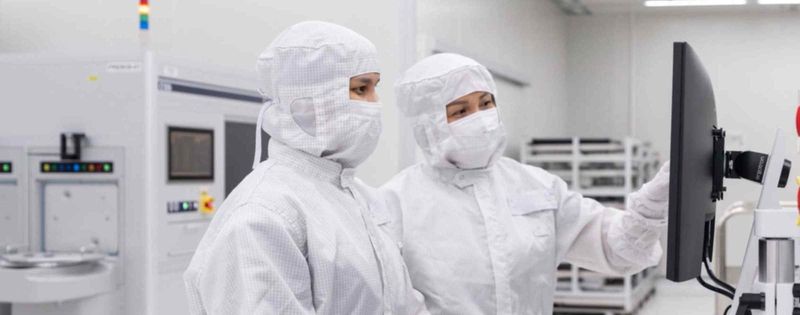
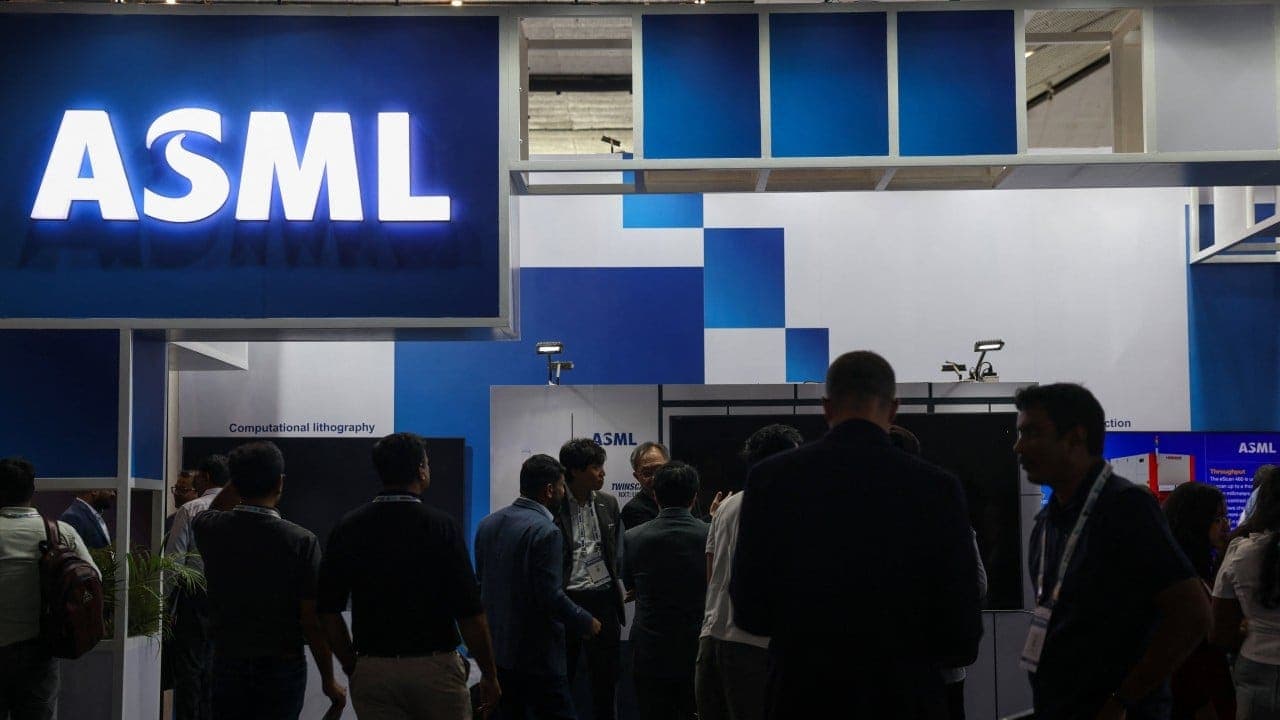
By early 2026, Chinese-owned semiconductor fabrication plants had accumulated 343 immersion deep ultraviolet lithography systems, according to data released in late September by the Centre for Technology & Statecraft, a Washington research organisation founded in August. The figure represents billions of dollars in advanced tooling, primarily from ASML, the Dutch equipment maker that holds a monopoly on high-end lithography. Former US officials who contributed to the analysis now argue that the sheer scale of this stockpile demands a full export ban on immersion DUV tools to China.
The accumulation has reframed the debate over semiconductor export controls. Where previous restrictions targeted extreme ultraviolet systems and the most cutting-edge process nodes, the new data reveals that Chinese manufacturers have been preparing for a protracted period of technological self-reliance by hoarding the generation of equipment that remains unrestricted. Immersion DUV systems can produce chips at the 7-nanometre node and below when combined with multi-patterning techniques, a capability that covers a wide range of commercial and strategic applications.
At Opentechwire, we've tracked the tightening of semiconductor export controls since the October 2022 measures, and this latest disclosure marks a turning point. The question is no longer whether China can access advanced lithography tools, it is whether the installed base already in place renders further restrictions moot for the next half-decade.
What Immersion DUV Enables
Immersion lithography uses a liquid medium between the lens and the wafer to achieve finer pattern resolution than dry DUV systems. While extreme ultraviolet lithography remains the gold standard for leading-edge nodes, immersion DUV paired with multiple exposure passes can reach geometries once thought to require EUV. This makes the technology a viable path to 7-nanometre and even 5-nanometre production, albeit at higher cost and lower throughput.
The 343 systems now installed across Chinese fabs provide substantial capacity. Each immersion tool costs between USD 100 million and USD 150 million, depending on configuration and support contracts. Even at the lower bound, the total installed value exceeds USD 34 billion. More importantly, these machines represent years of production capability. A single immersion DUV system can process thousands of wafers per month, and with proper maintenance and spare parts supply, can operate for a decade or longer.
Chinese foundries and integrated device manufacturers have been explicit about their intentions. SMIC, the country's largest contract chipmaker, has ramped 7-nanometre production using DUV-only processes. Other domestic players, including Hua Hong Semiconductor and several state-backed ventures, have similarly invested in multi-patterning workflows that lean heavily on immersion tools. The stockpile documented by the Centre for Technology & Statecraft suggests that these firms anticipated tighter controls and moved to secure equipment while export licences remained available.
The Policy Gap That Enabled the Build-Up
US export restrictions on semiconductor equipment to China have evolved in stages. The October 2022 rules targeted EUV systems, certain advanced DUV tools, and chipmaking equipment capable of producing logic chips at 16-nanometre or below, or DRAM at 18-nanometre half-pitch or below. Subsequent updates in 2023 and 2024 closed loopholes around third-country re-exports and tightened performance thresholds. Yet immersion DUV systems, while subject to licensing in some configurations, have not faced a blanket prohibition.
The result has been a surge in orders. ASML's revenue from China reached record levels in 2023 and 2024, driven almost entirely by DUV sales. The company's public filings show that Chinese customers accounted for nearly half of its DUV system shipments during that period. Dutch export licensing authorities, operating under the Wassenaar Arrangement and bilateral pressure from Washington, approved the majority of these transactions on the grounds that the tools did not meet the technical thresholds for denial.
Former officials involved in crafting the 2022 controls now argue that the policy framework underestimated the strategic value of immersion DUV. In their view, the focus on node-specific restrictions failed to account for the cumulative effect of hundreds of systems entering the Chinese ecosystem. The Centre for Technology & Statecraft report frames the issue in terms of production capacity rather than individual tool capability, a shift that aligns with broader thinking in Washington about the need to constrain China's overall semiconductor output, not merely its access to bleeding-edge processes.
Calls for a Complete Ban
The former officials behind the report have recommended that the United States, the Netherlands, and Japan impose a total export ban on immersion DUV lithography systems to Chinese entities. The rationale is twofold. First, the installed base of 343 systems already provides sufficient capacity for China to sustain domestic production at advanced nodes for years, meaning incremental additions would further entrench self-sufficiency. Second, allowing continued sales risks normalising a scenario in which Chinese fabs operate at near-parity with international competitors in mature and mid-tier processes, eroding the strategic advantage that export controls were designed to preserve.
Implementation would require multilateral coordination. ASML is subject to Dutch export licensing, and while The Hague has tightened rules in response to US pressure, a complete ban would represent a significant escalation. Japan's Tokyo Electron and other suppliers of ancillary lithography equipment would also need to align their policies to prevent substitution. The challenge is that immersion DUV is a mature, widely deployed technology, and several Chinese firms have made progress on domestic alternatives, albeit with lower performance and yield.
There is also an economic dimension. ASML has stated that China represents a significant share of its revenue, and a total ban would affect its financial performance and its ability to invest in next-generation EUV and high-NA EUV research. Dutch policymakers have historically balanced security concerns with the commercial interests of national champions, and a blanket prohibition would test that equilibrium. The company has not publicly commented on the Centre for Technology & Statecraft report, but its guidance for 2026 already anticipates slower growth in China-related sales due to existing restrictions.
What the Stockpile Means for China's Semiconductor Ambitions
The accumulation of 343 immersion DUV systems gives Chinese chipmakers a buffer against further export restrictions. Even if new sales cease tomorrow, the installed base provides the tools necessary to produce chips for consumer electronics, automotive applications, and a range of industrial and communications systems. It also supports domestic efforts to develop indigenous lithography technology. By reverse-engineering and iterating on ASML's designs, Chinese equipment makers can accelerate their own development timelines, though catching up to the state of the art remains a multi-decade challenge.
The stockpile does not, however, grant China unfettered access to the leading edge. Immersion DUV is a workhorse technology, but it cannot match the throughput, cost, or scalability of EUV for high-volume production at 5-nanometre and below. Multi-patterning workflows are complex, yield-sensitive, and expensive. For applications that demand the highest performance, such as advanced AI accelerators and flagship smartphone processors, Chinese firms remain constrained by the lack of EUV access.
What the installed base does enable is a robust mid-tier semiconductor industry. Chips produced at 7-nanometre and 14-nanometre nodes are sufficient for most commercial applications, including servers, network equipment, and automotive microcontrollers. By securing the tools to manufacture at these nodes domestically, China reduces its dependence on foreign foundries and insulates critical supply chains from geopolitical disruption. This is the strategic outcome that the former US officials warn against, it shifts the semiconductor rivalry from a question of technological leadership to one of capacity and resilience.
The Broader Export Control Debate
The Centre for Technology & Statecraft report arrives amid a broader reassessment of US technology export policy. The Biden administration's approach, continued under its successor, has emphasised "small yard, high fence" controls that target specific chokepoints without decoupling entire sectors. The immersion DUV stockpile suggests that even narrow restrictions can be circumvented through advance purchases and stockpiling, raising questions about the long-term effectiveness of incremental measures.
Some analysts argue that the focus should shift from equipment sales to consumables and services. Lithography systems require a steady supply of optical components, lasers, and software updates to maintain performance. Restricting these inputs could degrade the operational capability of the installed base over time, though it would also create incentives for Chinese firms to develop domestic supply chains for spare parts and support.
Others contend that the window for effective controls has already closed. With 343 immersion DUV systems in place, and domestic lithography programmes advancing, China has achieved a level of self-sufficiency that makes further restrictions largely symbolic. In this view, the priority should be maintaining US leadership in next-generation technologies, such as high-NA EUV and advanced packaging, rather than attempting to roll back China's existing capabilities.
The debate reflects a deeper tension in technology policy between containment and competition. Containment strategies aim to limit adversary capabilities through export controls and supply chain restrictions. Competition strategies focus on outpacing adversaries through investment in research, manufacturing capacity, and talent. The immersion DUV stockpile suggests that pure containment is difficult to sustain when adversaries have the foresight and resources to prepare for restrictions in advance.
What Happens Next
The Centre for Technology & Statecraft report will likely inform policy discussions in Washington, The Hague, and Tokyo over the coming months. Whether it leads to a complete ban on immersion DUV exports remains uncertain. The political and economic costs of such a move are significant, and the strategic benefits depend on assumptions about China's ability to indigenise lithography technology and maintain the performance of its existing installed base.
For now, the 343 systems already in Chinese fabs represent a fait accompli. They provide the foundation for a domestic semiconductor industry that can operate at advanced nodes, even if not at the absolute cutting edge. The question is whether policymakers will treat this as a lesson in the limits of incremental export controls, or as a call to escalate restrictions before the next generation of tooling becomes similarly entrenched. The answer will shape the semiconductor landscape for the next decade.