Infineon's $1.4 Billion Thai Fab Signals Southeast Asia's Back-End Semiconductor Push
Germany's power chip leader inaugurates its first Thai facility as Bangkok positions itself as a regional manufacturing alternative for automotive and data centre components.
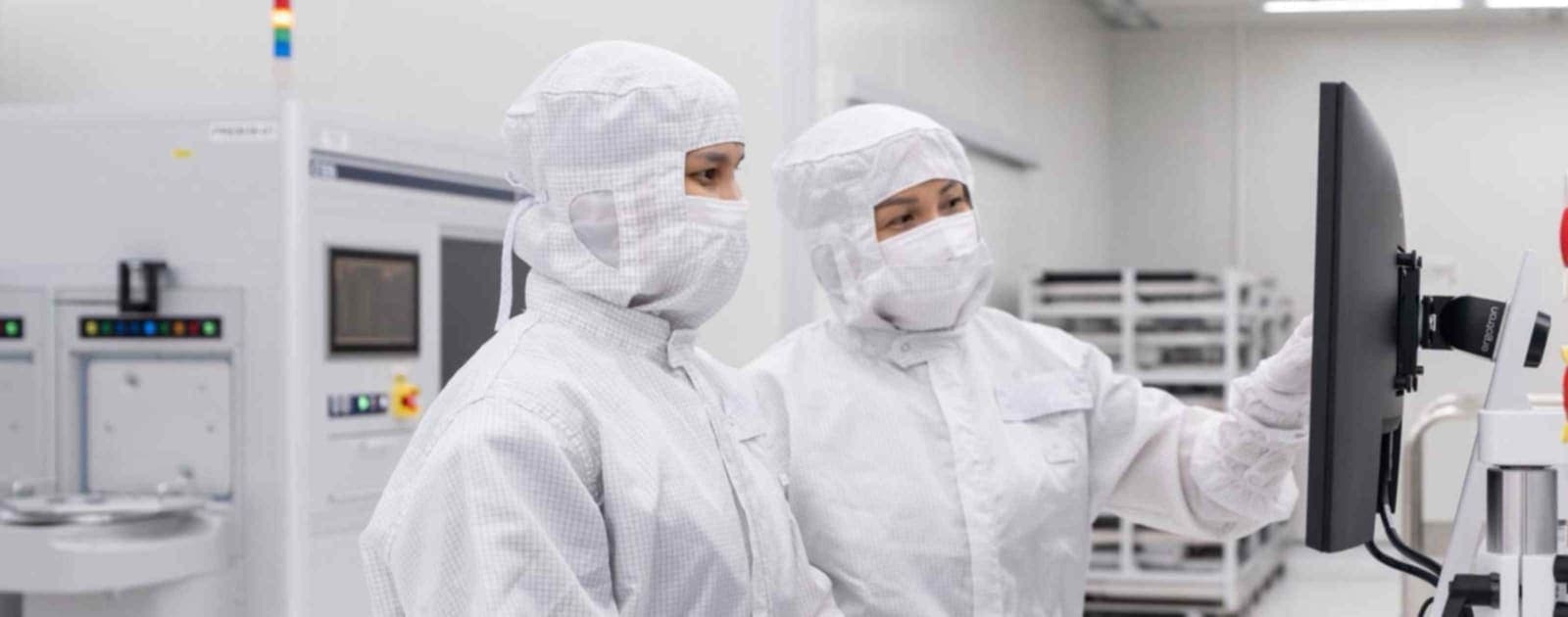
Germany Bets on Thailand's Manufacturing Corridor
Infineon Technologies has switched on production at a $1.4 billion semiconductor facility on the outskirts of Bangkok, marking the German power chip manufacturer's first manufacturing footprint in Thailand. The plant will concentrate on back-end assembly and testing for automotive power modules and server components, two sectors where supply-chain diversification has accelerated sharply since 2023.
At Opentechwire, we've tracked a wave of back-end investment across Southeast Asia over the past eighteen months. Infineon's Thai plant follows a pattern: established chipmakers are splitting advanced logic fabrication (which remains concentrated in Taiwan, South Korea, and now cautiously in Arizona) from packaging and test operations, which can be distributed more flexibly. Thailand, with its automotive manufacturing base and relative political stability, has emerged as a natural candidate for this middle layer of the value chain.
The facility will process wafers shipped from Infineon's German and Austrian fabs, performing the assembly, encapsulation, and final test steps that transform silicon into modules ready for integration into electric vehicle inverters and power supplies for hyperscale data centres. Thailand already hosts back-end operations for several Japanese and US semiconductor firms; Infineon's entry consolidates that position.
Why Thailand, Why Now
Bangkok's pitch rests on three pillars: an established automotive supply chain (Thailand is Southeast Asia's largest vehicle producer), competitive labour costs relative to Taiwan or Singapore, and a government eager to climb the value ladder. In 2025, Thai authorities launched a semiconductor promotion package that includes tax holidays of up to eight years for front-end and back-end investments above $500 million, streamlined permitting for industrial land, and co-investment in technical training programmes with multinational partners.
Infineon's decision also reflects tightening US export controls on advanced semiconductor equipment destined for China. Whilst the Thai plant will not produce leading-edge logic, it allows Infineon to serve Chinese electric-vehicle manufacturers and Shenzhen-based server integrators without routing finished modules through facilities that might trigger entity-list scrutiny. Back-end plants do not require EUV lithography or other controlled toolsets, so they remain outside the scope of the October 2023 US rules.
The timing aligns with Infineon's own capacity crunch. European automotive customers, particularly Volkswagen Group and Stellantis, have pressed Infineon to guarantee power-module supply as battery-electric platform launches accelerate through 2027. Adding Thai capacity reduces reliance on the company's Kulim, Malaysia plant, which has been running above 90 per cent utilisation since early 2025.
The Back-End Gamble
Thailand's semiconductor ambitions are explicitly back-end focused. A domestic industry body has argued that front-end fabrication requires capital and technical depth that Thailand cannot marshal in the near term; instead, the country should dominate assembly, test, and packaging for the region. That strategy carries risk. Back-end operations generate lower margins and less intellectual property than wafer fabrication, and they remain vulnerable to automation. Infineon itself has been piloting fully automated test cells in its German facilities, and those learnings will eventually migrate to Thailand.
Still, the sheer volume of power chips required for the electric-vehicle transition offers a window. Infineon forecasts that silicon-carbide and IGBT module demand will triple between 2024 and 2030, and no single region can absorb that growth. Thailand's wager is that even a commoditised step in the value chain can anchor a cluster, if the cluster is large enough and well connected to automotive and data-centre final assembly.
Singapore, by contrast, has attracted advanced packaging investments from Broadcom and others, targeting chiplet integration and high-bandwidth memory stacking. Thailand's pitch is less cutting-edge but potentially higher volume: millions of automotive modules per quarter, tested and shipped within Southeast Asia's free-trade perimeter.
Regional Context and Competitive Pressure
Infineon's Thai plant opens six months after TSMC's Singapore subsidiary announced its first capacity expansion, and three months after Tower Semiconductor designated Japan as its optical-chip hub. The pattern is clear: no single Asian location will replicate Taiwan's integrated ecosystem, but a constellation of specialised sites is taking shape. Thailand wants the automotive and industrial slice of that constellation.
Vietnam, Indonesia, and India are also courting back-end investment, each with different advantages. Vietnam offers lower wages and proximity to southern China; Indonesia has the largest domestic market in Southeast Asia; India has a deep engineering talent pool and ambitions to build a full-stack semiconductor industry. Thailand's edge is its existing automotive base, which means that an Infineon power module can be tested on a Friday and installed in a BYD or Tesla vehicle at a local assembly plant the following week.
The challenge for Bangkok is ensuring that this first wave of investment leads to a second. If Infineon's Thai plant remains a branch facility executing recipes developed in Munich, with no local R&D or process adaptation, then Thailand will have secured jobs but not capabilities. The government's co-investment in technical training is a start, but the real test will be whether Thai engineers begin filing patents on packaging improvements or test methodologies within the next three years.
What Comes Next
Infineon has not disclosed the Thai plant's eventual headcount, though similar back-end facilities in Malaysia employ between 1,200 and 1,800 people at full ramp. Production will scale gradually through 2027, with output initially allocated to European automotive customers and later to Asian data-centre clients.
Thailand's Board of Investment has signalled that it is in talks with two additional chipmakers about back-end projects above $500 million, though neither has been named. If those deals close, Thailand will have assembled a critical mass of semiconductor manufacturing by 2028, enough to justify dedicated logistics, equipment service, and chemical supply infrastructure.
The open question is front-end. Thai industry bodies have publicly acknowledged that leading-edge logic fabrication is out of reach, but mature-node fabs for power discretes or analogue chips might be viable. Infineon's Thai plant does not include wafer fabrication, but a future phase could. That would require a separate round of negotiation on water rights, power supply, and waste handling, all of which are more demanding for front-end than for back-end operations.
For now, Thailand has secured a meaningful foothold in the back-end segment, and Infineon has diversified its assembly base beyond Malaysia. Whether that foothold evolves into a platform depends on execution in the next 24 months and on whether the Thai government can translate capital investment into local capability, not just local employment.