Bay Area Talent Proves Elusive for China's AI Labs
Ambitious recruiting campaigns from MiniMax, Moonshot AI and ByteDance confront salary shortfalls and frontier-model gaps that keep elite engineers in Silicon Valley
The recruitment push meets reality
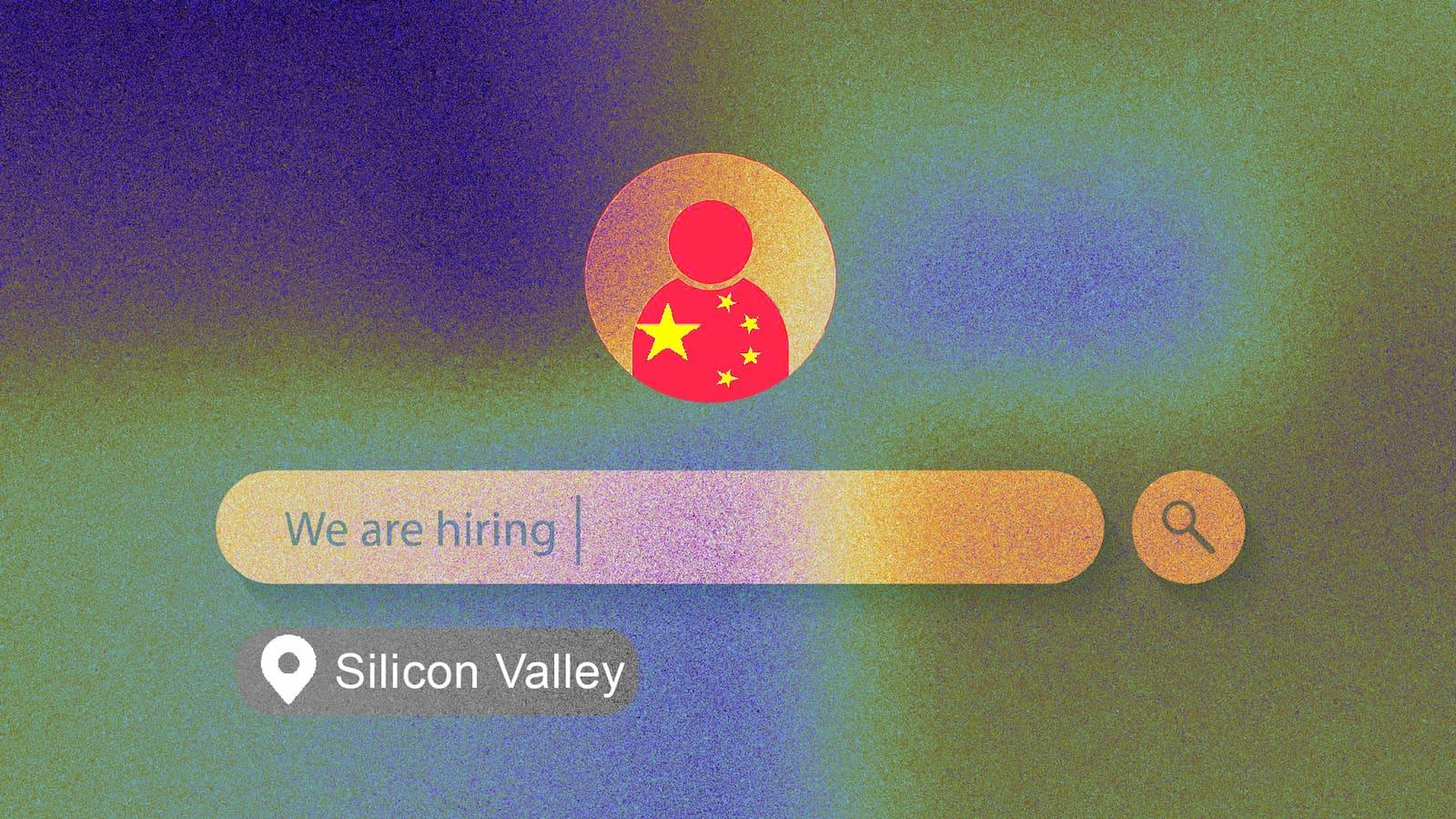
MiniMax's careers page now carries sixteen Bay Area openings, from research leads for its core model to specialists in finance, law and life sciences. Moonshot AI, which operates the Kimi assistant, advertises for solutions architects who will embed its technology in US enterprise accounts. ByteDance's Seed division lists seventy-one positions spanning San Jose, San Diego and Seattle, and the company tells candidates holding OpenAI or Anthropic offers that it will pay one and a half times those numbers to secure a signature.
The campaign reflects a clear strategic pivot: Chinese labs want a foothold in the market where the best models are built and where many of their most lucrative customers sit. Yet the early results suggest ambition outpaces execution. Headhunters working the Bay Area say hiring managers ask for "little geniuses" who cut their teeth at frontier labs, then watch candidates decline when compensation packages fall short or when the promise of working on state-of-the-art systems evaporates.
The numbers tell an uncomfortable story
Financial filings offer a stark view of the gap. MiniMax spent eighty-four million dollars on remuneration across four hundred and fifteen employees in 2025, yielding an average of two hundred and three thousand dollars per head. Z.AI's annualised cost for the first half of 2026 came to one hundred and forty thousand dollars per employee. Both figures blend share-based pay with salaries across all functions, and neither company breaks out what researchers earn.
OpenAI lists base salaries of two hundred and fifty thousand to four hundred and forty-five thousand dollars for research engineers in San Francisco, before equity. Three researchers based in Silicon Valley say total packages above one million dollars a year are routine among their peers at leading labs.
Revenue compounds the problem. Cheryl Wu, who studies AI economics at Yale University and the think tank GovAI, calculates that China's six largest AI companies together generated roughly one-tenth of the combined AI revenue that OpenAI and Anthropic recorded as of September. That constraint limits how much Chinese firms can raise, how much they can spend, and how competitive their offers become when bidding for scarce talent.
More than money
Compensation alone does not explain every decision. Wu notes that senior engineers at Meta have accepted lower titles to join Anthropic because the chance to work on frontier models outweighs rank or a modest pay cut. Chinese labs face the inverse challenge: their models trail the state of the art, so even matching salary leaves them at a disadvantage when a candidate weighs the technical trajectory of a career.
Three Chinese researchers working in the United States told Opentechwire they prefer American employers for better work-life balance and access to cutting-edge systems. Damien Ma, director of Carnegie China, observes that most top Chinese engineers feel comfortable in Silicon Valley partly because it is one of the few places outside China where intensive work hours - nine in the morning to nine at night, six days a week - do not draw disapproval. Yet even that cultural overlap has not been enough to reverse the flow.
The talent pipeline runs one way
More than half the world's leading AI researchers complete undergraduate degrees in China, Carnegie China found in September by tracing the educational backgrounds of authors published at NeurIPS, a premier conference. The United States nonetheless remains the dominant destination: in 2025 it recorded a net gain of two thousand one hundred and forty-five researchers while China saw a net loss of one thousand seven hundred and twenty-nine, the same analysis showed.
Chinese companies have secured occasional high-profile returns. Tencent recruited Yao Shunyu, formerly of OpenAI, to lead its AI research. ByteDance brought in Wu Yonghui, who spent seventeen years at Google, to head Seed's research in early 2025. Those successes remain exceptions. A recruiter working for Chinese labs in the Bay Area, speaking on condition of anonymity because she is not authorised to discuss her work publicly, said most approaches fail when candidates compare offers side by side.
Geopolitical friction looms
Washington has spent years restricting Chinese access to advanced Nvidia chips and scrutinising use of overseas data centres and cloud infrastructure. No equivalent rule yet bars Chinese AI companies from opening US offices or hiring American engineers, but the gap between policy and practice is narrowing.
The Chinese government proposed export controls on some of its most advanced models, particularly those trained on datasets it classifies as "important data," though the specifications remain vague. US officials and American labs, meanwhile, have accused Chinese developers of using distillation techniques to copy model capabilities without authorisation.
In the semiconductor industry the United States already requires American engineers to obtain a licence before working in Chinese fabrication plants. Neither country has imposed a blanket restriction on cross-border AI hiring, yet the intensifying competition over advanced technology makes talent recruitment a plausible next flashpoint.
Ma argues that scarcity drives the risk. "This elite talent is by definition scarce; we are talking about the top five to ten per cent of people. Who wouldn't want to hoard the best and the brightest for themselves?" He sees a scenario in which US companies invoke national security arguments to make it harder for Chinese labs to operate or attract top researchers, and envisions a mirror dynamic if American labs were to establish operations in China.
Precedent exists. In 2019 Huawei eliminated more than six hundred positions at Futurewei, its US research arm, after Washington added the telecom giant to a trade blacklist.
Not every lab joins the chase
DeepSeek, often cited as China's most prominent AI startup, continues to advertise research and engineering roles exclusively in China. The company recently announced roughly one hundred and fifty openings for engineers focused on agentic AI and back-end infrastructure. Founder Liang Wenfeng said in a 2024 interview that he hires mostly people educated in China and believes the company can cultivate elite researchers internally.
Wu remains sceptical that Chinese startups will pull enough top-tier talent to close the gap with America's leading labs. "They may have plans to hire, but that doesn't necessarily mean they'll be able to find the people," she said.