Hong Kong's Chip Listings Split as Investors Pick Winners
Two semiconductor suppliers from mainland China raised US$280 million but faced opposite market receptions, revealing how selective capital has become in Asia's crowded chip sector.
Two Debuts, Two Directions
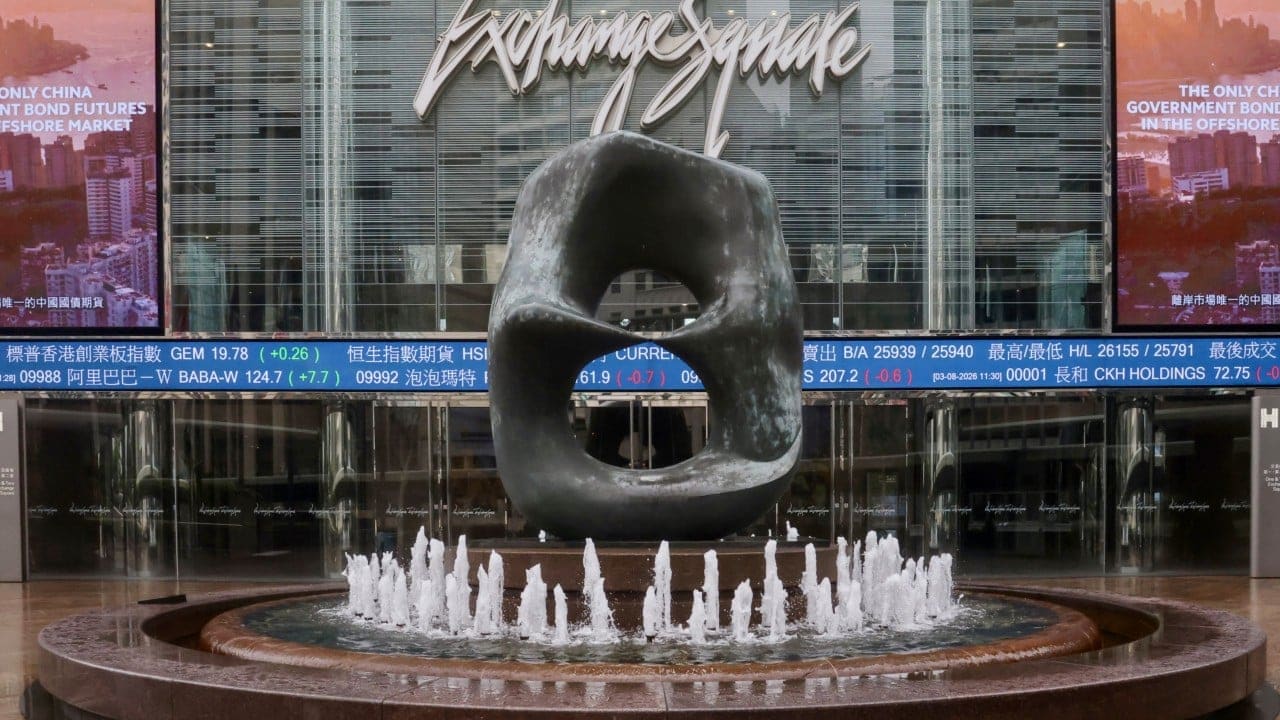
Hong Kong's capital markets offered a stark illustration of investor selectivity this week when two mainland Chinese semiconductor suppliers began trading with sharply contrasting fortunes. Suzhou Denglin Technology, a graphics processing unit maker that raised HK$1.4 billion (US$179 million) in the week's largest initial public offering, opened 10 November with an immediate drop of 8.6 per cent in morning trade. Its shares had been priced at HK$231 each.
The other debut told a different story. A second chip supplier, which together with Denglin brought the combined fundraising total to HK$2.2 billion (US$280 million), met a far warmer reception from traders. The divergence underscores a theme that has come to define Asia's semiconductor financing landscape over the past eighteen months: capital remains abundant, but it flows only to companies that can demonstrate differentiation in technology, customer base, or margin profile.
Hong Kong has become a primary venue for mainland chip companies seeking public listings, particularly as regulatory scrutiny in the United States continues to complicate cross-border offerings. Yet the appetite for semiconductor stocks in the city is no longer indiscriminate. Investors who poured into nearly every chip listing during the post-pandemic boom have grown more discerning, and the market now punishes companies perceived as undifferentiated or exposed to commoditised segments.
The GPU Maker's Stumble
Denglin's weak debut is particularly notable given the size of its offering. At HK$1.4 billion, the company's IPO was the largest to price in Hong Kong during the week, and graphics processing units have been among the most discussed categories in semiconductor investment over the past two years. Demand for GPUs has surged alongside the growth of machine learning workloads, and the category has attracted significant venture and public market capital.
Yet Denglin's immediate price decline suggests that investors saw reasons for caution. The company operates in a segment where competition is intense, both from established players with deep moats and from a cohort of newer entrants across Asia that have raised significant sums in recent quarters. Pricing power in the GPU market is concentrated among a small number of firms, and companies serving the mid-tier or serving specific regional markets often face margin pressure.
The HK$231 pricing also positioned Denglin at a valuation that may have left little room for upside in the eyes of public market buyers. Institutional allocations in Hong Kong IPOs frequently go to investors with short holding periods, and if the pricing leaves insufficient discount to perceived fair value, early trading can turn negative quickly. Denglin's morning drop reflects that dynamic.
What Differentiation Buys
The contrasting performance of the second chip supplier highlights what investors are willing to reward. While details of the second company's business model were not disclosed in the same level of detail, its stronger debut suggests it offered a clearer value proposition, whether through proprietary technology, exposure to faster-growing end markets, or a more defensible customer base.
Across Asia's chip sector, the companies that have sustained post-IPO momentum in recent years share common traits. They tend to operate in niches where they hold technical leadership, serve end markets with high switching costs, or benefit from long-term supply agreements that provide revenue visibility. Companies that position themselves as commodity suppliers, even in high-growth categories, have struggled to maintain investor enthusiasm once public.
This selectivity is not unique to Hong Kong. In Seoul, Singapore, and Shanghai, semiconductor IPOs have seen widening dispersion in first-day performance. The median debut gain for chip listings in Asia has narrowed over the past year, but the top quartile continues to post strong returns, indicating that capital is available for the right stories.
Hong Kong's Role in Chip Capital
Hong Kong's importance as a listing venue for mainland Chinese semiconductor companies has grown significantly since 2023. Regulatory changes in both the United States and China have made dual listings more complex, and the Hong Kong Stock Exchange has positioned itself as a natural home for companies that want access to international capital without navigating the full compliance burden of a US listing.
The city's investor base includes both mainland institutions, which bring familiarity with Chinese supply chains and customer dynamics, and international funds, which provide cross-border capital and valuation discipline. That mix can be an advantage for issuers, but it also means that companies face scrutiny from two angles: mainland investors assess competitive positioning within China's dense chip ecosystem, while offshore investors compare valuations and growth prospects to global peers.
For GPU makers in particular, that dual lens can be challenging. The category is dominated globally by a small number of firms with market capitalisations in the hundreds of billions of dollars, and investors with exposure to those leaders may be reluctant to allocate to smaller, regionally focused competitors unless the valuation discount is substantial. Denglin's pricing appears not to have offered that discount, at least not in the view of early buyers.
Busy Week, Selective Market
The HK$2.2 billion combined raise from the two chip suppliers marks one of the busier weeks for semiconductor listings in Hong Kong this year. The pace of IPO activity in the city has picked up in recent months after a slow first half, and the technology sector has accounted for a significant share of that recovery.
Yet the rebound in listing volume has not translated into uniformly strong aftermarket performance. Several technology IPOs in Hong Kong over the past quarter have traded below their offer prices within days of debut, and the pattern is consistent with what has been observed in other Asian markets. The era of reflexive buying in any chip-related offering has ended, and investors are now making sharp distinctions between companies based on competitive moats, financial trajectory, and management credibility.
For issuers, this environment requires more careful positioning. Companies that can articulate a clear technology edge, demonstrate customer concentration below certain thresholds, and show improving unit economics have been able to command premium valuations. Those that present as undifferentiated suppliers in crowded categories face scepticism, regardless of end-market tailwinds.
What This Signals for the Pipeline
The divergent debuts of Denglin and its counterpart will be studied closely by other mainland chip companies preparing for public listings. Several semiconductor firms with operations in Shenzhen, Shanghai, and Beijing are understood to be in the pre-IPO stage, and the reception that awaits them in Hong Kong or other venues will depend on how well they can differentiate themselves from the growing cohort of listed peers.
One area of focus for future issuers will be margin sustainability. Investors have become more attuned to the risk that even companies in high-growth chip categories can see margins compress if they lack pricing power. Gross margin trends and operating leverage will be scrutinised in roadshow presentations, and companies that cannot demonstrate improving profitability as they scale may struggle to generate demand at attractive valuations.
Another factor is geopolitical exposure. Semiconductor companies with significant revenue concentration in markets subject to export controls or trade restrictions face additional valuation risk. Investors are increasingly modelling scenario-based outcomes that incorporate potential policy shifts, and companies that can point to diversified customer bases or products outside the scope of current restrictions have an advantage.
Regional Context and Investor Sentiment
The performance of Hong Kong's chip listings sits within a broader regional picture. Across Asia, semiconductor companies have raised over US$12 billion in public equity year to date, according to exchange filings, with the majority of that capital going to firms based in China, South Korea, and Taiwan. The aggregate fundraising figure is up from the prior year, but the distribution of that capital has become more concentrated.
A small number of high-profile listings have accounted for a disproportionate share of the total raised, while many smaller offerings have struggled to reach their initial size targets or have priced at the low end of indicated ranges. This bifurcation reflects the same selectivity visible in Denglin's debut: investors are willing to deploy large sums, but only when they see clear reasons to believe a company can sustain growth and defend margins.
For Hong Kong specifically, the pipeline of mainland chip IPOs remains robust. The city's regulatory framework, language accessibility, and time zone alignment with both Asia and parts of Europe make it an attractive venue, and the Stock Exchange has been active in courting technology issuers. Yet the exchange's efforts will only translate into sustained listing activity if companies can meet the market's higher bar for differentiation.
The Path Forward for Denglin
Denglin's immediate challenge is to stabilise its share price and rebuild investor confidence. The company's post-listing performance over the next several weeks will depend on whether it can communicate a credible path to market share gains and margin improvement. Management teams of recently listed companies in Hong Kong often schedule investor meetings and site visits in the weeks following debut, and those engagements will be critical for Denglin.
The company will also face scrutiny over its use of IPO proceeds. Investors will watch for signs that capital is being deployed into research and development, capacity expansion in high-margin product lines, or strategic partnerships that enhance competitive positioning. Deployments into lower-return projects or excessive corporate overhead would likely weigh on the stock.
For the broader market, Denglin's debut serves as a reminder that even in a sector with strong long-term fundamentals, individual companies face real execution risk. The semiconductor industry's growth trajectory is well established, but that growth is not evenly distributed, and investors are making increasingly fine-grained judgements about which companies will capture value and which will see it erode through competition.