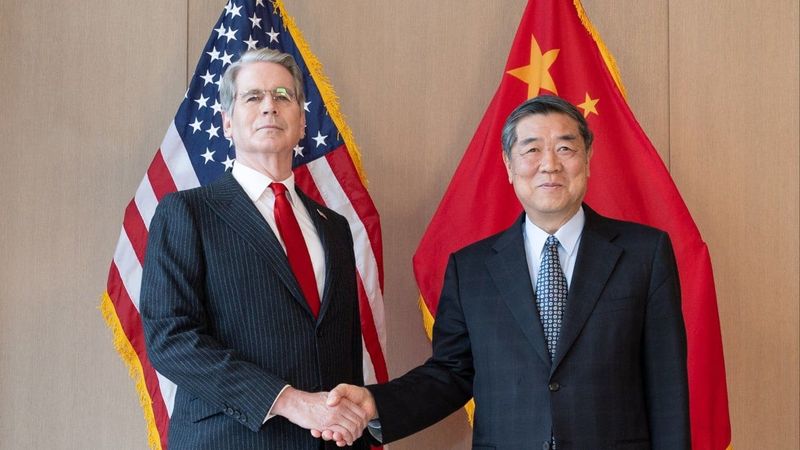
Can Safety Concerns Slow the AI Arms Race Between Washington and Beijing?
As American tech leaders call for development restraint, the geopolitical reality of US-China competition may make any meaningful pause impossible.

The Paradox of Pacing
A curious tension has emerged in global AI policy. Senior executives at major US technology firms have begun advocating for what they term "pacing" - a deliberate reduction in the velocity of AI capability advancement. The rationale centres on safety: as systems approach or exceed human-level performance in narrow domains, the argument goes, institutions need time to understand risks, establish guardrails, and build governance frameworks that can contain potential harms.
The appeal is intuitive. Rapid iteration has characterised the last four years of large language model development, with training runs scaling by orders of magnitude and capabilities expanding faster than most researchers anticipated. Incidents involving hallucinations, alignment failures, and unexpected emergent behaviours have lent weight to calls for caution.
Yet the context in which these calls are made matters enormously. The US and China are locked in a competition for AI leadership that both governments frame as existential. Export controls, talent restrictions, semiconductor supply chain interventions, and billions in state-backed research funding have turned artificial intelligence into the central theatre of technological rivalry. In that environment, unilateral restraint carries strategic risk.
At Opentechwire, we've tracked how pacing proposals have been received across research communities in both countries. The responses reveal a fundamental mismatch between safety logic and competitive dynamics.
What Pacing Actually Means
The term itself is deliberately ambiguous. Some proponents use it to describe slower model releases, giving society time to adapt. Others mean pausing training of frontier systems above a certain scale until safety benchmarks are met. Still others advocate for international agreements that bind all major actors to a common timeline.
The most concrete version involves technical thresholds. One proposal suggests halting training runs that exceed a defined compute budget - measured in floating-point operations per second, or FLOPS - until evaluations confirm that models below that threshold can be deployed without catastrophic risk. Another focuses on capabilities: if a system demonstrates the ability to autonomously replicate, deceive human overseers, or generate dual-use biological knowledge, development halts until containment measures are verified.
These frameworks assume a shared definition of risk and a willingness to forgo competitive advantage in favour of collective safety. Both assumptions are fragile when applied to US-China relations.
The View from Beijing
Chinese AI researchers and policymakers have shown limited enthusiasm for pacing as articulated by their American counterparts. Public statements from China's Ministry of Science and Technology and the Cyberspace Administration emphasise responsible development, but define responsibility through the lens of state oversight and ideological alignment rather than international coordination on safety timelines.
Several factors shape this scepticism. First, Chinese institutions remember the asymmetry of previous technology agreements. When the US held overwhelming advantages in semiconductors and aerospace, calls for restraint were rare. Now that China has closed gaps in machine learning infrastructure and model performance, proposals to slow down are perceived as efforts to lock in American leads.
Second, the current export control regime has made cooperation difficult even where mutual interest exists. US restrictions on high-end graphics processing units and chip fabrication equipment are designed explicitly to limit China's ability to train large models. In that context, American calls for both sides to slow development can appear disingenuous - one side advocating restraint while simultaneously working to deny the other side the tools needed to compete.
Third, China's AI governance model relies on centralised control and pre-deployment review rather than open debate about existential risk. The safety concerns that animate pacing advocates in the US - rogue superintelligence, loss of human agency, uncontrolled optimisation - are less prominent in Chinese policy discourse. The focus instead is on content moderation, data sovereignty, and ensuring that AI systems reinforce rather than undermine party authority.
The Prisoners' Dilemma at Scale
Game theory offers a useful lens. If both the US and China slow AI development, both gain time to address safety challenges and reduce the risk of catastrophic accidents. If one slows while the other accelerates, the accelerating side gains strategic advantage. If both accelerate despite risks, neither gains relative advantage but both face higher absolute risk.
The structure is a classic prisoners' dilemma, and the incentives favour defection. Without enforcement mechanisms - and there are none in this domain - each side has reason to doubt the other's commitment. Even if leaders in Washington and Beijing privately agree that unchecked AI development poses danger, domestic political pressures and the opacity of research programmes make verification nearly impossible.
The semiconductor supply chain adds another layer. Because advanced AI training depends on cutting-edge chips, any pacing agreement would need to include provisions on hardware. But chip production is itself a contested domain, with the US restricting exports and China investing heavily in domestic alternatives. A slowdown in AI development would not reduce competition; it would shift it to the underlying infrastructure.
Where Coordination Might Still Be Possible
Despite these obstacles, narrow areas of alignment exist. Both governments have expressed concern about AI-generated disinformation, particularly in the context of elections and public health. Both have an interest in preventing non-state actors - criminal networks, extremist groups - from accessing the most dangerous capabilities. Both face domestic pressure to ensure that AI systems do not amplify unemployment or social instability faster than institutions can adapt.
These shared concerns could form the basis for limited cooperation. Joint research on model interpretability, for instance, would help both sides understand what their systems are doing without requiring either to reveal proprietary architectures. Agreements on red-teaming standards - the adversarial testing used to identify vulnerabilities - could improve safety on both sides of the Pacific without constraining competitive dynamics.
Transparency around incidents might also be achievable. If a major lab in either country experiences a serious alignment failure or security breach, rapid information-sharing could prevent others from making the same mistake. The precedent exists in other high-risk domains: nuclear near-misses and aviation accidents are reported internationally precisely because the consequences of ignorance outweigh competitive considerations.
But these measures fall well short of pacing as originally conceived. They represent risk reduction at the margins, not a fundamental slowdown in capability development.
The Credibility Problem
Even if political will existed, technical challenges would remain. AI progress is harder to verify than nuclear arsenals. There are no centrifuges to count, no missile silos to photograph. Training runs can be distributed across data centres, and key breakthroughs often come from algorithmic efficiency gains that require no additional hardware. A nation could publicly commit to pacing while privately continuing frontier research.
The decentralised nature of AI development compounds the problem. In the US, much of the cutting-edge work happens in private companies, not government labs. Beijing has more direct control over its major AI firms, but even there, the ecosystem includes universities, startups, and research institutes with varying degrees of autonomy. Enforcing a slowdown would require monitoring thousands of actors, many of whom have strong incentives to push boundaries.
What Happens Next
The pacing debate will continue, but its influence on actual development trajectories is likely to be modest. Rhetoric around safety and responsibility will feature prominently in policy documents and international forums. Some voluntary commitments - pre-deployment testing, red team exercises, incident reporting - may gain traction. But the core dynamic of US-China competition will push both sides to maintain or increase investment in frontier AI, even as they acknowledge the risks.
The question is not whether fears about AI safety are justified. Many of the concerns raised by pacing advocates are technically sound and warrant serious attention. The question is whether those fears can overcome the logic of strategic rivalry. History suggests they cannot, at least not without a catalysing event - an accident severe enough to shift calculations on both sides.
Until then, the race continues. And the gap between what safety requires and what competition permits will remain one of the defining tensions of the decade.