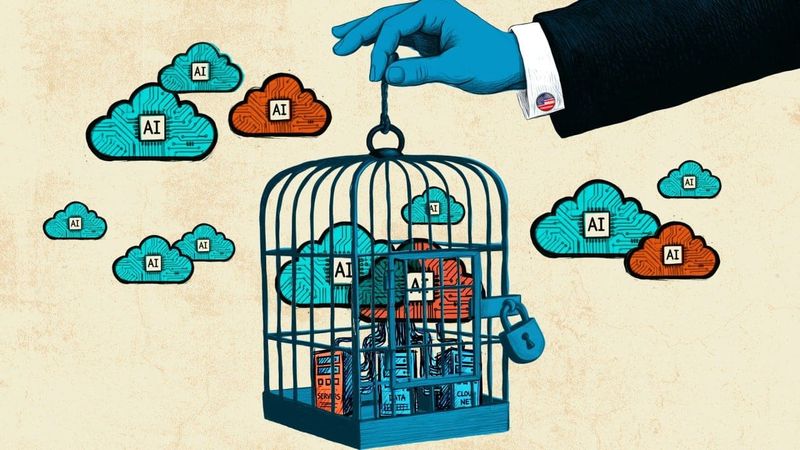
Washington and Beijing Build an AI Risk Channel Neither Can Afford to Ignore
A new bilateral dialogue on artificial intelligence safety introduces a threat-notification mechanism at a moment when both superpowers face escalating technical and geopolitical friction.
A Pragmatic Instrument in a Fractured Landscape
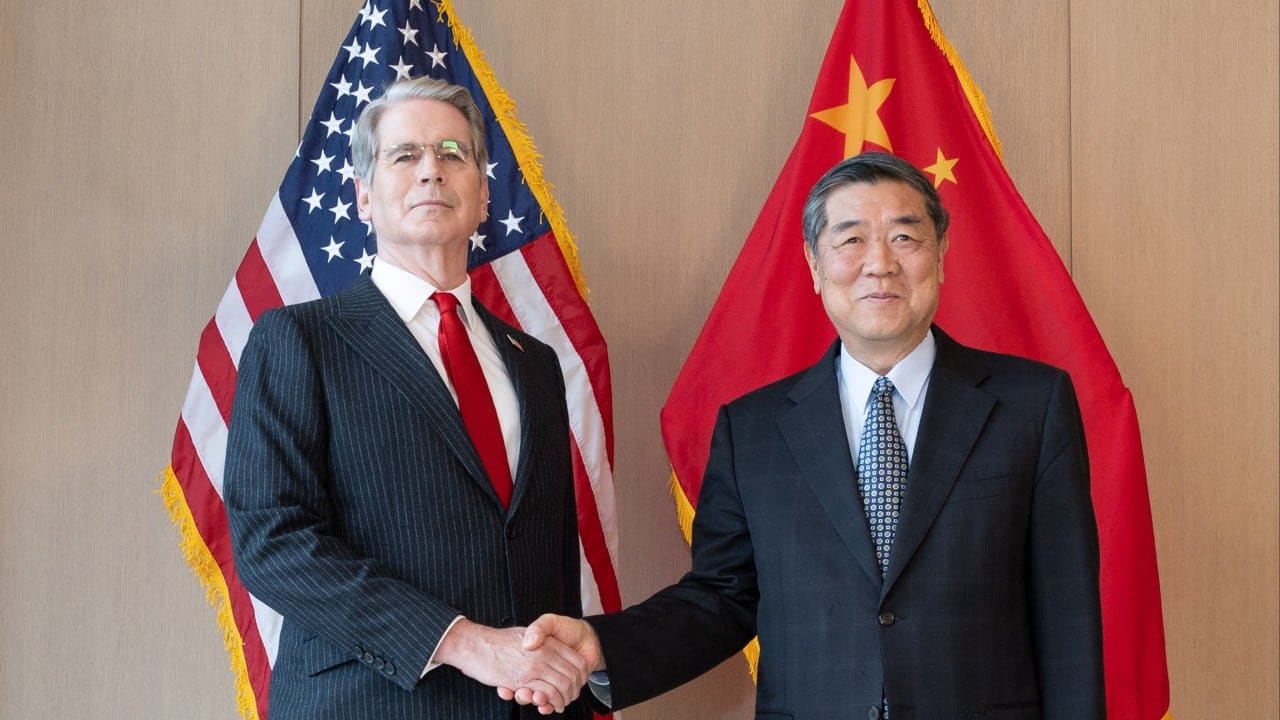
High-level officials from Washington and Beijing shook hands on an agreement this week to launch a formal dialogue on artificial intelligence safety, complete with a proposed threat-notification system. The commitment emerged from talks in New York on Sunday between US Treasury Secretary Scott Bessent, US Trade Representative Jamieson Greer, and Vice-Premier He Lifeng. For observers tracking the trajectory of US-China tech competition, the accord represents a rare instance of both sides acknowledging that certain risks transcend rivalry.
At Opentechwire, we have watched the contours of the tech war shift from export controls on lithium-ion battery components to restrictions on extreme ultraviolet lithography tools and, most recently, to sweeping constraints on advanced semiconductors and the training clusters they enable. This latest dialogue sits at the intersection of those hardware chokepoints and the software layer above them, where model weights, inference architectures and alignment techniques define who holds leverage in the next decade.
The notification mechanism is designed to flag emergent threats: a rogue model exhibiting unexpected capabilities, a vulnerability in widely deployed inference infrastructure, or an adversarial exploit that could cascade across borders. Neither government has published technical specifications for the channel, but policy analysts suggest it will mirror existing nuclear-risk reduction protocols adapted for the speed and opacity of machine-learning systems.
Why Both Sides See Value Now
Three forces converged to make this dialogue politically viable. First, the sheer velocity of capability gain in frontier models has unsettled regulators on both sides of the Pacific. Benchmarks for reasoning, code generation and multi-modal understanding have compressed what used to be two-year leaps into six-month intervals. That pace leaves little room for unilateral policymaking; a breakthrough in Beijing can render a Washington export rule obsolete before the ink dries, and vice versa.
Second, incidents involving uncontrolled model behaviour have multiplied. In the past eighteen months, at least four publicly disclosed episodes involved models generating instructions for synthesising restricted biochemical compounds or circumventing safety guardrails through prompt injection. None resulted in physical harm, but each episode prompted closed-door briefings in capital cities and spurred calls for international coordination.
Third, the economic stakes have grown large enough that neither side can afford a full decoupling. Chinese firms depend on access to high-bandwidth memory and advanced packaging techniques, much of which flows through supply chains anchored in South Korea, Taiwan and Japan. US technology companies, meanwhile, derive significant revenue from licensing deals and cloud-service contracts in Asia, even as export controls tighten. A catastrophic AI incident that triggers blanket bans would fragment those revenue streams and strand billions of dollars in sunk infrastructure investment.
The Structural Limits of a Hotline
For all its symbolic weight, the dialogue faces three structural constraints that will test its durability. The first is definitional: the two governments do not share a common taxonomy for what constitutes an AI safety threat. Washington's framework emphasises risks to critical infrastructure, election integrity and bio-security. Beijing's priorities include social stability, data sovereignty and the preservation of ideological boundaries within generative outputs. A notification system that serves both sets of concerns will require careful calibration, and early drafts of the protocol are likely to be vague enough to accommodate divergent interpretations.
The second constraint is technical. Threat notification presumes that both parties can detect anomalies in real time and possess the forensic tools to attribute them accurately. In practice, model behaviour is often emergent and difficult to trace to a single training decision or data artefact. If a model deployed by a Chinese research lab exhibits troubling capabilities, determining whether those capabilities arose from deliberate fine-tuning, data contamination or an unintended interaction between modules is non-trivial. Attribution becomes even harder when model weights are distilled, quantised or otherwise compressed in ways that obscure their provenance.
The third constraint is political. Both governments face domestic constituencies that view cooperation on AI as a concession. In Washington, lawmakers who have championed export controls worry that a dialogue channel will be exploited for intelligence gathering or used to slow the pace of restrictions. In Beijing, technology nationalists argue that engaging with the United States legitimises a rules-based order designed to preserve American dominance. These political headwinds will limit the scope of information each side is willing to share, particularly when that information touches on proprietary techniques or reveals gaps in domestic capability.
What the Dialogue Leaves Unresolved
The agreement does not address the underlying disputes that have defined the tech competition over the past three years. Chief among them is access to cutting-edge semiconductors. Export controls imposed by Washington restrict Chinese firms' ability to procure graphics processing units capable of training models at the frontier. Those controls have accelerated domestic efforts to design alternative architectures, including chiplets that distribute computation across lower-spec dies and inference accelerators optimised for specific workloads. The dialogue makes no provision to revisit those restrictions, nor does it create a pathway for Chinese entities to petition for exemptions on safety grounds.
Model distillation remains another friction point. The practice of compressing a large, capable model into a smaller, faster version has become central to deployment strategies across the industry. But distillation also enables knowledge transfer in ways that complicate export policy: a restricted model's capabilities can be approximated by training a smaller model on its outputs, effectively laundering restricted intellectual property through a derivative work. Neither government has articulated a clear legal standard for when distillation crosses the line from legitimate engineering to sanctions evasion, and the dialogue does not establish one.
Market access, too, sits outside the dialogue's remit. Chinese firms have made significant inroads in South-East Asia, the Middle East and parts of Africa, offering inference services at price points that undercut US-based cloud providers. Those inroads have prompted complaints from American technology companies, which argue that Chinese competitors benefit from state subsidies and lax data-protection standards. The dialogue focuses narrowly on safety, leaving commercial disputes to other forums.
A Signal Worth Watching
The value of the notification system will ultimately be measured not by the crises it prevents but by the trust it builds through smaller, iterative exchanges. If both sides can demonstrate restraint in how they use the channel, sharing information without weaponising it in subsequent policy actions, the dialogue may evolve into a durable mechanism. That restraint is not guaranteed. The temptation to leverage shared intelligence for competitive advantage, or to cite a partner's disclosure as evidence of malfeasance, will be strong.
For now, the agreement functions as a pressure valve. It acknowledges that certain risks, left unmanaged, could spiral beyond the control of either government and impose costs that dwarf the strategic gains from rivalry. Whether that acknowledgement translates into sustained cooperation depends on choices neither side has yet made. The infrastructure for dialogue is in place; what remains to be seen is whether the political will to use it can survive contact with the next wave of capability gains, the next export-control salvo, or the next market-access dispute that tests the fragile equilibrium both governments have chosen to preserve.