The Arithmetic Behind AI's $5 Trillion Bet
Hyperscalers are borrowing billions to build data centres across the US. A Wharton analysis shows they will need to nearly triple productivity by 2030 just to break even - or risk the largest capital misallocation in history.
A Finance Professor's Blunt Calculation
Jessica Wachter runs the numbers without sentiment. The University of Pennsylvania finance scholar set aside forecasts about artificial intelligence capabilities and customer adoption curves. Instead, she examined the capital expenditure announcements from Alphabet, Microsoft, Amazon, Meta and Oracle - collectively spending $750 billion this year on AI data centres - and worked backwards to a simple question: how fast must these companies grow their own earnings to justify the outlay?
Her conclusion, co-authored in a working paper earlier this year, cuts through the hype. By 2030, the five hyperscalers will need to increase their productivity by a factor of 2.7 to break even on cumulative investments approaching $1.1 trillion through 2027, after accounting for a 15 per cent return on capital and asset depreciation. Miss that target and the firms face interest payment shortfalls - and, in her words, bankruptcy risk. Achieve it and the result mirrors the US information technology boom that unfolded over a decade starting in the mid-1990s, compressed into half the time.
"That's a lot of growth," Wachter noted. If the productivity surge fails to materialise, the current buildout will rank as the largest misallocation of capital in modern economic history.
Revenue Gap and the Debt Treadmill
The mismatch between spending and revenue has become impossible to ignore. This year, hyperscaler AI revenues will total between $150 billion and $200 billion, according to Gary Gensler, former chair of the US Securities and Exchange Commission and now a professor at MIT Sloan. Against that, the same companies are deploying three-quarters of a trillion dollars into data centre construction, GPU procurement and power infrastructure. Free cash flow - operating cash minus capital expenditure - is sliding into negative territory across the group.
Alphabet reported a free cash deficit of $5.9 billion in its most recent quarter, the first shortfall since the company went public in 2004. Revenues of nearly $120 billion were consumed by AI infrastructure outlays. The other hyperscalers are following similar trajectories, borrowing heavily to maintain construction schedules. Morgan Stanley estimates that more than half of the $2.9 trillion the group will spend between 2025 and 2028 will come from external capital - bank loans, bond issuance and private credit arrangements.
Debt is expensive, and the obligations do not vanish if demand for compute capacity softens. Worse, the loans are being repackaged and distributed across pension funds, insurance portfolios and private credit vehicles, embedding AI data centre exposure deep inside the financial system. Stijn Van Nieuwerburgh, a finance professor at Columbia Business School, warns that many institutions and individuals hold this risk without knowing it, buried in funds that back life insurance policies and retirement accounts.
The Depreciation Time Bomb
Capital costs tell only part of the story. Graphics processing units - the specialised chips that power large language model training and inference - account for roughly 60 per cent of data centre expenditure. Performance of these chips doubles approximately every two years, a pace that drives model improvement but imposes a brutal replacement cycle on owners.
A data centre commissioned in 2025 will house chips that are functionally obsolete by 2027 if the owner wants to remain competitive with rivals deploying next-generation silicon. Mihir Kshirsagar at Princeton's Centre for Information Technology Policy describes the risk plainly: without continuous reinvestment in newer chips, facilities become "hulks" - stranded assets scattered across the American landscape, expensive shells with outdated electronics inside.
This dynamic means hyperscalers face a double burden. They must service the debt incurred to build the facilities, then find billions more every two to three years to refresh the compute hardware or accept that their infrastructure has lost its edge.
The $3.7 Trillion Revenue Requirement
If the construction pipeline continues through the early 2030s, the revenue targets become staggering. Van Nieuwerburgh models a scenario in which 183 gigawatts of AI compute capacity comes online between 2025 and 2032, at an estimated cost of $41 billion per gigawatt. Assuming a 10 per cent return - the floor most institutional investors will accept - required annual revenues reach approximately $3.7 trillion by 2032.
To hit that figure, the hyperscalers cannot rely on selling subscriptions and API tokens to enterprises indefinitely. At Opentechwire, we have tracked venture capital flowing into AI application startups across Asia and North America over the past eighteen months; those companies are themselves under pressure to demonstrate return on investment to their own backers. Eventually - perhaps already - customers paying for model access will demand measurable gains in efficiency, output or profit. If AI fails to deliver productivity improvements at the enterprise and economy-wide level, the willingness to pay evaporates.
Daron Acemoglu, the MIT economist and 2024 Nobel laureate, frames the dependency clearly. Without productivity gains rippling through the broader economy, enthusiasm for AI will sour, customers will cut spending, and hyperscaler revenues will stall. Sustainable investment over the next five to ten years requires visible, widespread productivity growth.
The Productivity Evidence So Far
Economy-wide statistics offer little encouragement. Most economists surveying national accounts data see negligible productivity growth attributable to AI through 2025. A survey of 6,000 senior executives across the United States, United Kingdom, Germany and Australia found that around 90 per cent report no productivity increase over the past three years. However, the same cohort anticipates total productivity gains of approximately 1.45 per cent over the next three years, with US executives expecting a 2.25 per cent rise.
Those expectations are driving behaviour. Respondents indicated plans to increase AI spending, leading survey authors to project roughly $280 billion in private-sector AI expenditure by the end of 2026 - welcome news for hyperscaler revenues. The mechanism executives plan to use, however, raises a separate risk. They expect productivity to rise through higher sales and significantly lower headcounts. If AI-driven efficiency translates into mass redundancies, public and political backlash will intensify, potentially blocking data centre construction and curtailing the investments needed to meet revenue targets.
A Parlay Bet With Three Legs
Gensler describes the situation as a parlay wager by capital markets and the broader economy. Success requires winning three interdependent bets simultaneously. First, hyperscalers must generate massive revenues from selling compute capacity and AI services. Second, AI must deliver economy-wide productivity growth that justifies continued enterprise spending. Third, both outcomes must occur while expensive frontier models - the large, resource-intensive architectures that require hyperscaler data centres - fend off competition from cheaper, smaller models that many businesses may find adequate.
The bets are linked. If productivity growth comes primarily from lightweight models such as DeepSeek, hyperscaler revenues collapse because customers no longer need to rent expensive infrastructure. If productivity growth materialises through workforce reductions, communities may resist data centre construction, strangling the supply of new capacity and limiting revenue potential. All three wagers must pay off together, or the entire structure unravels.
When Risk Spreads Beyond Balance Sheets
The stakes were contained when hyperscalers funded data centres from accumulated cash reserves. Losses would hit their own equity and shareholders. Borrowing changes the equation. The debt instruments financing these projects are now woven into the fabric of institutional portfolios, exposing entities far removed from the technology sector.
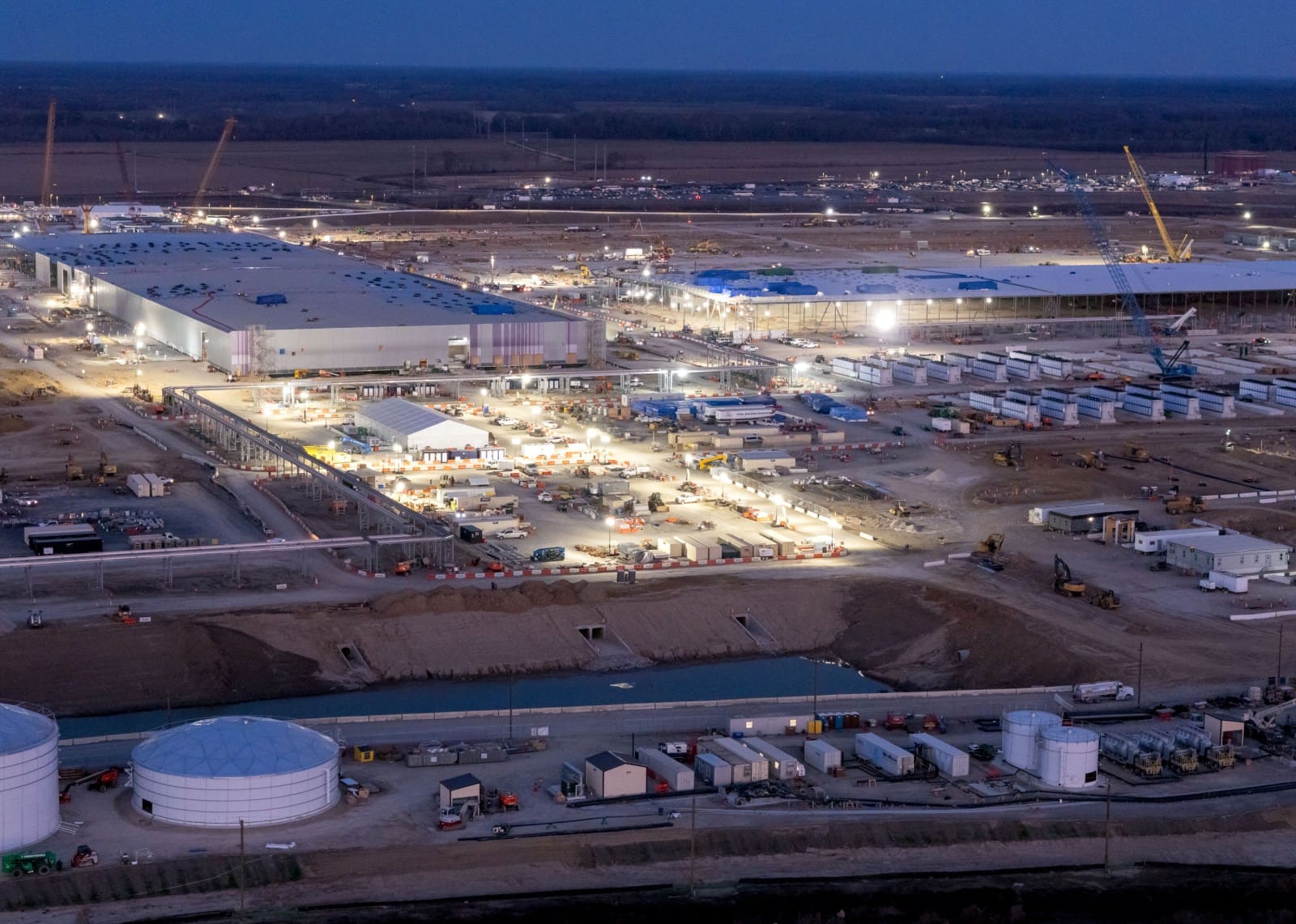
Meta's Hyperion data centre in Richland, Louisiana, illustrates the complexity. Announced in late 2024 at a $10 billion price tag for two gigawatts of capacity, the project swelled to $30 billion by the following autumn. Entergy Louisiana proposed three large natural gas power plants to supply the facility. The financing structure involves multiple layers of external capital, guarantees from financial institutions and exposure for private credit funds whose investors include pension schemes and insurance companies. Van Nieuwerburgh notes that individuals holding retirement accounts or life insurance policies may be indirectly backing data centre debt without awareness or consent.
The Stranded Asset Scenario
If demand for frontier model compute falls short of projections, the consequences extend beyond corporate earnings statements. Billions of dollars in physical infrastructure - buildings, cooling systems, electrical substations, fibre optic networks - will sit underutilised or idle. The GPU chips inside will depreciate on an unforgiving schedule regardless of utilisation rates. Lenders will demand repayment. Equity investors will face write-downs.
Wachter's stark framing applies: the buildout could become the largest misallocation of capital in history, a constellation of expensive, obsolete facilities that failed to generate returns commensurate with the investment. The financial losses would not remain confined to Silicon Valley or Redmond. They would ripple through credit markets, pension funds and insurance balance sheets, touching households across the country.
What Needs to Happen Next
For the hyperscaler bet to succeed, several conditions must align over the next five years. AI models must continue improving in ways that justify the cost and complexity of frontier architectures, maintaining customer willingness to pay premium prices for access. Enterprises deploying AI must achieve genuine productivity gains - higher output per worker, expanded services, new revenue streams - that validate their own spending and sustain demand for hyperscaler infrastructure. Policymakers and communities must see tangible local benefits from data centre investments, whether through employment, tax revenue or grid improvements, sufficient to maintain social licence for continued construction.
The arithmetic is unforgiving. A 2.7-fold increase in productivity by 2030 is not impossible - the US economy achieved similar growth during the dot-com era - but compressing that trajectory into five years while servicing mounting debt and refreshing depreciating hardware leaves little margin for error. The hyperscalers have placed an enormous wager. The rest of the economy, knowingly or not, is along for the ride.