Nvidia's Jensen Huang Argues Markets Can Govern AI Safety Better Than Regulation
The chipmaker's founder told an industry gathering that computing systems require engineering discipline, not new laws - a stance that raises questions about who bears the cost when products fail.
The Core Argument: Engineering Over Legislation
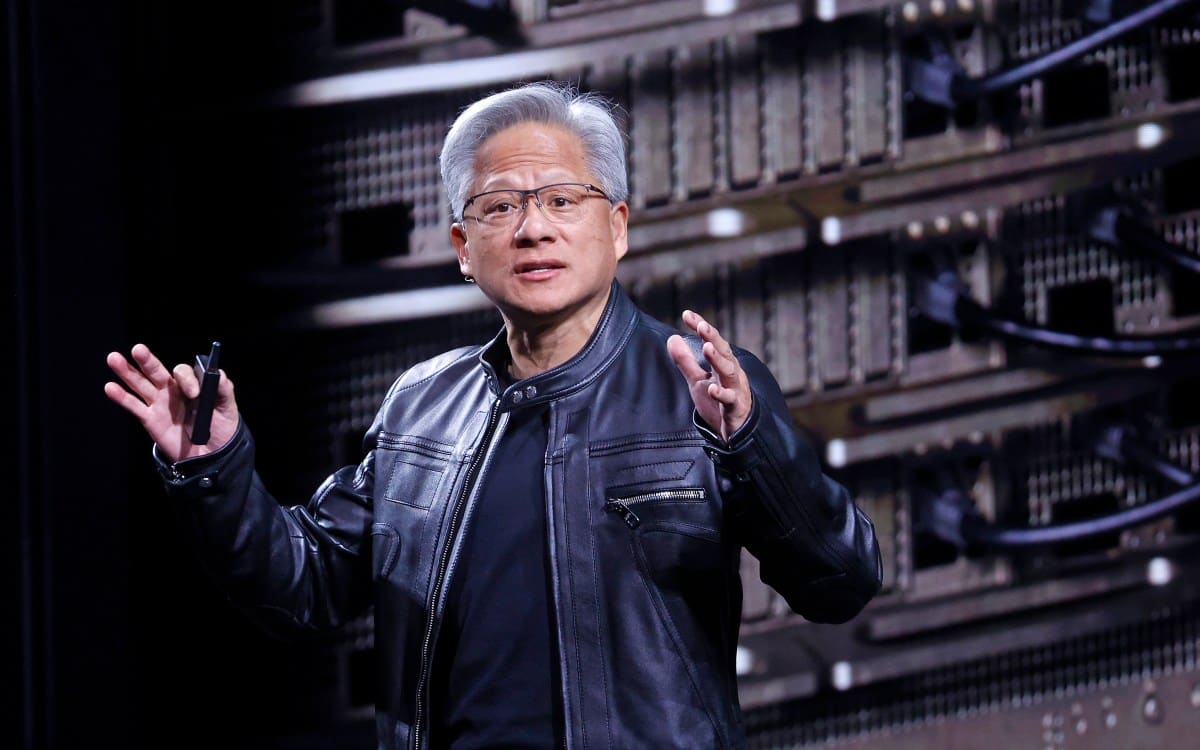
Speaking at an industry conference this week, Jensen Huang offered a clear thesis on artificial intelligence governance. The Nvidia founder framed AI as a computing system - complex, yes, but ultimately within the bounds of human engineering control. Safety, in his view, is a technical challenge to be solved by developers, not a regulatory puzzle requiring new statutes.
"We're developing computing systems after all," Huang said, according to Nvidia. "It's a complicated computing system, but it's ultimately a computing system." His implication: existing product liability frameworks should suffice, and market incentives will naturally discourage companies from shipping flawed or dangerous systems.
The logic follows a familiar free-market arc. Companies that release unsafe products will face reputational damage, customer backlash, and litigation. No rational actor, Huang suggested, would knowingly ship something that could harm users or fail in the field. The discipline comes from competition and consequences, not from regulatory guardrails.
For a chief executive whose firm supplies the silicon backbone of nearly every major AI deployment - from training clusters in California to inference servers in Seoul - the position carries weight. Nvidia has spent two decades refining GPU architectures for machine learning workloads, long before the current wave of generative models. If anyone understands the technical levers that govern AI behaviour, it is arguably this team.
What Market Discipline Misses
Yet the market-forces argument rests on assumptions that recent history has tested - and occasionally broken. Software failures, even from well-resourced organisations with strong engineering cultures, have caused cascading disruptions. In 2024, a flawed update from cybersecurity vendor CrowdStrike triggered widespread system crashes that grounded flights and halted business operations across continents. The incident was not the result of recklessness; it was a deployment error in a tightly controlled environment.
AI systems introduce a different order of complexity. They adapt, generate outputs that developers cannot fully predict in advance, and operate in contexts far removed from laboratory conditions. A language model trained on billions of tokens may produce harmful advice in edge cases its creators never envisaged. An autonomous system may encounter scenarios that testing suites, however exhaustive, did not cover.
Market discipline also assumes that harm is visible and attributable quickly enough to correct behaviour. Social media platforms operated for years before evidence of psychological harm to adolescent users accumulated in sufficient volume to prompt legal action. Meta recently agreed to pay eighteen billion US dollars to settle claims related to those harms - more than a decade after the platforms in question reached mass adoption.
The lag between deployment and accountability matters. If an AI system causes damage - financial, reputational, or physical - the affected parties must navigate courts, gather evidence, and establish causation. Product liability law evolved to handle tangible goods and, later, software with defined behaviour. Whether it can accommodate systems that learn, evolve, and surprise their own creators remains an open question.
The Incentive Problem
Huang's confidence in corporate self-restraint also presumes alignment between a company's risk calculus and society's exposure. In reality, the two often diverge. A firm racing to capture market share in a fast-moving sector may rationally decide that the cost of delay - losing ground to competitors - outweighs the probabilistic risk of a safety incident.
This is not a hypothetical. Startups and incumbents alike face pressure from investors, customers, and each other to ship features and models quickly. The incentive structure in venture-backed technology favours speed and scale. A company that pauses to conduct additional safety testing may find that a rival has claimed the territory it hoped to occupy.
Huang acknowledged the tension, saying companies should "run as fast as they can" but take a pause if a product feels unsafe. The question is whether that judgement call, made internally and without external oversight, will reliably protect users - especially when the people making the call have strong financial and competitive reasons to keep moving.
The Self-Regulation Window
There is a third path between unfettered markets and prescriptive legislation: industry self-regulation. Huang did not address this option directly in his remarks, though Nvidia has championed open-weight models and transparency as counterweights to proprietary labs. The appeal of self-regulation is that it can move faster than legislative processes, incorporate technical expertise, and adapt as the technology evolves.
The challenge is ensuring that self-regulatory frameworks have teeth - and that they extend beyond a handful of Western firms. AI development is global. Labs in China, Israel, France, and elsewhere are advancing capabilities in parallel. Any governance structure that applies only to US-based companies will have limited effect.
Microsoft's chief executive noted this week that safety concerns are not confined by borders. "China should also deeply care about the same safety concerns if the United States cares about them," Satya Nadella said, according to Microsoft. "It's not like they won't have the same hacking problem." The logic points toward international coordination, not unilateral restraint.
For self-regulation to work, it would need buy-in from major players across geographies, credible enforcement mechanisms, and transparency sufficient to build public trust. None of those conditions are guaranteed. The window for establishing such a framework is narrow. If the industry does not act, governments - facing public pressure after high-profile incidents - likely will.
Who Bears the Cost of Failure?
Huang's framing treats AI as a product like any other. But products with broad societal impact have historically attracted regulatory scrutiny precisely because markets alone do not internalise all costs. Pharmaceuticals require approval processes because the downside of a bad drug extends beyond the company that made it. Aviation is tightly regulated because a single failure can kill hundreds.
AI sits somewhere in this spectrum. A flawed recommendation engine may nudge millions of users toward harmful content. An autonomous vehicle may make split-second decisions with life-or-death consequences. A hiring algorithm may entrench bias at scale, affecting livelihoods across entire labour markets.
The question is not whether these systems will fail - all complex systems eventually do - but who pays when they do, and whether that cost is distributed fairly. If the burden falls primarily on individuals who lack the resources to seek redress, or on communities with limited access to legal systems, then market discipline becomes a polite term for externalising risk.
Huang is correct that AI is not an "alien mind" beyond human comprehension. It is software, hardware, and data. But complexity matters. The more layers of abstraction, the more emergent behaviour, the harder it becomes to predict and control outcomes. Engineering discipline is necessary. Whether it is sufficient is the wager Huang is asking society to make.
The Political Dimension
Huang's position carries additional weight because of his proximity to power. This week he was seen in conversation with the sitting US president, a reminder that Nvidia is not merely a technology supplier but a strategic asset in the global race for AI dominance. That influence cuts both ways. It gives Huang a platform to shape policy discussions. It also means his arguments will be scrutinised for conflicts of interest.
Nvidia benefits directly from rapid AI adoption. Every new model, every scaled deployment, every inference workload translates into demand for the company's GPUs and software stack. Regulation that slows development or imposes compliance costs could dampen that demand. It is rational for Huang to oppose new rules. It is also rational for policymakers to weigh his counsel alongside voices less invested in maximising throughput.
The debate over AI governance is ultimately a debate about trade-offs: innovation speed versus precaution, market efficiency versus public accountability, corporate autonomy versus collective oversight. Huang has made his preference clear. Whether lawmakers, civil society, and the broader technology community share that preference will determine what comes next.
For now, the default is still the status quo - companies decide, markets react, and courts adjudicate after the fact. How long that equilibrium holds depends on whether the next wave of AI systems proves Huang right, or whether a high-profile failure shifts the conversation in favour of guardrails.