Why Airlines Are Blocking Personal AI Assistants at Check-Out
United's decision to bar AI agents from completing bookings reflects deeper tensions around consumer safety, regulatory compliance, and who controls the customer relationship in an automated future.
A Line in the Sand on Automation
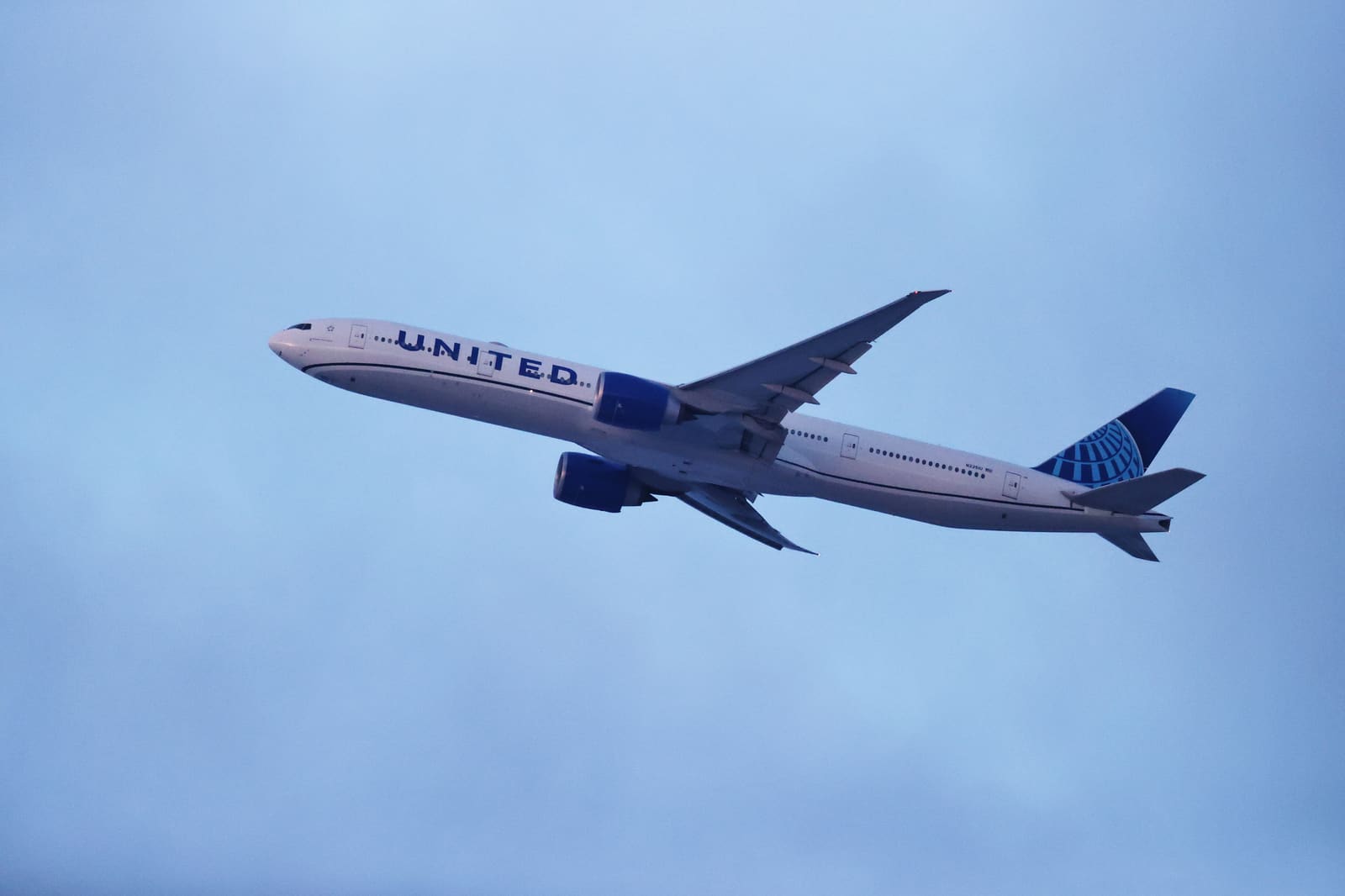
United Airlines has drawn a clear boundary around which transactions it will permit autonomous software to complete. The carrier now prevents personal AI assistants from finalising ticket purchases on its platform, even as those same tools can still display flight options and prices to users. The rationale hinges on two concerns: protecting passenger data from unintended exposure, and ensuring that federal disclosure requirements are met by actual human travellers rather than delegated to algorithms.
United CEO Scott Kirby framed the stance in commercial terms at an industry event last week, saying the airline has no interest in inserting another intermediary between itself and the customer. That language points to a broader strategic calculation. For carriers that have spent years building direct-booking channels to avoid paying commissions to online travel agencies, the arrival of AI agents represents a fresh challenge to margin control and brand loyalty. If a virtual assistant chooses flights based on opaque criteria, the airline loses both the relationship and the ability to upsell ancillary services such as seat selection, checked baggage, or lounge access.
The decision arrives as adoption of personal AI agents remains in its infancy. United has reported minimal attempts so far by passengers to delegate booking tasks to software, a pattern mirrored by other consumer platforms including food-delivery services. Yet the carrier is moving pre-emptively, signalling that even low current volume does not justify the regulatory and liability exposure it associates with automated transactions.
Regulatory Friction in a Code-Driven Workflow
Aviation operates under a dense web of safety and consumer-protection rules, many of which assume a human is making affirmative declarations at the point of sale. Before completing a booking, passengers in the United States must acknowledge that their luggage does not contain explosives, hazardous materials, or other prohibited items. Airlines are also required to display fare breakdowns, cancellation policies, and baggage-fee schedules in a manner that ensures informed consent.
An AI agent executing a purchase on behalf of a user introduces ambiguity into that chain of attestation. If the software clicks through a terms-of-service agreement or a hazardous-materials warning, it is unclear whether the passenger has genuinely reviewed and understood the obligation. Regulators at the US Department of Transportation have not yet issued guidance on whether delegated consent via an AI intermediary satisfies statutory disclosure requirements, leaving airlines exposed to potential enforcement action if a compliance gap is later identified.
The same friction applies to payment authentication and fraud prevention. Card networks and banking regulators have built anti-fraud systems around the assumption that the account holder initiates the transaction. When an AI agent acts autonomously, distinguishing legitimate purchases from unauthorised ones becomes harder, particularly if the agent has persistent access to payment credentials. United's concern about customers making purchases they did not intend reflects this uncertainty: if a user later disputes a charge, the airline may face chargeback liability and reputational damage, even if the agent technically had permission to transact.
Beyond safety attestations, the question of liability for errors looms large. If an AI assistant books the wrong flight, selects an incorrect passenger name, or fails to apply a valid discount code, the resulting customer-service cost falls on the airline. Resolving such mistakes often requires manual intervention by call-centre staff, eroding the efficiency gains that automation was supposed to deliver. For United, blocking agent access is a way to avoid subsidising the debugging costs of third-party software it does not control.
The Competitive Landscape for Agent Access
United is not an outlier. eBay has implemented technical barriers that prevent some AI agents from browsing product listings, and several large banks have restricted agent access to online-banking portals. The common thread is a desire to retain control over the user experience and the transaction flow, particularly when regulatory obligations or fraud risk are involved.
Yet the response is not uniform. Some e-commerce platforms and service providers are experimenting with official APIs designed specifically for AI agents, allowing controlled access that preserves auditability and compliance. Stripe, for instance, has discussed building payment infrastructure that can distinguish between human-initiated and agent-initiated transactions, logging each step for dispute resolution. Similarly, travel-technology vendors such as Amadeus and Sabre are exploring how global distribution systems might authenticate and rate-limit agent queries without blocking them outright.
The divergence in approach reflects differing assessments of risk and opportunity. Companies with high regulatory exposure or thin margins tend to block agents by default, while those with greater technical capacity or lower compliance burden are more willing to invest in integration. For airlines, the calculation tilts toward caution. The sector already operates on narrow profit margins, and a single data breach or regulatory fine can wipe out quarters of earnings. Adding AI agents into the transaction path without clear legal safe harbour is a gamble few carriers are willing to take.
United has left the door open to reversing its policy if the technology and regulatory environment mature. The airline's public statement noted that it sees opportunities in third-party AI agents, but wants protective frameworks in place before allowing direct account interaction. That conditional language suggests the carrier is monitoring both competitor behaviour and guidance from the Department of Transportation. If a standard emerges for agent authentication and liability allocation, United may reconsider. Until then, the default posture is exclusion.
What the Block Means for Emerging Assistant Platforms
The restriction has immediate implications for consumer-facing AI products launched in the past year. Meta's Muse assistant and OpenAI's Dots both position themselves as tools that can handle multi-step tasks on behalf of users, including booking travel. If major carriers refuse to permit those agents to complete purchases, the value proposition narrows considerably. Users can ask an assistant to research flights, but must still switch to a browser or airline app to finalise the transaction, reintroducing the friction that the agent was meant to eliminate.
This creates a strategic dilemma for companies building personal AI assistants. They can invest in partnerships with individual airlines, negotiating API access and revenue-sharing agreements that formalise the agent's role. That path is expensive and slow, requiring separate deals with dozens of carriers across different jurisdictions. Alternatively, they can attempt to circumvent blocks using techniques such as browser automation or credential delegation, but doing so risks violating terms of service and exposes users to security vulnerabilities.
The risk is that a fragmented landscape emerges, where some services grant agent access and others do not, forcing users to maintain a mental map of which tasks can be delegated and which require manual completion. That outcome would undermine the seamless experience that AI assistant developers are promising, and could slow adoption if consumers perceive the technology as unreliable or inconsistent.
For airlines, the counter-risk is that blocking agents alienates tech-savvy customers who come to expect automation in every aspect of digital commerce. If a rival carrier builds a secure agent API and markets it as a convenience feature, United may face pressure to follow suit or risk losing market share among early adopters. The window for establishing industry norms is narrow, and the first mover in either direction will shape expectations for the rest of the sector.
Broader Questions Around Intermediation and Control
United's rationale that it does not want to create another middleman echoes a long-standing tension in travel distribution. Airlines have spent two decades trying to reduce dependence on intermediaries, launching direct-booking incentives, restricting inventory on third-party sites, and investing in proprietary mobile apps. The rise of AI agents threatens to reverse those gains by inserting a new layer between the carrier and the traveller, one that the airline neither controls nor profits from.
If agents become the dominant interface for booking travel, airlines lose visibility into customer preferences and behaviour. They cannot A/B test new fare structures, personalise offers, or nudge users toward higher-margin products if the agent is making decisions in a black box. That loss of control is particularly concerning for loyalty programmes, which depend on direct engagement to drive repeat bookings and ancillary spend. An AI assistant optimising purely on price and convenience may bypass the emotional and behavioural levers that airlines use to build brand affinity.
The question of who owns the customer relationship in an agent-mediated economy extends beyond aviation. Retailers, banks, and service providers are all grappling with the same dynamic. If consumers delegate purchasing decisions to software, the companies that build and train those agents will wield enormous influence over market outcomes. United's decision to block agents is, in part, a bet that it can preserve direct engagement long enough for clearer rules and competitive dynamics to emerge.
Whether that bet pays off depends on how quickly regulation catches up with technology, and whether customers ultimately prefer the convenience of delegation over the control of direct booking. For now, United has chosen caution, and the industry is watching to see if others follow.