Washington Extends DeepSeek Ban to Civilian Agencies as AI Trade Tensions Escalate
The Department of Homeland Security's latest directive blocks not only the Chinese startup's products but also third-party services built on its technology, widening the scope of US export-control policy.
A Broader Net
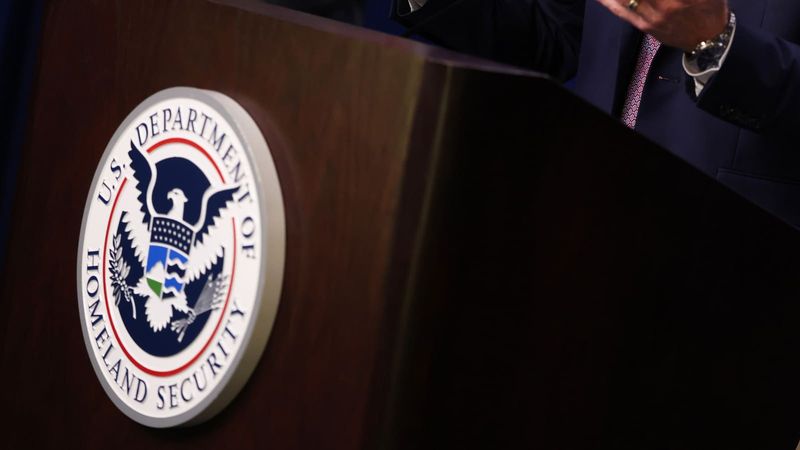
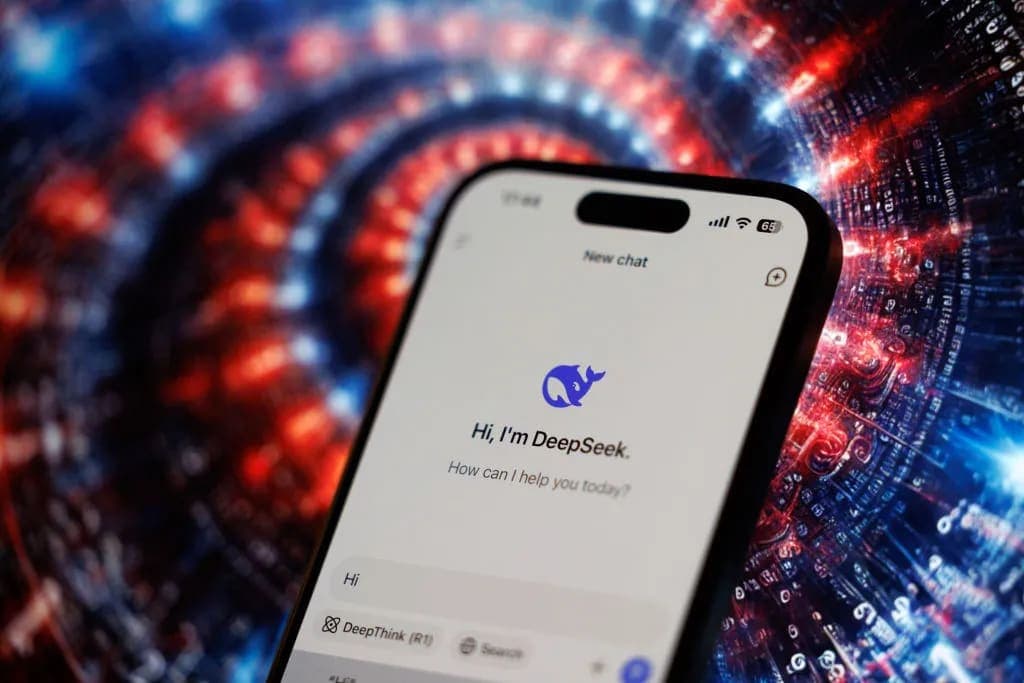
The Department of Homeland Security has instructed federal civilian agencies to cease purchasing products and services from Chinese AI startup DeepSeek and to purge existing installations from government IT infrastructure. The directive, issued over national security concerns, reaches beyond the Hangzhou-based company's own offerings to encompass third-party tools and platforms that incorporate DeepSeek's models or technology stack, though agencies may apply for exemptions on a case-by-case basis.
At Opentechwire, we have tracked the US government's incremental approach to restricting Chinese AI tools since late 2025. This latest order represents a significant expansion. Whereas legislation passed in December 2025 targeted intelligence and national-security systems, the new instruction brings civilian agencies under the same umbrella, covering both procurement pipelines and legacy deployments already in operation.
The rationale centres on data sovereignty. The Department of Homeland Security warned that information entered by US government users could become accessible to Chinese authorities under domestic laws that compel data handover, creating a potential channel for sensitive material to leave federal control. For agencies handling citizen records, procurement data, or policy drafts, the risk calculus has shifted sharply enough to justify a blanket removal order.
Beijing's Countermove
China's Foreign Ministry responded within hours. Spokesperson Mao Ning told reporters that Beijing opposes the "overstretching" of national security and the "politicising" of technology and trade issues, adding that the government will "resolutely safeguard the legitimate rights and interests of Chinese enterprises." The language mirrors statements issued during earlier rounds of semiconductor and telecommunications restrictions, signalling that Beijing views the DeepSeek order as part of a continuum rather than an isolated incident.
Meanwhile, recent reporting suggests China is considering export controls on twenty-three AI-related technologies, including chip-design methodologies and certain advanced model architectures. The draft list, which surfaced last week, is framed as a measure to address security and misuse risks, but its timing suggests a tit-for-tat dynamic. If enacted, the restrictions would create new friction for multinational firms that rely on Chinese research labs or fabrication partners for AI development.
The Distillation Allegations
DeepSeek has faced persistent scrutiny over its training practices. In September, the US government named the startup alongside Alibaba, Moonshot AI, and three other Chinese AI companies in a report alleging the use of large-scale model distillation to extract information from American AI systems. Model distillation is a technique in which outputs from one model are used to train a smaller, faster, or more efficient derivative, effectively transferring knowledge without direct access to the original training data or weights.
Two leading US AI labs have voiced concerns independently. Earlier this year, OpenAI informed US lawmakers that it had observed suspected attempts by DeepSeek to distill its models. Anthropic separately reported identifying unauthorised attempts by DeepSeek and other Chinese entities to collect outputs from Claude, its flagship conversational model. Neither company has disclosed technical details of the alleged attempts, and DeepSeek has not issued a public statement addressing the claims.
The distillation question sits at the intersection of technical capability and legal interpretation. Open-weight models, which DeepSeek releases, are designed to be studied, fine-tuned, and integrated into downstream applications. Yet when outputs from proprietary, closed models are systematically harvested to train competing systems, the practice edges into contested territory, particularly when the models in question are subject to export controls or terms-of-service restrictions.
The R1 Moment and Market Reaction
DeepSeek entered the global spotlight in January 2025 with the release of its R1 reasoning model. The model demonstrated competitive performance on benchmark tasks while reportedly requiring a fraction of the compute budget associated with comparable systems from OpenAI and Meta. The announcement triggered a sharp sell-off in Nvidia shares, as investors recalibrated assumptions about the capital intensity and margin structure of the AI infrastructure market.
The R1 launch also intensified regulatory attention. Governments and agencies in multiple jurisdictions began reviewing DeepSeek's data-handling practices, corporate structure, and ties to Chinese state entities. The scrutiny has not been confined to the United States. Regulators in the European Union and several Asia-Pacific countries have opened preliminary assessments, though none has yet imposed restrictions comparable to Washington's latest order.
For DeepSeek, the challenge is structural. The company operates under Chinese jurisdiction, which means compliance with domestic data laws is non-negotiable. At the same time, access to international markets, particularly in government and enterprise segments, increasingly hinges on demonstrating data isolation and operational independence from state influence. Squaring that circle has proven difficult for Chinese technology firms across sectors, from telecommunications equipment to cloud services, and AI is following a similar trajectory.
Implications for the Federal IT Landscape
The immediate impact of the Homeland Security directive will be felt in procurement offices and IT operations centres across civilian agencies. Contracts that include DeepSeek-based components will need to be reviewed, and in many cases renegotiated or terminated. For agencies that have integrated third-party platforms built on DeepSeek models, the remediation process will be more complex, requiring audits to identify dependencies and alternative solutions to maintain functionality.
The exception process built into the order offers a release valve, but it also introduces friction. Agencies seeking exemptions will need to document their use cases, justify the absence of viable alternatives, and propose risk-mitigation measures. That administrative burden is likely to deter all but the most critical applications, effectively making the ban near-universal in practice.
The order also sets a precedent. If the US government is willing to block not only a foreign AI provider but also the ecosystem of derivative products, other jurisdictions may follow suit. For software vendors and systems integrators, the calculus around incorporating Chinese AI models into their stacks has become materially riskier, even for products destined for non-government markets.
The Competitive Context
DeepSeek's low-cost, open-weight approach has made it an attractive option for organisations seeking to deploy AI capabilities without the recurring subscription costs or vendor lock-in associated with closed platforms. That value proposition has resonated particularly in cost-sensitive markets across Southeast Asia, Latin America, and parts of Africa, where DeepSeek has gained traction over the past year.
The US order does not directly affect those markets, but it shapes the broader competitive environment. American AI companies have lobbied for stronger restrictions on Chinese competitors, arguing that state subsidies, lenient data-privacy regimes, and access to vast domestic datasets create an uneven playing field. Chinese firms counter that US export controls on advanced semiconductors and cloud infrastructure have artificially constrained their ability to compete on equal terms.
The result is a fragmented landscape. In markets where US influence is strong, Chinese AI tools face mounting barriers. In markets where China holds greater sway, American platforms encounter reciprocal friction. For multinational enterprises operating across both spheres, the compliance burden is rising, and the risk of being caught in the crossfire is real.
What Comes Next
The immediate question is whether other governments will issue similar directives. The European Union, which has taken a more regulatory than prohibitive approach to AI governance, is unlikely to mirror the US order in the near term. However, individual member states with heightened security concerns, particularly those in Eastern Europe, may move independently.
In Asia, the picture is more varied. Japan and South Korea, both close US allies with significant AI ambitions, are under pressure to align with Washington's stance. Singapore, which has positioned itself as a neutral hub for tech investment and research, faces a more delicate balancing act. India, which has its own tensions with China, may see the US move as validation for a more restrictive posture, though New Delhi has historically been cautious about adopting US policy wholesale.
For DeepSeek, the path forward is narrow. The company can double down on markets where US restrictions carry less weight, but that strategy limits growth potential and reinforces perceptions of geopolitical alignment. Alternatively, it can attempt to establish operational separation, perhaps through offshore subsidiaries or independent governance structures, though such arrangements have proven difficult to sustain under scrutiny.
The broader takeaway is that AI is no longer primarily a technical or commercial contest. It is a domain of statecraft, where decisions about model architectures, data flows, and supply chains are increasingly shaped by national-security considerations. The Department of Homeland Security's order is one more marker on that trajectory, and it is unlikely to be the last.