DHS Bars DeepSeek From Federal Networks on Data-Transfer Grounds
A Federal Register notice labels the Chinese AI firm a security risk and orders civilian agencies to strip its products from government systems within weeks.
The Ban and Its Scope
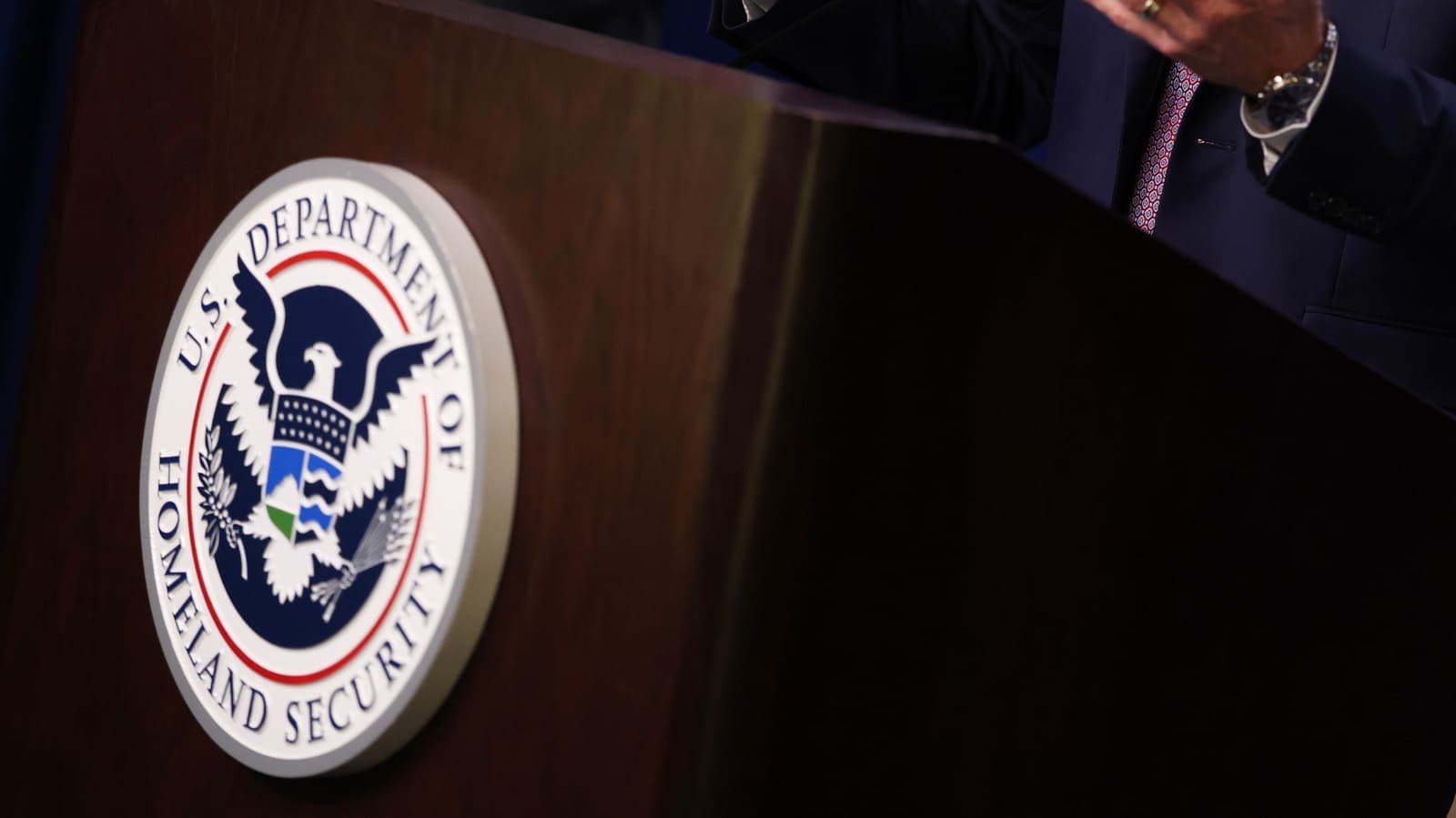
The Department of Homeland Security has ordered every civilian federal agency to excise DeepSeek products from government IT infrastructure, marking the most explicit Washington rebuke yet of the Hangzhou-based AI developer. A notice filed in the Federal Register on 19 October 2026 characterises DeepSeek's models as vectors for "transfer of sensitive data" belonging to US government personnel and contractors to authorities in China. The directive applies to dozens of agencies spanning the Environmental Protection Agency, the Federal Communications Commission, and the Department of Education, among others.
Under the order, any existing DeepSeek software must be removed, new installations are forbidden, and the company is barred from bidding on or fulfilling federal contracts. DHS cited the risk that DeepSeek models "could contain malware or other security vulnerabilities" but offered no technical forensics or incident timeline to substantiate the claim. The language mirrors broader executive-branch concerns about Chinese-origin software in critical infrastructure, though this is the first time an AI model provider has faced such a sweeping federal prohibition.
Timing and the V4.1-Flash Release
The ban arrives two days after DeepSeek unveiled V4.1-Flash-1017, a model the firm described as delivering higher accuracy and lower latency than its predecessor. The timing is unlikely to be coincidental. At Opentechwire, we have tracked how DeepSeek's successive releases have unsettled incumbents in Silicon Valley and drawn bipartisan attention on Capitol Hill. The company's ability to train competitive large language models at a fraction of the reported cost of GPT-4 or Gemini has invited both admiration and suspicion, the latter now crystallising in policy.
V4.1-Flash entered a market already jittery about Chinese AI capabilities. DeepSeek's inference pricing undercuts OpenAI and Google by an order of magnitude in some benchmarks, and the firm has published research suggesting novel optimisations in mixture-of-experts architectures. Whether those optimisations rest on export-controlled US chips acquired through indirect channels, or on algorithmic breakthroughs that sidestep hardware constraints, remains a matter of speculation and, evidently, regulatory anxiety.
The Data-Transfer Rationale
DHS anchors its prohibition on the assertion that using DeepSeek products risks funnelling sensitive government information to Beijing. The Federal Register notice does not enumerate which data types or transmission pathways prompted the finding, nor does it cite classified intelligence assessments. What is clear is that the concern extends beyond espionage to include the operational security of agency workflows that might touch employee records, contractor rosters, internal correspondence, or policy drafts.
The rationale presumes that any data submitted to a DeepSeek API endpoint or processed by an on-premises DeepSeek model could be logged, aggregated, or otherwise accessible to the company's servers in China. Chinese data-security and intelligence laws do compel firms to share information with state authorities upon request, a legal reality that has underwritten US restrictions on Huawei, TikTok, and other technology providers. DeepSeek has not publicly disclosed the jurisdictional boundaries of its data storage or the governance framework for model telemetry, leaving agencies with little basis to perform independent risk assessments.
Legislative Precedent and Escalation
This is not the first Washington action against DeepSeek. In early 2025, two members of Congress introduced legislation to prohibit the company's chatbot from government-issued devices, citing national-security grounds similar to those invoked for TikTok. That bill stalled in committee, but the executive branch has now bypassed the legislative process through a departmental order that carries immediate force across the civilian executive branch.
The escalation reflects a broader hardening of US policy toward Chinese AI. Export controls on advanced semiconductors, updated multiple times since 2022, have sought to limit Beijing's access to the Nvidia H100 and successor chips that power frontier model training. DeepSeek's continued competitiveness despite those controls has prompted questions in policy circles about enforcement gaps, stockpiling, or alternative supply chains routed through third countries. The DHS ban can be read as an acknowledgment that export controls alone have not contained the diffusion of capable Chinese models.
Industry Implications and the Asia AI Landscape
For enterprises watching from Seoul, Singapore, or Tokyo, the ban offers a preview of the compliance landscape that may ripple outward. Multinational corporations with US government contracts or aspirations to sell into federal markets will now need to audit their AI supply chains for DeepSeek dependencies, much as they have done for Huawei networking gear or Hikvision surveillance cameras. Software-as-a-service platforms that embed third-party models face the same scrutiny.
At the same time, DeepSeek's cost advantage and technical performance have made it an attractive option for startups and research labs across Asia that do not face US procurement restrictions. The company has cultivated partnerships with universities in Southeast Asia and opened API access to developers in markets where OpenAI and Anthropic remain unavailable or prohibitively expensive. The bifurcation of the AI stack along geopolitical lines, already visible in semiconductor supply chains, is now extending to the model layer.
What Comes Next
The DHS order is silent on enforcement mechanisms, penalty structures, or the timeline agencies must follow to achieve compliance. Historically, such directives are accompanied by agency-specific implementation plans and quarterly reporting requirements. Whether DHS will publish technical indicators of compromise, conduct audits of agency networks, or rely on self-certification remains to be seen.
DeepSeek has not issued a public response to the ban. The company has previously emphasised that its models are trained on publicly available data and that it complies with Chinese data-protection regulations, but it has not addressed US-specific concerns about data residency or government access. Any appeal or legal challenge would likely hinge on administrative-procedure grounds rather than on the merits of the security assessment, given the broad discretion afforded to executive agencies in matters of national security.
For the moment, the prohibition stands as the most explicit boundary the US government has drawn around Chinese AI in civilian operations. How that boundary evolves, whether other jurisdictions follow suit, and whether technical mitigations such as on-premises deployment or air-gapped inference might satisfy regulators, will shape the next phase of the global AI race. The stakes are not merely commercial: they concern the architecture of the information systems on which governments, and increasingly private enterprises, depend.