Vietnam's Tevo Closes $10 Million Non-Dilutive Financing to Scale App Portfolio
The Hanoi-based consumer app operator secured growth capital from Singapore's PvX Partners without surrendering equity, enabling expansion across 45 AI and utility products.
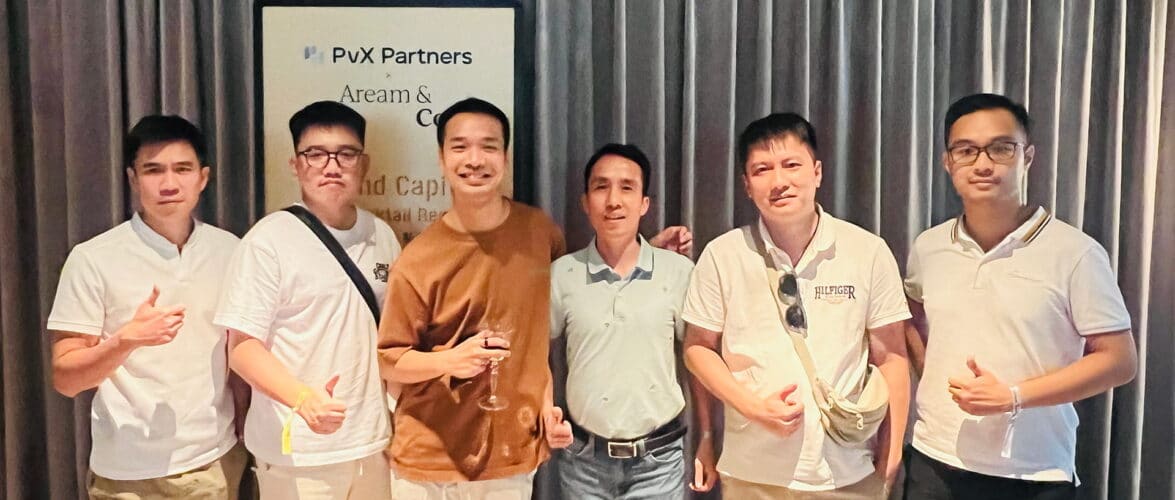
A Capital Structure Built for Scale, Not Dilution
Tevo, a Vietnam-based consumer app operator, has closed a $10 million non-dilutive user acquisition facility with Singapore-based PvX Partners. The structure allows the company to fund growth marketing without issuing equity, a financing model that has gained traction among app-portfolio businesses with repeatable unit economics but cash constraints on customer acquisition.
The facility will be deployed across three areas: expanding user acquisition in priority markets, increasing marketing spend on cohorts that have demonstrated product-market fit, and funding further development of AI-native product features, according to the company. Tevo currently operates around 45 consumer and artificial intelligence applications spanning work utilities, education, and entertainment.
Non-dilutive financing of this kind typically carries repayment terms tied to revenue or usage metrics rather than equity surrender. For app operators managing large portfolios, the model offers a way to scale marketing spend without compressing founder ownership or adding board complexity. PvX Partners, the Singapore-based financier behind the facility, has been active in structured growth capital across Southeast Asia, though this marks one of the firm's larger single commitments to a Vietnam-based operator.
Portfolio Breadth as a Hedge
Tevo's approach reflects a portfolio strategy increasingly common in Southeast Asia's consumer app landscape: operating dozens of lightweight applications rather than concentrating resources on a single flagship product. The 45-app footprint spans categories including productivity tools, educational content, and entertainment, distributing risk across user bases with different retention profiles and monetisation pathways.
This diversification can smooth revenue volatility. A downturn in one vertical, such as entertainment subscriptions during an economic contraction, may be offset by stable demand in work utilities or education tools. It also allows the operator to test product-market fit at speed, reallocating marketing spend toward cohorts that show stronger retention or lifetime value.
At the same time, managing this many products introduces operational complexity. Each app requires ongoing development, user support, and platform compliance. The company's stated intention to invest in AI-native features suggests an effort to automate parts of this overhead, whether through content generation, user support, or personalisation engines that reduce the manual work required to keep dozens of apps fresh.
The Capital Stack Question
The choice of non-dilutive financing signals that Tevo's unit economics are strong enough to service debt-like structures, but that traditional venture capital may have been either unavailable on acceptable terms or misaligned with the company's growth trajectory. Venture capital in Vietnam has contracted since 2022, with later-stage rounds becoming harder to close and valuations under pressure. For a portfolio operator without a single breakout product, raising equity at scale can mean accepting steep dilution or down-rounds.
Non-dilutive facilities sidestep this by treating growth marketing as a working capital problem rather than a long-term capital structure decision. The trade-off is that the operator must generate cash flow sufficient to repay the facility, which imposes discipline on customer acquisition cost and payback periods. If cohort economics deteriorate, the facility becomes a liability rather than a lever.
PvX Partners' involvement also reflects a broader shift in how growth capital is being deployed in Southeast Asia. Traditional venture firms have pulled back from seed and Series A in the region, creating space for alternative structures: revenue-based financing, marketing facilities, inventory loans, and other instruments that sit between venture equity and bank debt. These products are particularly suited to businesses with visible unit economics but limited access to institutional venture rounds.
AI as Infrastructure, Not Feature
Tevo's emphasis on AI-native product development is worth unpacking. The term can mean many things: generative content, recommendation engines, conversational interfaces, or automated moderation. For a portfolio operator, the most valuable AI investments are likely those that reduce the marginal cost of running additional apps, such as shared infrastructure for personalisation, user onboarding, or retention nudges.
If Tevo can build a platform layer that serves all 45 apps, it can lower the engineering and operational overhead per product, making the portfolio model more defensible. The risk is that AI features become table stakes rather than differentiators. Competitors across Southeast Asia are embedding similar capabilities, and users may not attribute value to AI unless it produces a measurably better experience.
The financing will test whether Tevo's cohort data and product-market fit claims hold under scaled spend. Marketing efficiency often degrades as acquisition budgets grow, particularly in smaller markets where supply of high-intent users is finite. If the company can maintain or improve payback periods while doubling down on priority markets, the facility will likely be refinanced or expanded. If not, the operator will face pressure to narrow focus or restructure.
Regional Context and Competitive Pressure
Vietnam's consumer app market has matured rapidly over the past five years, driven by smartphone penetration above 70 per cent and a young, digitally native population. But the market is also crowded. International platforms dominate social, messaging, and entertainment, while local operators compete in verticals such as e-commerce, fintech, and utilities.
Tevo's portfolio strategy allows it to operate in niches too small to attract platform giants but large enough to generate sustainable revenue. The challenge is retention: lightweight apps in categories such as work utilities or entertainment often see high churn unless they embed themselves in daily workflows or social graphs. The company's ability to scale user acquisition profitably will depend on whether it can convert trial users into long-term, monetisable cohorts.
The financing also positions Tevo to compete more aggressively in adjacent markets. Southeast Asia's app economy is increasingly regional, with operators in Vietnam, Thailand, Indonesia, and the Philippines all targeting each other's user bases. Non-dilutive capital gives Tevo runway to test expansion without the pressure of near-term exits or valuation milestones that equity investors typically impose.
For PvX Partners, the deal represents a bet on portfolio diversification and operational discipline. The firm's willingness to back a 45-app operator suggests confidence in Tevo's ability to manage complexity and generate returns across a wide surface area. If the model works, it could set a template for other consumer app operators in the region looking to scale without traditional venture backing.
The broader question is whether the portfolio model itself is defensible in an environment where platform dynamics favour scale and network effects. Tevo's answer appears to be that diversification, combined with AI-driven efficiency and disciplined capital allocation, can create a sustainable business even in the absence of a single breakout product. The next 18 months will test that thesis as the marketing facility is deployed and cohort performance becomes visible.