Vietnam's Consumer Brands Begin International Push After Years of Domestic Focus
A wave of retailers, cafés and beauty chains are testing foreign markets for the first time, spurred by saturation at home and a large, mobile diaspora
A Late but Accelerating Shift
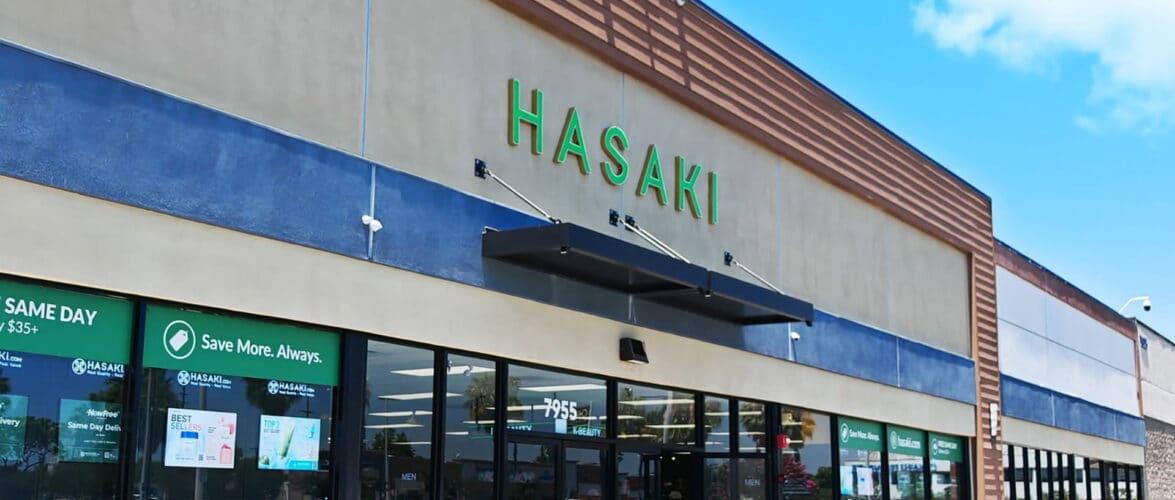
For most of its history, Vinamilk sold through distributors and supermarket shelves beyond Vietnam's borders. The dairy producer, which marked its 50th anniversary in 2026, has exported to more than 60 countries and took a controlling stake in a California dairy operation in 2014. Yet it waited until this year to open two standalone stores in Phnom Penh. The chocolate maker Maison Marou, which operates 24 locations across Vietnam, spent 15 years building its domestic network before securing a retail slot at Singapore's Changi Airport in 2026. Beauty retailer Hasaki opened its first two outlets in California the same year.
The timing reflects a broader pattern. Vietnamese consumer businesses that achieved scale and profitability at home are now committing capital and management attention to physical retail beyond their domestic market. Coffee chains, fashion labels and food concepts that once relied on local growth are signing leases in Manila, Singapore and Los Angeles. The shift marks a departure from the distributor-led export model that dominated Vietnamese consumer goods for decades.
Domestic Saturation Meets Diaspora Demand
Vietnam's retail sector generated USD 273 billion in sales in 2025, more than double the figure recorded a decade earlier. That growth cushioned businesses from the need to navigate unfamiliar regulatory environments and higher cost structures abroad. But the rate of expansion is slowing. Binh Dang, an associate partner at Bain & Company, noted that in food and beverage, outlet counts are rising faster than revenue, a signal that same-store performance is weakening.
At the same time, Vietnam's diaspora has grown to 6.5 million people, and tourist arrivals reached 21 million in 2025. Projections for 2026, based on the first nine months of data, point to more than 25 million visitors, double the level of three years earlier. Those flows create ready-made customer bases in cities with large Vietnamese populations and offer brand recognition that can lower the cost of entry.
Chau Tran, founder of fashion accessories label Chautfifth, opened her first international store in Singapore in 2025, three years after launching the brand in Vietnam. She observed that Singaporeans were already shopping at her domestic locations, which provided early validation that demand existed beyond the diaspora.
Structural Barriers That Held Firms Back
Vietnamese private enterprise gained momentum after the Doi Moi reforms of 1986 and accelerated further when the Enterprise Law introduced licensing changes in 2000. Yet the conglomerates that emerged, including Vingroup and Masan, concentrated their retail and consumer operations at home. Regional peers moved earlier. Thailand's CP Group and the Philippines' Jollibee Group built international retail networks in the 1980s. Vingroup's first significant retail expansion abroad came only in 2022, when its automotive division VinFast opened showrooms outside Vietnam. VinFast has since established more than 150 locations across three continents and built manufacturing plants in India and Indonesia.
Quang Hoan Truong, a researcher at the Vietnam Academy of Social Sciences, argued that the domestic market provided enough growth for most firms to delay overseas moves. Local market knowledge, relationships and distribution networks offered competitive advantages that disappeared when firms crossed borders. Upalat Korwatanasakul, an assistant professor at the Shibaura Institute of Technology, added that many Vietnamese firms remained focused on lower-value-added activities, which limited their ability to build international brands and cross-border operations.
Coffee and Fashion Lead the Way
Food and beverage businesses were among the first to test international waters. Highlands Coffee entered the Philippines in 2012 after Jollibee Foods acquired a 50 per cent stake in its parent company, but the chain has not expanded to other countries despite operating more than 1,000 branches in Vietnam. Trung Nguyen Legend and Cong Ca Phe began opening stores abroad in 2017 and 2018, respectively, and each now operates around two dozen international outlets in the United States, Malaysia and South Korea.
Pizza 4P's, founded by a Japanese couple, has locations in Cambodia, India, Indonesia, Japan and the United States. Post-pandemic, beauty and fashion brands including Cocoon and Chautfifth have followed. Chautfifth's Singapore outlet at Bugis Junction opened in 2025, reflecting the brand's ambition to appeal beyond Vietnamese customers.
Official statistics show that Vietnamese outbound investment exceeded USD 1 billion in 2025, with wholesale and retail trade accounting for USD 131 million. While the total remains below that of Thailand and Indonesia, Vietnam's outbound investment has doubled over the past decade and recorded compound annual growth of 31 per cent from 2022 to 2025, outpacing neighbouring countries.
Unit Economics and Localisation
Chad Ovel, a partner at Mekong Capital, which invested in Maison Marou, said Vietnamese companies are addressing mistakes that undermined earlier international efforts. A common problem is underestimating how cost structures differ abroad. Opening a restaurant on Orchard Road in Singapore involves rental and labour costs as a percentage of revenue that diverge sharply from those in Ho Chi Minh City. Another pitfall is sending Vietnamese leadership teams overseas instead of building local teams that understand supply chains, consumer preferences and cost structures in the new market.
Vincent Mourou, co-founder and chief executive of Maison Marou, said the company highlights its use of 100 per cent Vietnamese cacao and its vertical integration with farmers. For the Singapore launch, the brand developed pandan and kaya toast flavours sold exclusively in that market, blending Vietnamese sourcing with local tastes.
Tran of Chautfifth said she never wanted the brand defined solely as Vietnamese. "Vietnam has a very young and increasingly confident creative scene, and I believe Vietnamese brands today have the opportunity to build products and identities that can travel beyond the domestic market," she said. A Singapore-based musician who visited the Bugis Junction store said she had never been to Vietnam but appreciated the brand's artistic style, which she described as aligned with Y2K fashion trends.
Dang of Bain & Company stressed that Vietnamese brands must move beyond serving the diaspora to reach mainstream local consumers. That requires managing differences in compliance and unit economics, particularly in developed markets with higher minimum wage requirements than Vietnam. Truong of the Vietnam Academy of Social Sciences said Vietnamese companies have strong operational experience from managing extensive domestic networks and considerable digital capability, but need to build skills in international brand development and nurture personnel able to lead multinational teams.
Government Support and Targets
The Vietnamese government has introduced measures to support international expansion. In 2025, it enacted reforms including the Investment Law and Resolution 68 to streamline frameworks for private enterprises. The GoGlobal programme aims to support at least 100 businesses in going international and at least 10 in achieving online export revenues exceeding USD 10 million by 2030, drawing inspiration from initiatives such as Thailand's Global Thai Campaign and South Korea's Startup Korea.
Ovel of Mekong Capital said consumers increasingly seek authentic brands and differentiated products, creating an opening for Vietnamese companies. "Vietnamese brands have an opportunity to introduce something new, rather than simply replicating concepts that already exist in those markets," he said. "Those that balance authenticity with localisation will have the highest probability of success."