Trump Signals Hands-Off Approach to AI Regulation, Citing Competition with China
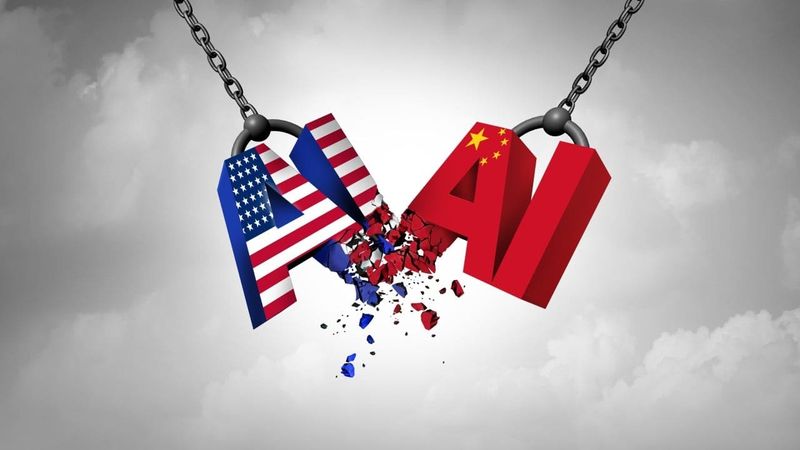
The US president dismissed calls for tighter oversight of artificial intelligence, arguing that maintaining technological leadership over Beijing takes precedence over domestic controls.
The Competition Framing
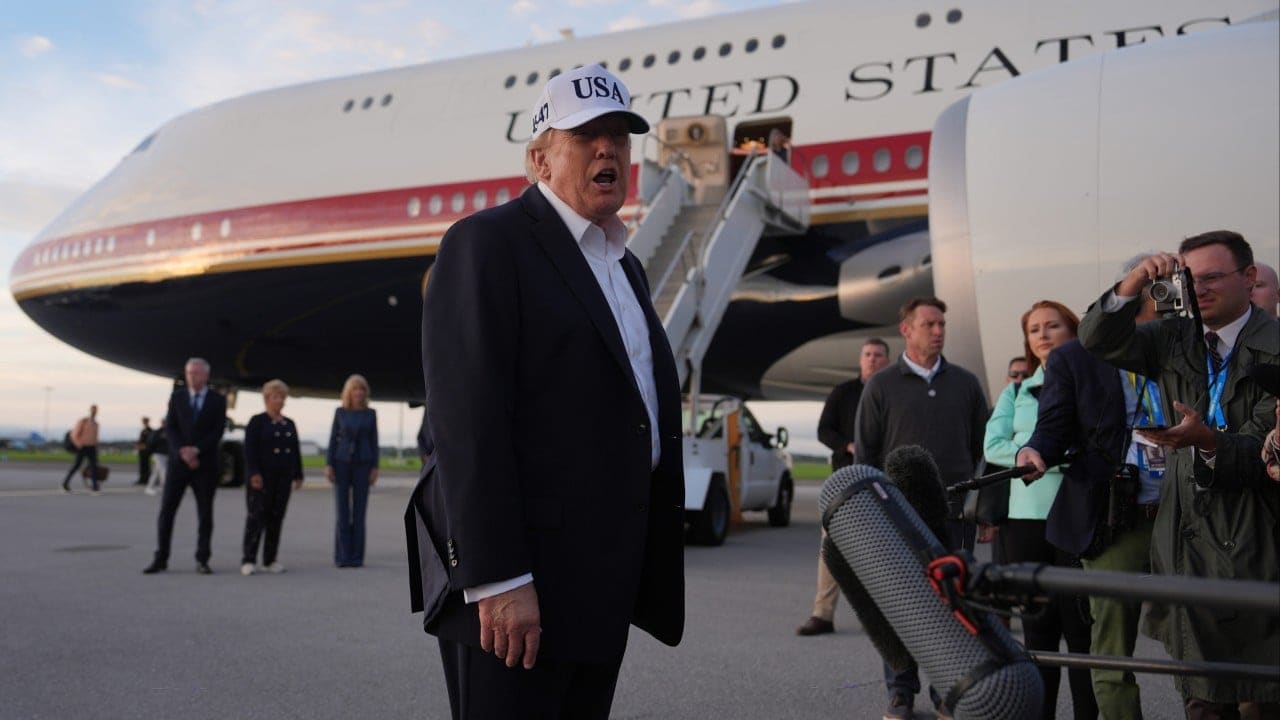
President Donald Trump made clear on Sunday that his administration will prioritise speed over safeguards in artificial intelligence development, framing the technology race primarily as a contest with China rather than a domain requiring careful domestic oversight. Speaking publicly about AI policy, Trump dismissed warnings that the technology is advancing too rapidly without adequate governance, characterising such concerns as unduly pessimistic.
The president acknowledged that some level of regulation might be necessary but offered no concrete proposals or timelines. Instead, he argued that winning the global AI competition would itself address the risks associated with the technology, a logic that places geopolitical advantage ahead of precautionary measures. Trump said he is unwilling to accept any policy that might slow American progress if it means allowing China to close the gap or pull ahead.
What the Stance Reveals
This framing reflects a broader shift in how Washington approaches emerging technology policy. Where previous administrations and many legislators have emphasised the need for guardrails around AI systems, particularly in areas such as algorithmic bias, data privacy, and autonomous weapons, Trump's comments suggest his administration will treat regulation as a potential drag on competitiveness rather than a necessary complement to innovation.
The president attributed calls for tighter oversight to what he described as negativity, effectively casting regulatory advocates as obstacles to American leadership. That characterisation is likely to resonate with parts of the technology industry that have chafed at proposals for mandatory audits, transparency requirements, or limits on certain applications of machine learning. At the same time, it sets up a tension with lawmakers in both parties who have been working on AI safety legislation, including bills that would establish testing standards for high-risk systems and create new disclosure obligations for developers.
The China Variable
Trump's emphasis on China reflects a bipartisan consensus in Washington that Beijing's advances in AI, particularly in surveillance, natural language processing, and autonomous systems, represent a strategic challenge. Chinese firms and research institutions have published influential work in machine learning, and the government has made AI a cornerstone of its industrial policy, directing substantial resources toward compute infrastructure, talent development, and application deployment.
However, the president's framing leaves open a critical question: whether maintaining a lead requires simply moving faster or also building more robust, trustworthy systems that can be deployed at scale without triggering public backlash or cascading failures. Some technologists and policy analysts argue that rigorous testing and transparency can be a competitive advantage, not a handicap, because they enable broader adoption and reduce the risk of high-profile accidents that could invite reactive, heavy-handed regulation later.
Trump's remarks did not engage with that debate. Instead, they suggested a zero-sum calculus in which any rule that slows deployment in the United States is a win for Beijing, regardless of whether the rule addresses a genuine risk or improves the reliability of American systems.
Industry and Congressional Response
The technology industry is divided on the question of AI regulation. Large incumbents, particularly those with significant cloud and enterprise businesses, have generally supported baseline standards, in part because they can absorb compliance costs more easily than smaller competitors and because standardisation can clarify liability and customer expectations. Start-ups and some venture investors, by contrast, have warned that prescriptive rules could lock in the advantages of established players and stifle experimentation.
Trump's comments are likely to embolden the latter camp, which has argued that the United States should focus on enabling innovation rather than constraining it. Yet his lack of specifics leaves room for interpretation. Without a clear policy framework, agencies such as the Federal Trade Commission, the Department of Commerce, and sector regulators will continue to apply existing authorities to AI systems, creating a patchwork of enforcement actions rather than coherent rules.
In Congress, AI legislation has moved slowly, with competing bills addressing everything from algorithmic accountability to export controls on advanced chips. Trump's dismissal of regulatory urgency may reduce pressure on lawmakers to reach consensus, or it may galvanise those who see the absence of White House leadership as a vacuum that needs filling. The Senate has been working on a package of measures that would fund AI research, establish testing infrastructure, and create reporting requirements for certain applications, but progress has stalled amid disagreements over scope and enforcement.
The Risk Calculus
At the heart of Trump's position is a wager that the benefits of moving quickly outweigh the costs of potential mistakes. That wager rests on several assumptions: that American firms will maintain their lead in foundational AI research, that China's progress can be slowed through export controls and other measures, and that any harms from under-regulated AI systems will be manageable or correctable after the fact.
Each of those assumptions is contestable. Export controls on high-end semiconductors and chip-making equipment have slowed but not stopped Chinese progress, and Beijing has responded by investing heavily in domestic alternatives and exploring architectures that require less cutting-edge hardware. Meanwhile, incidents involving algorithmic bias, privacy breaches, and misinformation have already triggered regulatory responses in Europe and other jurisdictions, creating compliance burdens for US firms operating globally.
The president's assertion that winning the AI race will solve safety concerns also glosses over the distinction between capability and alignment. A more powerful AI system is not inherently a safer one, and some of the most pressing risks, such as the potential for large language models to generate convincing disinformation or for autonomous systems to behave unpredictably in edge cases, scale with capability rather than diminishing.
What Comes Next
Trump's comments offer a signal rather than a policy, and the details will matter. If his administration interprets this stance as a green light to roll back existing agency guidance, weaken enforcement, or block international coordination on AI standards, the practical effect could be significant. If, on the other hand, the rhetoric remains largely symbolic while agencies continue their current trajectory, the impact may be more limited.
For now, the president has staked out a position that prioritises speed and frames caution as capitulation. Whether that approach accelerates American leadership or creates new vulnerabilities will depend on choices his administration has yet to make, and on how the rest of the world responds.