The Race for AI That Builds Itself
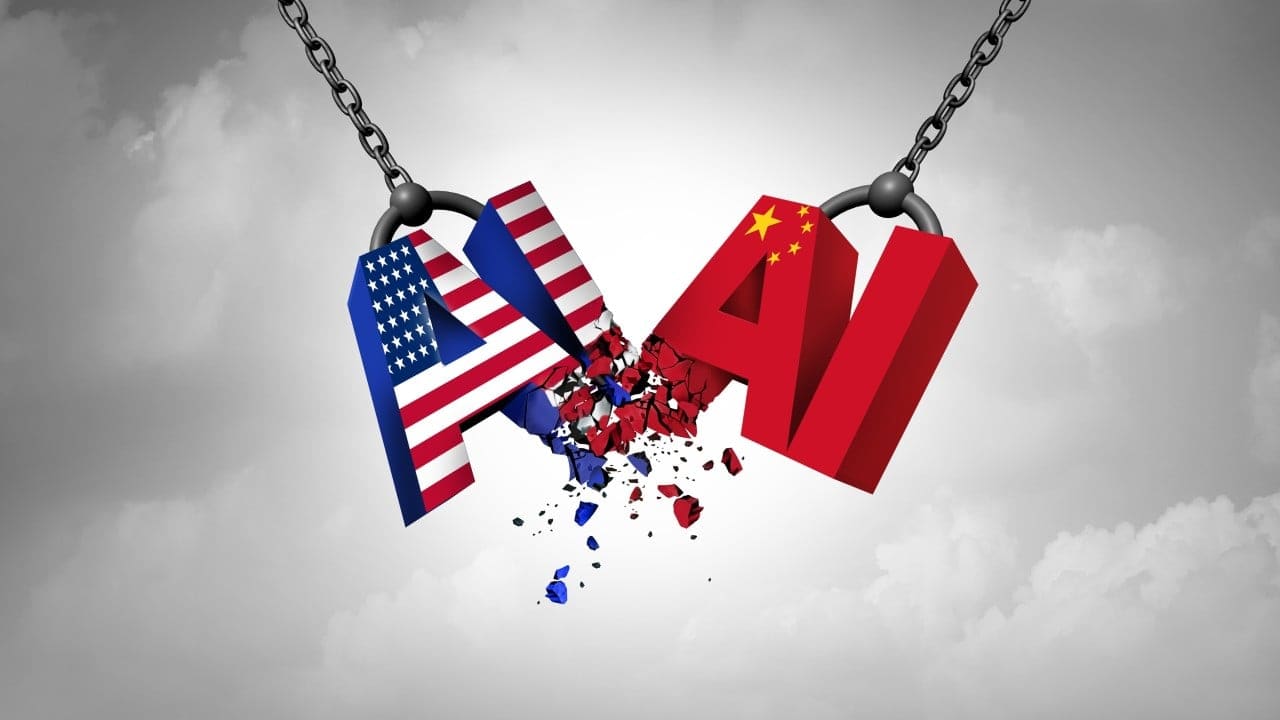
Washington and Beijing are pouring resources into recursive self-improvement systems, a leap that could redefine the balance of technological power and reshape export controls, compute access, and the economics of model development across Asia.
The New Frontier in Model Development
The most significant AI laboratories in the United States and China have quietly shifted their engineering priorities over the past year. Instead of relying solely on human researchers to architect the next generation of large language models, teams are now instructing existing models to write training code, propose novel architectures, and iterate on optimisation techniques. The practice - often described as recursive self-improvement - marks a departure from the labour-intensive, human-led pipeline that produced GPT-4, Claude, and their Chinese counterparts.
At Opentechwire, we've tracked how compute budgets and headcount have scaled across Shenzhen, Beijing, and the Bay Area. What stands out now is not the raw volume of H100 clusters being deployed, but the proportion of inference capacity dedicated to generating synthetic training data and exploring hyperparameter spaces autonomously. One research director at a Hangzhou-based lab told colleagues in a semi-public forum that nearly thirty per cent of their current inference workload supports "model-on-model improvement loops." The figure has not been confirmed independently, but the directional claim aligns with procurement patterns we have observed in Singapore and Seoul, where cloud providers report unusual spikes in long-context inference jobs that correlate with known training windows.
Recursive self-improvement is not a single technique. It encompasses automated code generation for training scripts, reinforcement learning from AI feedback (RLAIF), and the use of one model to label or critique outputs from another. The common thread is automation: tasks that once required PhD-level judgement are being delegated to models, which can run experiments in parallel, evaluate results, and feed conclusions back into the next training cycle. The operational advantage is speed. A human team might explore a dozen architectural variants over a quarter; a sufficiently capable model, given the right scaffolding, can propose and test hundreds of variations in days.
Why the Acceleration Matters Now
Two forces are converging. First, the marginal cost of inference continues to decline. Chips designed specifically for inference - such as custom ASICs from Alibaba's T-Head and Google's TPU line - have driven per-token costs down by roughly an order of magnitude since early 2025, according to data from major cloud operators in Asia. Cheaper inference makes it economically viable to run models continuously in service of training the next iteration, rather than reserving compute exclusively for end-user queries.
Second, export restrictions on advanced training hardware have not been matched by equivalent controls on inference accelerators. A Chinese lab unable to procure the latest Nvidia H200 GPUs for training can still access substantial inference capacity through domestic chips or through cloud partnerships in jurisdictions not subject to US licensing requirements. This asymmetry has pushed some teams to lean more heavily on inference-driven improvement loops, effectively substituting abundant inference compute for scarce training compute.
The geopolitical implication is subtle but real. Traditional export controls assume a bright line between "training a frontier model" and "deploying a model." Recursive self-improvement blurs that line. A model deployed for inference can also be an active participant in training its successor, which complicates enforcement and raises questions about where regulatory intervention should occur. Policymakers in Washington and Brussels have begun internal reviews of how to classify systems engaged in self-improvement, but no consensus framework has emerged.
Technical Limits and the Overhang Question
Recursive self-improvement is not unlimited. Every model operates within the bounds of its training distribution, and a model cannot reliably generate insights or architectures that lie far outside that distribution without human guidance or access to new data. The risk of mode collapse - where a model trained predominantly on its own outputs begins to degrade - is well documented in the literature on synthetic data. Labs are acutely aware of this and have implemented checks: periodic injection of human-labelled data, diversity penalties in reward models, and red-team evaluations to detect when a model begins to "forget" capabilities.
Nonetheless, the potential for a capability overhang is significant. If a lab succeeds in automating even a modest fraction of the research pipeline, the time required to move from one model generation to the next could compress from twelve months to six, or fewer. That acceleration would not only widen the gap between leaders and followers, but also reduce the window available for safety testing, interpretability research, and regulatory review. Several safety-focused organisations in the Bay Area and London have privately expressed concern that the pursuit of recursive self-improvement is outpacing the development of auditing tools capable of understanding what these systems are actually learning.
The Asian Dimension: Compute, Talent, and Regulatory Posture
Asia-Pacific economies are navigating this shift with varied strategies. Singapore has positioned itself as a neutral hub for inference workloads, attracting partnerships with both Western and Chinese labs. The city-state's data centre capacity grew by forty-two per cent year-on-year through mid-2026, driven in part by demand for long-running, high-throughput inference jobs. South Korea's hyperscalers, meanwhile, are investing heavily in custom silicon for RLAIF pipelines, betting that inference economics will determine competitive advantage as much as raw training scale.
China's approach has been to accelerate domestic chip production for inference while continuing to pursue training efficiency through algorithmic innovation. The country's leading labs have published a series of papers on distillation techniques that allow smaller models to inherit capabilities from larger teachers with minimal performance loss. These methods pair naturally with recursive self-improvement: a large model can be used to generate training signals for a smaller, faster model, which then serves as the inference engine for the next improvement cycle. The result is a feedback loop that is less dependent on access to the absolute highest-end training hardware.
India's AI research community, concentrated in Bengaluru and Hyderabad, has taken a different tack. Rather than competing directly on model scale, several well-funded startups are building tooling for recursive improvement workflows - frameworks that automate experiment tracking, manage synthetic data pipelines, and provide observability into multi-stage training loops. These platforms are being adopted by labs in Southeast Asia and the Middle East that lack the capital to build frontier models from scratch but want to participate in the self-improvement paradigm. The strategy is to capture value in the infrastructure layer rather than the model layer, a bet that recalls the picks-and-shovels economics of earlier technology waves.
Implications for the Next Twelve Months
Three scenarios are plausible over the next year. In the first, recursive self-improvement delivers incremental gains but does not fundamentally change development timelines. Labs continue to rely on human oversight for critical decisions, and the technology functions primarily as a productivity multiplier for existing teams. This is the conservative case, and it is consistent with what we have observed so far: faster iteration, but no step-change in capability.
In the second scenario, one or more labs achieve a breakthrough in automated research that allows them to skip a generation of manual tuning. The resulting model would arrive months ahead of schedule, potentially with capabilities that were not anticipated by safety benchmarks calibrated to the previous generation. This scenario would likely trigger a policy response - calls for mandatory disclosure of self-improving systems, or restrictions on the use of models in their own training loops.
The third scenario is a slowdown. Mode collapse, data exhaustion, or diminishing returns from synthetic training could stall progress, leading labs to revert to more conservative, human-led workflows. This outcome would ease some of the timeline pressure on safety research and regulation, but it would also leave unresolved the question of whether recursive self-improvement is a durable advantage or a temporary artifact of current model architectures.
At Opentechwire, we assess the second scenario as more likely than the third, based on the volume of capital and engineering talent now committed to this approach. The infrastructure investments we have tracked - new data centres in Johor Bahru, expanded ASIC fabrication in Suzhou, and the hiring sprees at inference-focused startups in Seoul - all point to an expectation that self-improvement loops will become a standard part of the development stack, not an experiment.
What This Means for Observers and Participants
For policymakers, the immediate challenge is definitional. Existing frameworks distinguish between research, training, and deployment. Recursive self-improvement collapses those categories. A system that is "deployed" for inference may simultaneously be conducting research and training its successor. Regulatory agencies will need to decide whether to regulate the activity (using a model to improve itself), the capability (a model that can autonomously generate training code), or the outcome (a new model that exceeds certain performance thresholds). Each approach has trade-offs, and none maps cleanly onto existing export control or safety regimes.
For companies, the strategic question is whether to build self-improvement capabilities in-house or rely on third-party platforms. Vertical integration offers control and the potential for proprietary advantage, but it requires deep expertise in reinforcement learning, code generation, and distributed systems. Outsourcing to specialised platforms reduces upfront cost but introduces dependency on infrastructure providers whose own competitive position may shift rapidly.
For researchers, the shift raises questions about the future of the profession. If a significant fraction of model development can be automated, the skills that define frontier AI research today - architecture design, hyperparameter tuning, training stability - may become less central. The premium will shift to higher-level tasks: defining objectives, curating diverse data sources, and interpreting the behaviour of systems that were partially designed by other systems. This is not replacement, but it is transformation, and it will reshape hiring, funding, and publication norms across the field.
The race for self-improving AI is not a sprint to a single finish line. It is a continuous process of capability accumulation, where each generation of models provides the tools to build the next. The countries and companies that master this process will set the pace for the industry. Those that do not will find themselves not merely behind, but operating on a slower clock - a disadvantage that compounds with every cycle.