Token Volumes Rise While AI Spending Flattens
Corporate customers are consuming more AI services yet paying less, a pattern that raises questions about revenue trajectories for model providers ahead of major market debuts.

A Divergence Between Use and Revenue
Token spend across corporate customers grew just 1.5 per cent from August to September 2026, according to data from expense management platform Ramp. The figure marks a sharp deceleration from July, when monthly growth hit 42 per cent. Yet token volumes - the actual quantity of inference requests - continued to climb, creating a wedge between usage and revenue that has not appeared in previous quarters.
The pattern suggests that price competition and improving customer efficiency are beginning to constrain top-line growth for model providers, even as adoption deepens. Ramp's dataset draws from venture-backed technology companies, a segment that accounts for the bulk of commercial AI spend and whose behaviour tends to signal broader market shifts before they reach other sectors.
October data showed a partial rebound, with token spend rising 8.9 per cent between late September and late October. Still, the August-September stall represents the first sustained pause in what had been near-exponential growth since early 2025.
The Top Tier Pulls Back
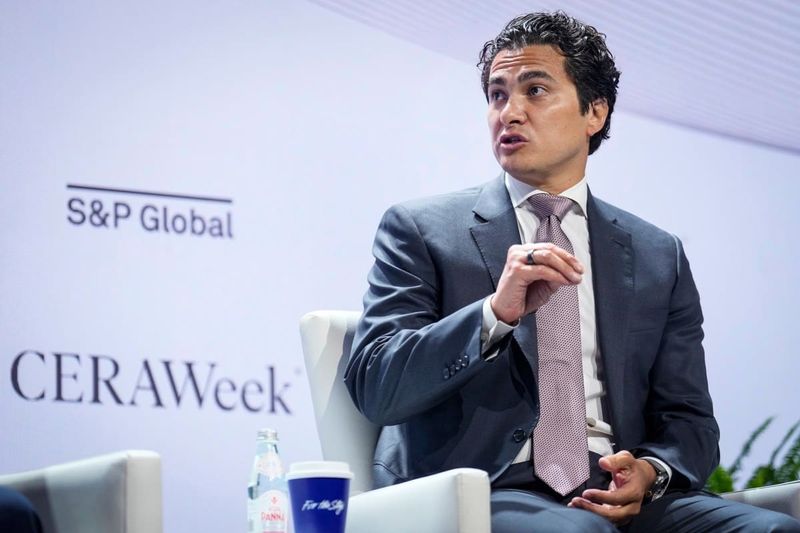
The slowdown is most pronounced among the heaviest users. Firms in the top one per cent of AI spend - those that had been deploying around $10,000 per employee per month at their summer peak - pulled back slightly in August and September, according to Ramp lead economist Ara Kharazian. Because this cohort generates an outsized share of total revenue, even a modest retreat is enough to flatten aggregate growth.
Median firms, by contrast, spend $12 to $15 per employee per month, while those in the top decile spend $600 to $1,000. Growth continued in both segments, but not at a pace sufficient to offset the deceleration at the top.
Kharazian noted that almost all AI spend originates from venture-backed, high-growth technology companies. That concentration creates systemic risk: if the top tier slows for any reason - budget fatigue, shifting priorities, or simply fewer new use cases - the effect cascades quickly across the entire market.
The economist also questioned whether median adopters will ever reach the spending levels of the top one per cent. AI coding agents have found strong demand in software engineering and finance, but sectors such as healthcare and automotive retail may not require - or justify - similar outlays.
Price Cuts Deepen the Squeeze
Model providers have responded to competition by slashing API prices. In September 2026, OpenAI halved the cost of its GPT-6 Sol and GPT-6 Luna endpoints. Anthropic followed with significant reductions for Fable 5.1 and Opus 5.5, a move the company disclosed in a recent filing had reduced projected revenue by approximately $600 million.
Both companies have also extended enterprise discounts intended to secure long-term commitments, but those agreements lock in lower per-token rates and further compress revenue growth.
The dynamic reflects a buyer's market. Meta and Nvidia have introduced enterprise offerings built on inexpensive or open-source models, while a wave of Chinese and US open-model providers has expanded the range of low-cost alternatives. Ramp data also shows rising usage of Jev, a lightweight tool that routes simple binary decisions to minimal inference endpoints, allowing customers to complete straightforward tasks at a fraction of the cost of frontier models.
For many workflows - approval routing, classification, basic summarisation - customers no longer need the capabilities of a top-tier model. As adoption matures, buyers have become more adept at matching workload to model, using routers to direct expensive queries to high-capability endpoints and offloading routine tasks to cheaper alternatives.
Efficiency Gains Compound the Effect
Customer sophistication is accelerating the spending slowdown. Companies are imposing budgets on employee usage, setting defaults that steer long-running tasks away from expensive models, and deploying routers that automatically select the least costly endpoint capable of handling a given request.
Internal data shared by Notion co-founder Akshay Kothari in late October mirrored Ramp's findings. Kothari's chart showed token volumes climbing sharply while costs declined, a trend he summarised as "tokens go brrr. costs go ahhh."
The ability to extract more output from each dollar spent is a win for customers, but it inverts the traditional hypergrowth playbook. In consumer internet, companies subsidised usage to build network effects and later raised prices once competition thinned. That strategy depends on market consolidation. In AI, the abundance of capable models - and the ease of switching - makes lock-in difficult and price increases unlikely.
Valuation Pressure Builds
Market expectations have begun to adjust. In early October 2026, Anthropic was estimated to command a valuation near $2 trillion. By early November, that figure had fallen to a range of $1.2 trillion to $1.3 trillion, with credit agencies preparing to assign a high "junk" rating. OpenAI, meanwhile, reduced its proposed valuation from $1.4 trillion to $1.25 trillion and scaled back its latest fundraising target by roughly $10 billion.
Kharazian suggested that Ramp's dataset - covering thousands of corporate customers - is likely informing investor caution. The data challenges a core assumption: that AI spend would continue to grow at rates seen in 2024 and early 2025, driven by expanding use cases and rising per-seat consumption.
The Search for a Second Act
Much of the bullish case for AI revenue rests on the expectation that new applications will emerge to drive the next wave of spending. AI coding assistants, which became commercially viable only eighteen months ago, transformed OpenAI and Anthropic into trillion-dollar entities. Investors are betting that another breakthrough - perhaps personal agents - will replicate that trajectory.
OpenAI, SpaceXAI, and Meta have all launched personal agent products, joined by start-ups such as Instinct. Yet Kharazian expressed scepticism that personal agents, which are "not as economically productive as coding," will generate the sustained enterprise spend needed to return to hypergrowth.
The coding use case succeeded because it directly replaced high-cost labour and integrated seamlessly into existing workflows. Personal agents, by contrast, address more diffuse needs and lack a clear enterprise buyer with budget authority. Without a second category of similar commercial density, the spending plateau may persist.
What the Data Implies
The Ramp figures do not indicate that AI adoption is slowing. Token volumes continue to rise, and new customers are entering the market. What has changed is the revenue each token generates. Price competition, open-source alternatives, and customer efficiency have combined to decouple usage from spend.
For model providers, the implication is that revenue growth will depend less on expanding the customer base and more on finding use cases that justify premium pricing - applications where accuracy, latency, or reliability command a margin that discount models cannot match. Absent that, the era of near-automatic revenue doubling may have already ended.