Agility Robotics Goes Public as Humanoid Industry Faces Reality Test
The Oregon firm's Nasdaq listing reveals the financial pressures and competitive dynamics shaping the race to commercialise bipedal machines for warehouse and logistics work.
A Rare Window Into Humanoid Economics
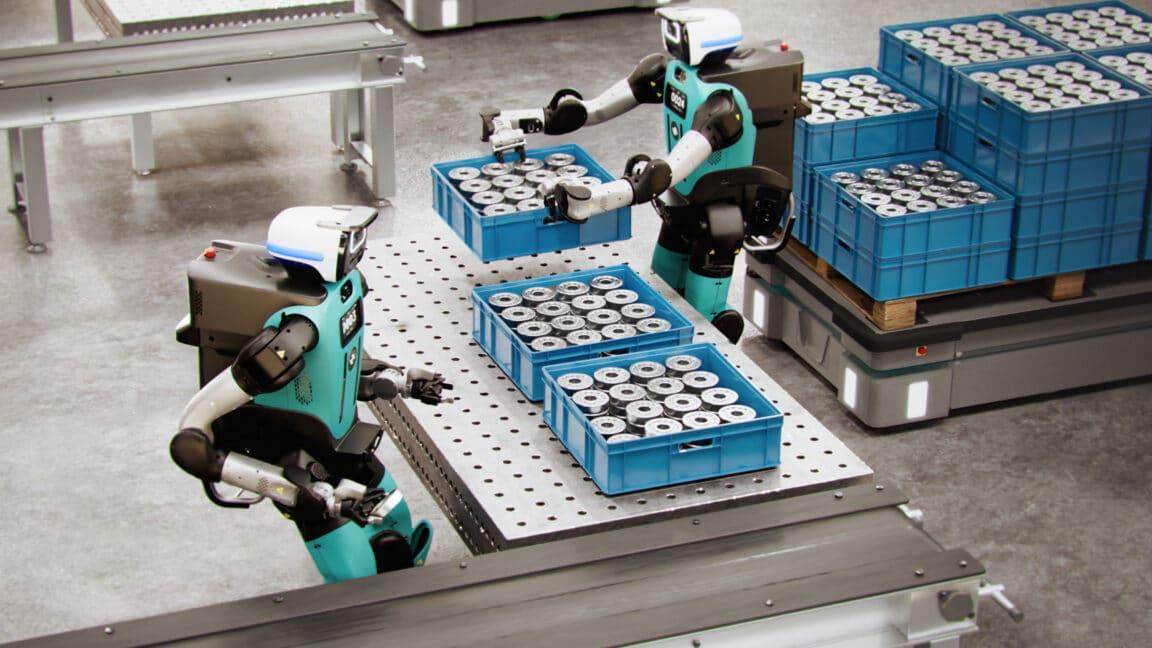
Agility Robotics, the Oregon-based developer of the bipedal Digit robot, completed its transition to public trading on Nasdaq in early November 2026, offering investors and observers an uncommon view into the economics of building humanoid machines at scale. The listing, structured through a special purpose acquisition company merger, arrived as the broader humanoid robotics sector pivots from laboratory demonstrations toward revenue-generating deployments in warehouses and distribution centres.
The company's regulatory filings detail a business model built around a single product line - the Digit robot - alongside an expanding manufacturing footprint anchored by its RoboFab facility in Oregon. Agility disclosed that it continues to allocate the overwhelming majority of its capital toward research, development, and commercialisation efforts for Digit, underscoring both the technical complexity and the capital intensity inherent in bringing autonomous bipedal systems to market.
On 21 October, Agility announced plans for a second facility in Pittsburgh, Pennsylvania, focused on deployment support and software development for Digit. The decision to establish a presence in Pennsylvania signals an operational shift toward customer-facing infrastructure, moving beyond pure manufacturing to encompass field service and iterative software refinement in environments where the robots are actually working.
The Competitive Landscape Agility Acknowledges
Agility's S-4 filing with the US Securities and Exchange Commission offered a candid assessment of the competitive environment, naming Boston Dynamics, Tesla, Apptronik, Figure AI, 1X Technologies, Sanctuary AI, Hexagon, and NEURA Robotics as active participants developing rival humanoid platforms. The disclosure acknowledged that many of these entrants possess advantages in brand visibility, established customer networks, and access to deeper financial and technical resources.
Boston Dynamics, now under Hyundai ownership, brings decades of robotics research and a well-known product portfolio that includes the Spot quadruped and the Atlas humanoid, which has transitioned from hydraulic to electric actuation. Tesla's Optimus project benefits from the automotive giant's manufacturing scale and vertically integrated supply chain, while Figure AI has secured partnerships with BMW for factory pilots and raised substantial venture funding. 1X Technologies, backed by OpenAI's venture arm, is pursuing a parallel path with its NEO humanoid aimed at consumer and light industrial applications.
The intensity of this competition reflects a broader industry thesis: that bipedal robots capable of navigating human-built environments could address labour shortages in sectors characterised by repetitive manual tasks and high turnover. Yet the path from prototype to profitable deployment remains unproven at scale, and Agility's public status will subject its progress to quarterly scrutiny in a way that privately held competitors can avoid.
Real-World Deployment and the Hype Cycle
Damion Shelton, Agility's co-founder and chief executive, has spoken publicly about the company's market opportunity, framing it around what he describes as millions of unfilled roles involving tasks that require mobility and dexterity but not advanced cognitive skills. The target customer base spans logistics operators, third-party logistics providers, and manufacturers seeking to automate workflows in environments where conveyor systems and fixed automation reach their practical limits.
Shelton anticipates that within the next twelve months, multiple Agility customers will begin sharing footage of Digit robots performing routine tasks in operational settings, a shift he expects will drain the novelty from humanoid deployments. The analogy he offered - comparing the emerging humanoid market to the early automotive industry, where different manufacturers carved out distinct niches - suggests a future in which form factors and capabilities diverge based on application requirements rather than converging on a single dominant design.
This perspective stands in contrast to the more ambitious timelines and broader use cases sometimes floated by other humanoid developers. Shelton has consistently dismissed the near-term feasibility of deploying bipedal robots in unstructured or safety-critical environments such as private homes, stating explicitly that the current generation of Digit robots will not be walking into living rooms to perform household chores. The constraint is not merely technical but also economic and regulatory: home environments present vastly greater variability, liability exposure, and customer acquisition costs than controlled industrial spaces.
Financial Realities and the Path to Scale
Agility's regulatory disclosures highlighted a range of operational and strategic risks that investors in the humanoid sector must weigh. The company cited uncertainty around the real-world performance of AI-driven robotic systems, particularly in dynamic environments where edge cases and unexpected interactions are inevitable. Safety remains a central concern, given that humanoid robots are designed to operate in shared workspaces alongside human workers, raising questions about collision avoidance, failure modes, and liability in the event of accidents.
Regulatory frameworks for autonomous mobile robots in industrial settings are still evolving, with occupational safety authorities in different jurisdictions taking varied approaches to certification and operational requirements. Agility's filing also flagged cybersecurity threats, a concern that extends beyond data protection to encompass the physical safety of workers and the integrity of warehouse operations if robotic systems were compromised or manipulated.
The company's financial trajectory will hinge on its ability to scale manufacturing at RoboFab while managing per-unit costs, a challenge that has historically bedevilled robotics companies attempting to transition from low-volume custom builds to higher-volume production. Digit's design incorporates custom actuators, sensors, and control systems, many of which lack the supply chain depth and cost curves available to consumer electronics or automotive components. Achieving price points that generate acceptable returns for logistics operators - where labour costs, turnover, and operational uptime drive purchasing decisions - will require both engineering refinement and supply chain maturation.
Regional Implications and the Automation Calculus
The competitive dynamics in humanoid robotics carry implications for manufacturing and logistics hubs across Asia, where labour availability, wage growth, and automation adoption rates vary widely. In markets such as Singapore, Japan, and South Korea, where ageing demographics and tight labour markets have accelerated investment in industrial automation, humanoid robots represent a potential complement to existing robotic systems that struggle with tasks requiring navigation across varied terrain or manipulation of diverse objects.
China's robotics ecosystem, anchored by companies such as UBTECH Robotics and emerging entrants in the humanoid space, benefits from proximity to component suppliers and lower prototyping costs, though the sector faces its own challenges around software maturity and international market access. European manufacturers, meanwhile, are evaluating humanoid platforms as part of broader strategies to reshore production and reduce reliance on migrant labour in logistics and light assembly roles.
For Agility, international expansion will require navigating not only technical and commercial hurdles but also trade policy, intellectual property protections, and local partnership strategies. The company's ability to secure deployments outside North America will serve as a barometer for the global scalability of its business model and the extent to which humanoid robots can compete with alternative automation approaches tailored to regional labour and cost structures.
The Long Road to General-Purpose Autonomy
Shelton has articulated a long-term vision for Agility that culminates in general-purpose autonomous robots capable of adapting to a wide range of tasks without extensive reprogramming. That vision, however, remains distant, constrained by current limitations in perception, manipulation, and decision-making under uncertainty. The AI systems that enable Digit to navigate warehouse aisles and handle totes are specialised and trained on relatively narrow task distributions, a far cry from the open-ended problem-solving required for true general-purpose operation.
The gap between today's task-specific deployments and tomorrow's general-purpose machines will be closed, if at all, through iterative improvements in machine learning, sensor fusion, and hardware robustness. Agility's public listing provides a mechanism for raising capital to fund that journey, but it also exposes the company to investor expectations shaped by both the hype surrounding humanoid robotics and the sobering realities of robotics commercialisation.
What the Listing Reveals About the Industry
Agility's move to public markets is instructive not because it guarantees success but because it forces transparency in an industry often characterised by selective disclosure and prototype-stage optimism. The financial and operational details now available offer a baseline against which to measure progress, both for Agility and for the cohort of competitors pursuing parallel strategies.
The humanoid robotics industry is entering a phase where capital efficiency, customer retention, and operational reliability will matter more than technological novelty. Agility's trajectory in the coming quarters will illuminate whether the business case for bipedal robots in logistics can withstand the scrutiny of public markets and whether the broader sector can transition from venture-backed experimentation to sustainable commercial operation. For investors, customers, and competitors alike, the company's public journey provides a rare empirical test of the assumptions underpinning the humanoid automation thesis.