Tesla Commits €3 Billion to Berlin Expansion for Cybercab Production
The automaker will build a second facility in Grünheide capable of manufacturing one million autonomous vehicles annually, marking a decisive shift toward robotaxi infrastructure as traditional EV demand plateaus in key markets.
A Manufacturing Bet on Autonomy
Tesla announced on Monday that it will invest €3 billion ($3.3 billion) in a new production building at its Berlin gigafactory, dedicated to manufacturing the Cybercab autonomous vehicle. The facility, located in Grünheide just outside the German capital, will have annual capacity to produce up to one million vehicles, with construction slated to begin in the first half of 2027 and production starting in 2029.
André Thierig, Tesla's senior director of manufacturing for the site, described the expansion as the company's most technologically advanced factory project to date. The announcement comes two months after Tesla deployed its first Cybercabs on public roads, a timeline that underscores the company's confidence in scaling a vehicle that remains under federal regulatory scrutiny in the United States.
The investment represents one of the largest single commitments to autonomous vehicle manufacturing infrastructure announced by any automaker. While competitors including Waymo have focused on converting existing vehicle platforms for robotaxi service, Tesla is building dedicated production capacity for a purpose-built autonomous vehicle that eliminates traditional driver controls entirely.
Rebalancing the Product Portfolio
The Berlin expansion coincides with a broader reorientation of Tesla's manufacturing footprint. The company has announced plans to cease Cybertruck production next year, in part to free up capacity at its Austin, Texas factory for Cybercab assembly. That decision reflects a strategic judgement that demand for the angular electric pickup has not justified continued investment, even as the company's Model 3 and Model Y vehicles continue to find buyers.
Tesla delivered more than 486,000 vehicles in the third quarter, approximately 6,000 more than the prior quarter. European sales have been rising as adoption of electric vehicles continues across the continent, a trend that makes the Berlin site a logical anchor for Cybercab production targeting the region. The company has not disclosed how it will allocate Berlin's existing production capacity between conventional models and the new autonomous vehicle line once the expansion is complete.
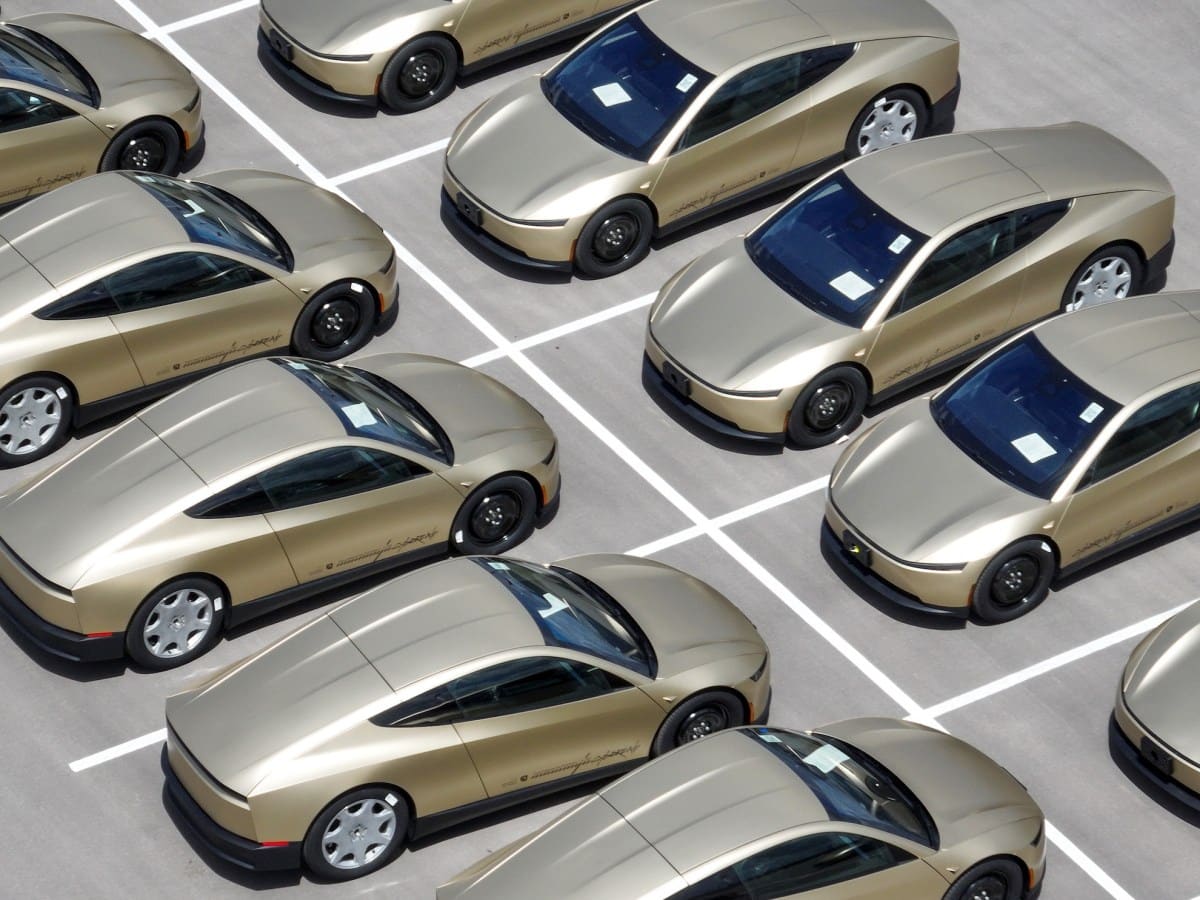
The decision to phase out the Cybertruck less than three years after its launch signals that Tesla is willing to abandon product lines that do not align with its evolving focus on artificial intelligence and robotics. The Cybercab, a two-seat vehicle with no steering wheel or pedals, sits at the centre of that vision. First revealed in 2024 and launched publicly in September, the vehicle is designed exclusively for autonomous operation, a departure from Tesla's current Full Self-Driving (Supervised) system that still requires a human driver to monitor the road.
Regulatory and Technical Hurdles
The Cybercab's lack of conventional controls has drawn attention from federal regulators in the United States. The vehicle omits equipment required under existing federal safety standards, and regulators are currently investigating Tesla's self-certification process. The company has not publicly detailed how it plans to navigate similar regulatory frameworks in Europe, where vehicle approval processes differ by member state and require compliance with European Union type-approval regulations.
Tesla's approach to autonomous driving relies exclusively on cameras, eschewing lidar and other sensor types that competitors such as Waymo integrate into their systems. Camera data is intended to mimic human vision, but artificial intelligence models trained solely on visual input can struggle in conditions where additional sensor modalities might provide clarification. The company has argued that camera-only systems are more scalable and cost-effective, though the industry remains divided on whether that trade-off is prudent for vehicles operating without any human oversight.
Since the Cybercab's public launch, Tesla has restricted the vehicles from operating late at night, though the company has been working to extend those hours. In the more than two months that Cybercabs have been on the road, no major incidents have been reported. That operational track record appears to have informed the decision to commit substantial capital to expanded production, though the sample size remains small and the operating environment limited.
Fleet Scale and Geographic Expansion
Tesla has approximately 1,307 robotaxis registered in Texas, the majority of which are modified Model Y vehicles used in services across several cities in the state. The Cybercab fleet is smaller but growing, with about 573 vehicles operating in Austin and deployment in Dallas expected soon. The Berlin announcement places Europe firmly on the company's roadmap for autonomous vehicle expansion, though Tesla has not specified which cities or countries will receive the first Cybercabs produced at the German facility.
The scale of the planned Berlin facility suggests Tesla anticipates demand well beyond initial pilot markets. One million vehicles per year would represent a significant share of the European passenger vehicle market, and achieving that output will require not only manufacturing capacity but also regulatory approval, insurance frameworks, and public acceptance of steering-wheel-free vehicles operating on public roads.
European cities have historically been more receptive to shared mobility services than their American counterparts, and several jurisdictions have established regulatory sandboxes for testing autonomous vehicles. However, no European city currently permits fully driverless vehicles without steering wheels to operate commercially at scale. Tesla will need to secure those approvals before the 2029 production start date if it intends to deploy Cybercabs in the region immediately upon completion of the factory expansion.
Strategic Implications for the Industry
The €3 billion commitment is notable not only for its size but for what it signals about Tesla's view of the automotive market's future. While the company continues to sell conventional electric vehicles in substantial numbers, its capital allocation increasingly favours projects tied to autonomy and artificial intelligence. That shift reflects a belief that margins on traditional vehicles will compress as competition intensifies, and that differentiation will come from software and services rather than hardware alone.
Other automakers have announced autonomous vehicle programmes, but few have committed comparable resources to dedicated manufacturing infrastructure. General Motors scaled back its Cruise robotaxi operations following safety incidents, and Ford wound down its Argo AI investment. Waymo, owned by Alphabet, operates a growing fleet but relies on vehicles manufactured by partners rather than building its own production capacity.
Tesla's decision to build rather than convert vehicles gives it control over the entire stack, from sensor integration to interior layout, but it also concentrates risk. If regulatory approval stalls or public acceptance lags, the Berlin facility could become a costly stranded asset. The company is wagering that the operational data it gathers in Texas will translate to other markets and that regulators will adapt standards to accommodate vehicles designed from the ground up for autonomy.
What Comes Next
Construction of the Berlin expansion is expected to begin in the first half of 2027, leaving a two-year window before production starts in 2029. During that period, Tesla will need to demonstrate that its camera-only autonomy system can operate safely in a wider range of conditions, secure regulatory approvals in multiple jurisdictions, and build the software infrastructure to manage a fleet of vehicles operating across different cities and countries.
The company has not disclosed pricing for Cybercab rides or whether it will operate the fleet directly or license the technology to third-party operators. Those business model decisions will shape the economics of the expansion and determine whether the Berlin facility can achieve the utilisation rates needed to justify the investment.
For now, the announcement confirms that Tesla views autonomous vehicles as central to its future, and that it is prepared to commit billions in capital to that vision even as questions about technology, regulation, and market demand remain unresolved. The Berlin expansion will test whether the company's confidence in camera-only autonomy and purpose-built robotaxis is justified, or whether the industry's more cautious approach will prove more durable.