Chip Challengers Eye Opening as Nvidia Faces Leadership Void
Jensen Huang's exit triggers questions about the GPU giant's Israel operations and whether rivals can exploit uncertainty in the AI hardware race.
A Reshuffle in Santa Clara, Reverberations in Tel Aviv
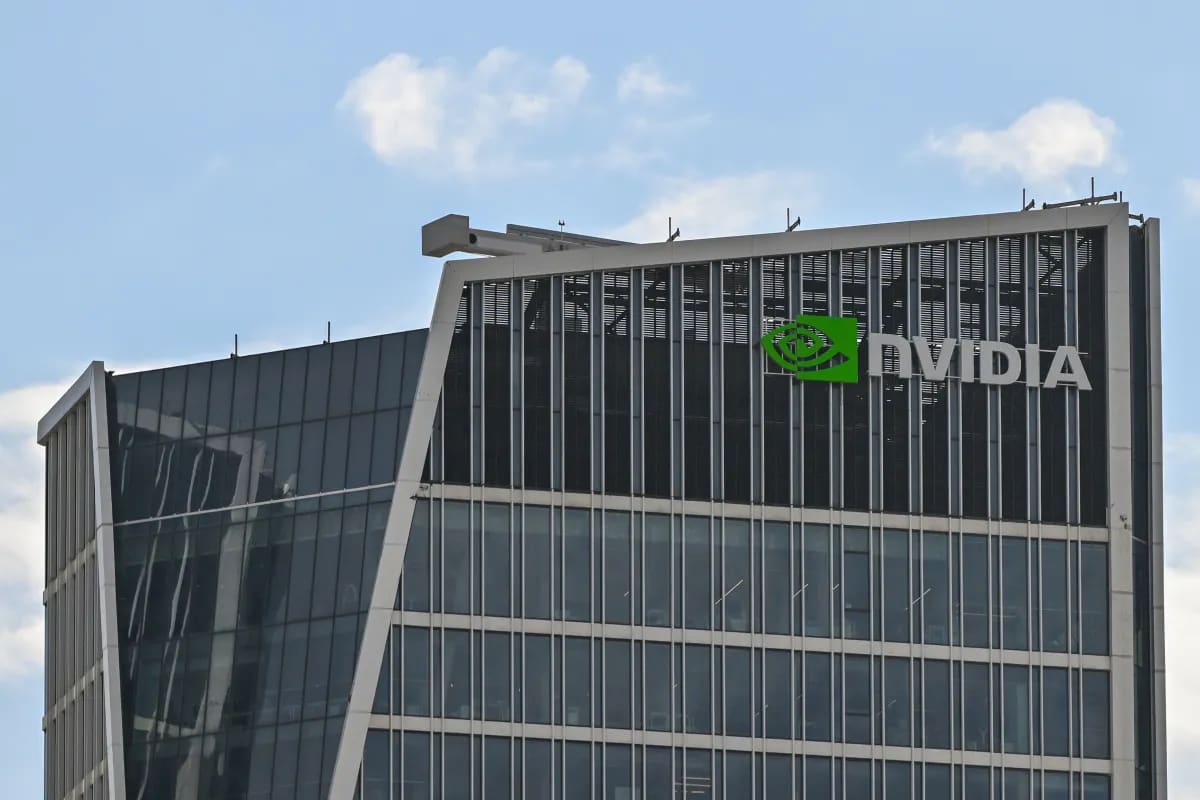
When Jensen Huang stepped down as chief executive of Nvidia, the immediate worry in Israel's technology sector was not about share prices or product roadmaps. It was about continuity. Huang had described Israel as the company's "second home" in 2023, and the semiconductor giant employs 6,000 people in the country following its acquisition of chipmaker Mellanox for $6.9 billion in 2019. That deal turned Mellanox into the foundation for Nvidia's largest research and development facility outside the United States, and the company had outlined plans for a multibillion-dollar campus in northern Israel.
The question now circulating among founders, investors and engineers is whether Huang's successor will maintain that commitment, or whether the leadership transition marks the beginning of a slower, more cautious era for a company that has shaped Israel's economic forecasts in recent years. Intel and Microsoft also conduct substantial R&D work in Israel, but Nvidia's dominance in graphics processing units for training large language models and running inference has given it outsized influence over the country's AI ecosystem.
Pavel Gurvich, a repeat cybersecurity entrepreneur in Israel, noted the strong positive sentiment towards both Huang and Nvidia within the local technology community, rooted in the executive's decision to anchor the company's presence through the Mellanox acquisition. That sentiment is now tinged with uncertainty about what comes next.
Interim Leadership and the Israel Connection
Colette Kress, Nvidia's chief financial officer, has taken over as interim chief executive. In a 2023 interview now circulating widely, Kress said she typically began her workday with meetings focused on Israel before turning her attention to California. That remark has been seized upon by those hoping the company's Israel operations will remain a priority, though Kress may not hold the role permanently.
Speculation about a permanent successor has included two Israelis: Johny Srouji, a senior executive at Apple, and Michael Kagan, who works at Nvidia. Neither is at the top of the tentative list, but their presence in the conversation reflects the depth of Israeli talent in semiconductor design and the extent to which Nvidia's trajectory has been intertwined with the country's technology sector.
Whoever ultimately takes the role will inherit a company with a vastly different profile than the one Huang built over decades. The outgoing chief executive wielded unusual control over both Nvidia's strategy and its public image, driving decisions that ranged from massive capital investments in next-generation chips to direct equity stakes across the AI industry. His successor is unlikely to command the same grip on the company or the broader technology sector, and that shift in itself creates openings for competitors.
Slower Decisions, Narrower Windows
Yanai Oron, a general partner at Vertex Ventures Israel, framed the leadership change as a double-edged development for Nvidia's rivals. Slower decision-making at the company could provide an opening for competitors to close the gap in performance or pricing, but if uncertainty also dampens overall spending on AI infrastructure, those challengers might end up fighting over a smaller pool of capital.
Nvidia has been responsible for a vast share of spending in the global AI industry, using its cash reserves to invest heavily in both external companies and its own chip development. That empire is unlikely to collapse simply because its architect has left, but the path to outright monopoly now appears less certain.
Adi Levanon, founder and managing partner at Selah Ventures, argued that Huang's departure does not dismantle the technology or ecosystem Nvidia has built, but it could give competitors more room to shape the next phase of AI hardware. The leadership void arrives at a moment when companies worldwide are deploying increasingly demanding AI agents into their workflows, creating fresh demand for specialised chips and inference software that can compete with Nvidia's offerings.
Levanon added that challengers now have a window to demonstrate that a different approach delivers better economics, though a leadership change alone will not be enough to win business away from Nvidia. The company's GPUs remain central to training large language models and running them in production, and switching costs for customers are high.
The Broader Competitive Landscape
The semiconductor industry has long been characterised by periods of dominance followed by rapid shifts when a new architecture or manufacturing process emerges. Nvidia's position in AI hardware has been built on its CUDA software ecosystem, which has made it difficult for rivals to offer drop-in replacements even when their chips match or exceed Nvidia's performance on paper.
But the leadership transition introduces a variable that competitors have not had to contend with in years: the possibility that Nvidia's product roadmap or go-to-market strategy might slow or shift direction. Huang's hands-on approach meant that major decisions, from the timing of new chip launches to the structure of customer partnerships, were often made quickly and with little internal debate. A more consensus-driven leadership style could lengthen decision cycles and create moments of hesitation that rivals can exploit.
Venture capital has already begun flowing into developers of AI-specific chips designed for inference rather than training, a segment where Nvidia's dominance is less entrenched. Startups in this space argue that their architectures can deliver better performance per watt or per dollar for the specific workloads involved in running AI agents, chatbots and recommendation engines. Whether they can scale production and build the software ecosystems needed to compete remains an open question, but the leadership change at Nvidia has given them a narrative to pitch to investors and customers.
Israel's Stake in Nvidia's Future
For Israel, the stakes extend beyond the 6,000 jobs Nvidia provides directly. The company's presence has helped anchor a cluster of semiconductor talent and attracted investment into related areas, from chip design tools to cooling systems for data centres. A reduction in Nvidia's commitment to the country, whether through slower hiring or scaled-back expansion plans, would ripple through that ecosystem.
The multibillion-dollar campus Nvidia had planned for northern Israel is one tangible project that could serve as a barometer of the company's intentions under new leadership. Construction timelines and hiring targets for that facility will be watched closely by local officials and investors as signals of whether the company views Israel as a strategic hub or simply one of many global R&D sites.
At the same time, Nvidia's leadership crisis is not the only factor shaping Israel's semiconductor sector. Intel has maintained a significant presence in the country for decades, and Microsoft has expanded its AI research operations there. Homegrown startups continue to attract venture funding for chip designs targeting everything from autonomous vehicles to edge computing. The question is whether Nvidia's slower pace, if it materialises, will create space for those companies to grow faster or simply redistribute opportunity within a sector that remains heavily dependent on a few large buyers.
What Competitors Must Prove
The window that has opened for Nvidia's challengers is real, but narrow. Customers who have built their infrastructure around Nvidia's GPUs face substantial switching costs, both in terms of retraining engineers and rewriting software. A leadership change at Nvidia does not erase those barriers, nor does it suddenly make competing chips more attractive if they require significant integration work.
What it does is introduce doubt about whether Nvidia will continue to move as quickly or invest as aggressively as it has under Huang. That doubt can be enough to prompt customers to evaluate alternatives more seriously, particularly if they are planning new data centre builds or expanding into regions where Nvidia's supply chain is less established.
For Israeli investors, the calculus is whether local startups working on AI chips or inference software can capitalise on that doubt before Nvidia's new leadership settles into a rhythm. The country's venture ecosystem has a track record of backing semiconductor companies that have been acquired by larger players, but building a challenger capable of taking meaningful market share from Nvidia would require a different scale of ambition and capital.
Levanon's observation that a leadership change alone will not win business for competitors is a reminder that technology and economics still matter more than executive transitions. But in an industry where perception and momentum can shift quickly, even a temporary slowdown at the dominant player can be enough to let others catch up.
The Path Forward
Nvidia's next chief executive will inherit a company with unmatched market position in AI hardware, but also one facing questions about its long-term strategy and its ability to maintain the pace of innovation that Huang drove. For Israel, the hope is that the company's deep operational ties to the country will outlast any single leader. For Nvidia's competitors, the hope is that the leadership void will slow the giant enough to let them prove their own approaches can deliver better results.
The outcome will depend less on who takes over at Nvidia and more on whether challengers can execute quickly enough to turn uncertainty into market share. In the meantime, Israel's technology sector will be watching closely, both for signs of continuity in Nvidia's plans and for opportunities to build the next generation of AI hardware on home ground.