Tencent AI Chief Flags Biology Mastery as Next Frontier Risk
Vinces Yao Shunyu warns that frontier models approaching biological understanding could accelerate drug discovery while opening pathways for misuse
A Threshold Moment for Biological Intelligence
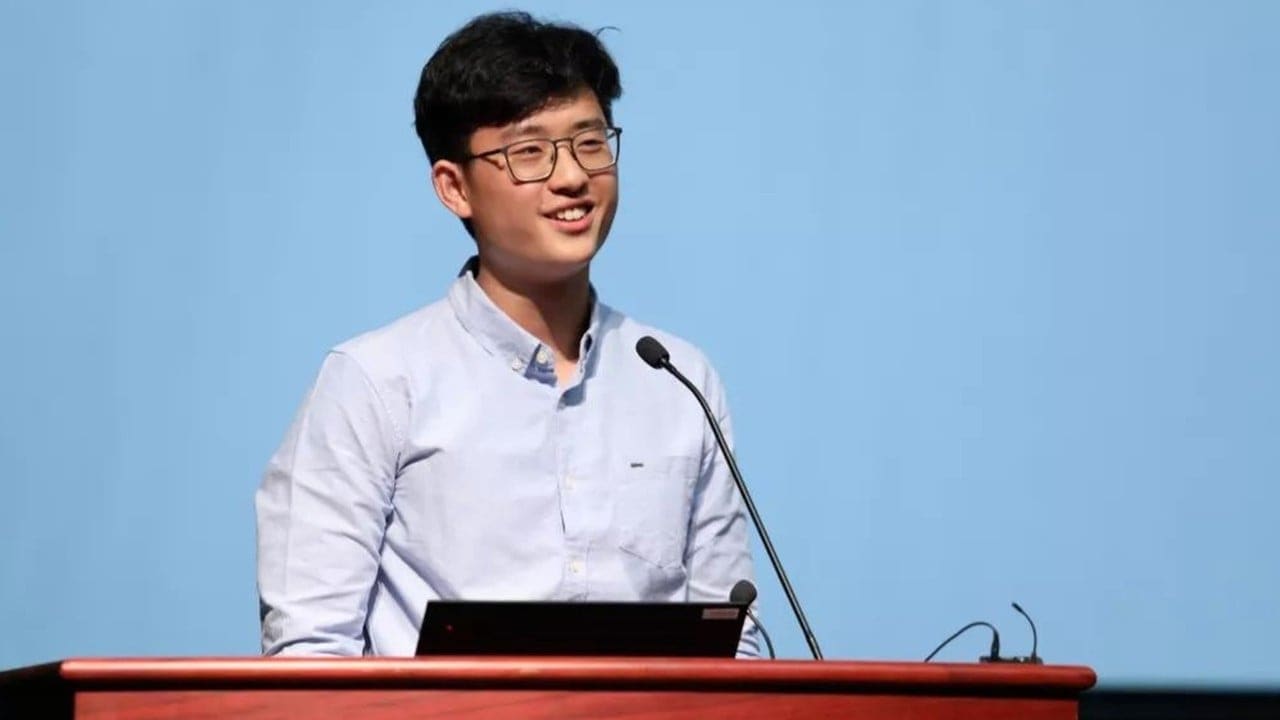
Artificial intelligence systems stand on the threshold of mastering biology, a development that will reshape drug discovery and medical research whilst introducing risks the field has barely begun to address. Vinces Yao Shunyu, chief AI scientist at Tencent Holdings and a former researcher at OpenAI, made the assessment during a public appearance on 8 November, marking one of his rare statements since joining the Shenzhen-based technology group.
The observation arrives as frontier labs push large models into domains far beyond text and image generation. Biology represents a particularly consequential target: molecular structures, protein folding, and genomic sequences are all pattern-recognition problems at scale, precisely the tasks at which transformer architectures excel. Yet the same capabilities that might compress decades of pharmaceutical research into months also lower barriers for actors seeking to engineer pathogens or circumvent safety protocols.
Convergence of Compute and Molecular Data
Over the past eighteen months, several research groups have demonstrated that models trained on biological datasets can predict protein structures, design novel enzymes, and propose drug candidates with binding affinities that rival compounds discovered through traditional high-throughput screening. Tencent itself operates AI Lab divisions in both Shenzhen and Bellevue, Washington, where teams have published work on molecular generation and disease prediction models.
The technical foundation rests on two shifts. First, the cost of sequencing and structural biology has fallen sharply, generating training corpora large enough to support pre-training regimes comparable to those used for language models. Second, inference speed has improved to the point where in-silico screening of millions of candidate molecules becomes feasible within commercial cloud budgets. Taken together, these trends mean that capabilities once confined to pharmaceutical majors with dedicated supercomputers are now accessible to university labs and start-ups.
The Dual-Use Dilemma
Yao's warning centres on what security researchers call the dual-use problem: the same model that accelerates benign research can be repurposed to design harmful agents. A system trained to optimise drug-like molecules for human targets can, with minimal modification, optimise toxins or identify sequences likely to evade immune detection. Unlike software vulnerabilities, which can be patched, biological designs, once released, propagate through standard laboratory protocols and published literature.
Export controls and access restrictions offer limited protection. The datasets underpinning biological models draw heavily from open repositories: protein structures deposited in the Protein Data Bank, genomic sequences in GenBank, and chemical libraries maintained by academic consortia. Restricting model weights or API access does little if the training recipe and data remain public. Moreover, the compute threshold for training competitive models continues to fall, placing these capabilities within reach of actors who lack the institutional oversight common in established pharmaceutical firms.
Regulatory Gaps and Industry Response
Existing biosafety frameworks were designed for laboratory containment and pathogen handling, not for computational tools that generate novel biological designs at scale. In the United States, the Department of Health and Human Services and the National Institutes of Health maintain guidelines for research involving select agents, but those rules do not explicitly cover AI-generated sequences that have never existed in nature. Similar gaps persist in regulatory regimes across Asia and Europe.
Some frontier labs have begun implementing internal screening. OpenAI and Anthropic both restrict queries that request synthesis pathways for controlled substances or pathogens, relying on classifier models to flag problematic prompts. Yet these guardrails are imperfect: adversarial users can often elicit restricted outputs through carefully phrased indirect requests, a technique known as jailbreaking. More fundamentally, once a model is fine-tuned on domain-specific data, the original safety layers may no longer apply.
The Asia Dimension
Tencent's involvement underscores the geographical distribution of AI biology research. Whilst much attention has focused on labs in San Francisco and London, significant work is under way in Shenzhen, Seoul, and Singapore, often in closer proximity to contract research organisations that can rapidly synthesise and test computationally designed molecules. China's pharmaceutical industry has invested heavily in AI-driven discovery platforms, and the country's regulatory environment for digital health tools has historically moved faster than its counterparts in approving experimental therapies for clinical trials.
This distribution raises questions about coordination. International agreements on biosafety have traditionally operated through multilateral treaties and export control regimes that assume physical materials as the primary vector. Computational biology disrupts that model: a model checkpoint or fine-tuning script can cross borders as easily as any other digital file, rendering jurisdiction-based controls less effective.
What Comes Next
Yao did not specify a timeline for when models might achieve the level of biological mastery he described, but the trajectory suggests a window measured in quarters rather than years. Protein design models already approach experimental accuracy, and recent results in enzyme engineering and antibody optimisation indicate that the remaining gaps are narrowing. The question is no longer whether AI will master biology, but whether safety and oversight mechanisms can keep pace.
For now, the burden falls on frontier labs and their institutional partners to establish norms ahead of formal regulation. That includes pre-deployment testing for dual-use risks, transparency about training datasets and model capabilities, and collaboration with biosecurity experts to identify red lines. The pharmaceutical upside is real, but so is the downside if access controls and monitoring lag behind capability growth