Apple Pushes for Agentic Siri Upgrade as AI Assistant Race Intensifies
Internal pressure mounts to deliver multi-step task automation and third-party app control by mid-2027, closing the gap with OpenAI and Meta's autonomous agents
Internal Timeline Under Pressure
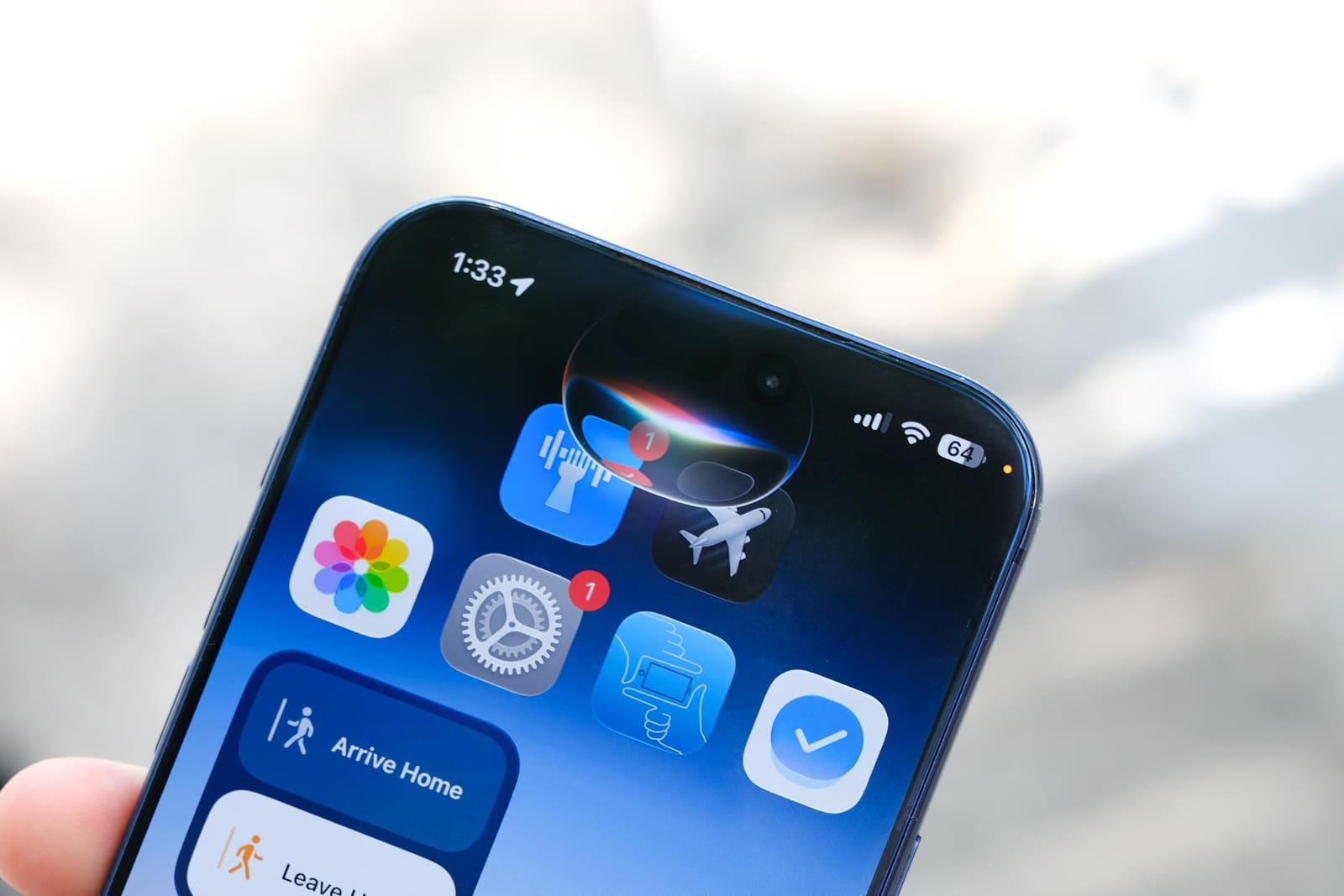
Apple's executive team is pushing to transform Siri from a reactive voice assistant into an autonomous agent capable of executing multi-step tasks without constant user input. CEO John Ternus has instructed software chief Craig Federighi to compress development timelines for advanced AI features, aiming to close a widening capability gap with OpenAI's Dots and Meta's Muse platforms.
The urgency reflects a strategic vulnerability. While Apple shipped a revised Siri architecture on an accelerated schedule earlier this year, internal assessments acknowledge the assistant remains a generation behind competitors in task complexity and autonomy. The company now faces market pressure to deliver not just incremental improvements but a fundamental shift in how Siri understands and executes user intent across sustained workflows.
The roadmap centres on two distinct phases. The first wave, targeted for iOS 27.3 in the coming months, will grant Siri granular command over Apple's own applications. Users will be able to instruct the assistant to manipulate photos, crop images with specific dimensions, reorder Safari tab groups, or adjust system settings through conversational requests rather than manual navigation.
The second phase, expected in spring, represents a more complex engineering challenge: opening Siri to third-party application control. This would enable the assistant to place food orders through delivery platforms, schedule reservations via restaurant booking services, or coordinate ride-sharing pickups without users switching between apps. The technical architecture requires not just API hooks but a semantic layer that maps natural language instructions to application-specific actions across thousands of potential app integrations.
The Agentic Threshold
The term "agentic" has become shorthand in AI development for systems that maintain context across sessions, formulate plans to achieve stated goals, and execute sequences of actions with minimal human intervention. Current voice assistants, including Siri, operate primarily in request-response mode: each interaction is discrete, and the system waits for explicit instructions at every decision point.
Competitors have moved beyond this constraint. OpenAI's Dots can track a user's objective over hours or days, breaking down a complex goal such as "plan a weekend trip to Kyoto" into constituent tasks (research accommodation, compare transport options, check weather forecasts, draft an itinerary) and execute them sequentially. Meta's Muse operates similarly, maintaining conversational memory and proactively suggesting next steps based on inferred intent.
Apple's internal development targets include building equivalent persistence into Siri. The assistant would need to store user goals in a secure, on-device knowledge graph, monitor progress toward those goals, and surface relevant actions or information without being prompted. A user might tell Siri to "help me prepare for next month's product launch" and expect the assistant to create calendar blocks, compile relevant documents, schedule check-ins with team members, and send reminders as deadlines approach, all without further instruction.
The technical hurdles are substantial. Agentic behaviour requires reasoning models that can decompose ambiguous instructions, prioritise conflicting sub-tasks, and handle failure gracefully when an action cannot be completed. It also demands sophisticated privacy safeguards; persistent goal-tracking means the system must store sensitive information about user intentions, schedules, and preferences, ideally without sending that data to cloud servers.
Architectural Constraints and Trade-Offs
Apple's commitment to on-device processing complicates the engineering roadmap. The company has consistently positioned privacy as a competitive differentiator, running inference locally wherever possible and using techniques such as differential privacy and secure enclaves to minimise data exposure. Agentic AI, however, benefits from large-context models and access to real-time information across the web, both of which are easier to deliver through cloud infrastructure.
The tension is visible in Apple's current AI implementation. The revised Siri introduced this year offloads some queries to Apple's private cloud compute nodes, which run on custom silicon designed to prevent data retention. This hybrid approach allows the assistant to handle more complex requests than purely on-device models permit, but it introduces latency and limits the scope of tasks Siri can perform offline.
Extending this architecture to support agentic workflows will require balancing responsiveness with privacy guarantees. If a user asks Siri to monitor flight prices and book tickets when a threshold is met, the assistant must either poll APIs continuously (a battery and bandwidth drain) or rely on server-side automation (a privacy concession). Apple's solution will likely involve a combination of on-device scheduling, encrypted cloud tasks, and user-controlled permissions that specify which actions can proceed without confirmation.
The third-party integration layer adds another dimension of complexity. Unlike Google or Amazon, which have cultivated extensive developer ecosystems for their assistants, Apple has historically maintained tighter control over system-level APIs. Opening Siri to deep app control means designing a framework that prevents malicious or poorly coded apps from exploiting voice commands while still allowing legitimate developers to expose rich functionality.
Competitive Dynamics in Asia-Pacific Markets
The assistant race carries particular weight in markets where voice interaction patterns and app ecosystems differ from Western norms. In China, WeChat's super-app model already provides a form of agentic automation through mini-programmes and service integrations, reducing reliance on standalone voice assistants. Apple's Siri struggles to match that utility in a market where the company does not control the dominant messaging and payment rails.
South Korea and Japan present different challenges. Samsung's Bixby has home-market advantages, and local language nuances (honorifics, context-dependent phrasing, mixed-script input) require tuning that general-purpose models often miss. Apple's ability to deliver agentic Siri in these languages will depend on training data quality and the sophistication of its multilingual reasoning models.
Southeast Asia's fragmented app landscape, meanwhile, tests the scalability of third-party integrations. A user in Jakarta might rely on Gojek for transport, Tokopedia for shopping, and Grab for food delivery; Siri's utility hinges on supporting the long tail of regional platforms, not just global brands. Apple's developer outreach and API adoption rates in these markets will determine whether agentic Siri becomes a practical tool or a feature that works well only in English-speaking territories.
Market Pressure and User Expectations
The shift toward agentic assistants is driven as much by consumer expectations as by competitive positioning. Early adopters of AI tools have become accustomed to systems that anticipate needs and reduce friction. A voice assistant that requires explicit commands for every step feels outdated when chatbots can generate entire workflows from a single prompt.
Enterprise users, in particular, are pushing for automation that extends across productivity suites. The ability to instruct an assistant to "summarise this week's project updates and draft a status report" requires integration with email, calendar, document storage, and potentially Slack or Teams. Apple's productivity tools (Mail, Calendar, Notes, iWork) lag behind Microsoft 365 and Google Workspace in third-party adoption, which limits Siri's reach in corporate environments even if the assistant gains agentic capabilities.
The consumer angle is equally pressing. Smart home control, travel planning, and personal finance management are use cases where agentic behaviour delivers tangible value. A user who can tell Siri to "optimise my energy usage this month" and have the assistant adjust thermostat schedules, lighting routines, and appliance timers based on occupancy patterns and tariff data will find the feature indispensable. Without that level of automation, Siri risks becoming a novelty rather than a daily utility.
Timeline Risks and Execution Challenges
Compressing development cycles carries execution risk. The initial Siri AI rollout encountered criticism for inconsistent performance, limited language support, and gaps in contextual understanding. Rushing agentic features to market could amplify those issues, particularly if the system misinterprets multi-step instructions or takes actions the user did not intend.
Apple's quality assurance processes are typically deliberate, favouring polish over speed. The current pressure to match competitors' timelines tests that philosophy. If iOS 27.3 ships with first-party app control that feels half-baked or the spring third-party integration launch is buggy, user trust in Siri's autonomy will erode, making adoption of future agentic features slower.
The company also faces a messaging challenge. Explaining the difference between a voice assistant that executes single commands and an agent that pursues goals over time requires clarity that marketing teams often struggle to deliver. If users do not understand what agentic Siri can do or how to activate those capabilities, adoption will lag regardless of technical sophistication.
What Comes Next
The spring third-party integration milestone will serve as a litmus test for Apple's broader agentic ambitions. If developers embrace the new APIs and users find the cross-app automation reliable, the path to persistent goal-tracking becomes clearer. If adoption is slow or the feature set feels limited compared to rivals, Apple will need to reassess its approach.
Longer term, the agentic assistant category is likely to converge with other AI initiatives inside Apple. The company is exploring on-device large language models, multimodal understanding (combining voice, vision, and sensor data), and proactive intelligence that surfaces information before users ask. Siri's evolution into an agent is less a standalone project than a piece of a larger strategy to embed AI across the operating system.
The roadmap extends well beyond next year. Truly agentic behaviour, where an assistant can manage complex projects with minimal oversight, requires advances in reasoning, memory, and error recovery that no vendor has fully solved. Apple's challenge is not just to catch up with current competitors but to position Siri as a platform that can absorb those advances as they emerge, without requiring users to switch ecosystems or retrain their habits.