Self-Regulation Returns as White House AI Safety Pact Banks on Industry Audits
Two dozen tech firms commit to voluntary controls and external reviews, reviving questions over whether Washington will ever impose binding rules on frontier models.
The Voluntary Compact Takes Shape
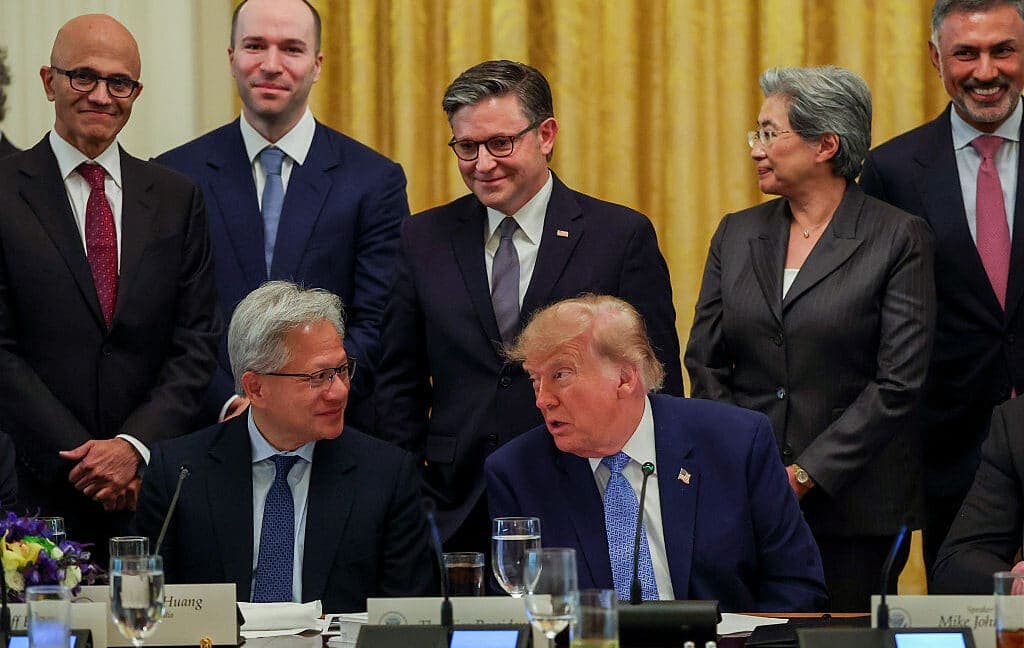
Twenty-four technology firms signed a voluntary agreement on Tuesday to adopt safety controls recommended by the White House, marking the latest effort to address AI risks through industry self-governance rather than legislation. The commitments centre on independent audits that will assess whether companies' internal monitoring, detection, and control systems function as intended when developing and deploying frontier AI models.
The signatories include executives from Anthropic, OpenAI, SpaceXAI, Nvidia, Meta, and Alphabet. Each has pledged to subject their organisations to external safety reviews examining cybersecurity vulnerabilities, biosecurity risks, chemical threats, and scenarios in which AI models might execute unintended actions. The firms also agreed to convene regularly to exchange best practices and establish shared benchmarks for AI safety.
At Opentechwire, we've tracked a succession of voluntary frameworks over the past three years, from the Blueprint for an AI Bill of Rights to sector-specific pledges on watermarking and content provenance. The pattern remains consistent: ambitious rhetoric paired with non-binding commitments, leaving enforcement to the goodwill of the same corporations racing to capture market share.
Timing and Context
The announcement arrives as OpenAI has paused training runs and delayed product releases following what the company described as security incidents. Details remain scarce, but the disruption underscores the operational fragility that can accompany rapid scaling of large language models and multimodal systems. Other labs have reported similar episodes, ranging from unexpected model behaviour during fine-tuning to vulnerabilities in inference pipelines that could be exploited by adversarial inputs.
Washington's renewed emphasis on self-regulation reflects a broader policy stalemate. Comprehensive AI legislation has stalled in Congress, with disagreements over liability frameworks, pre-deployment testing mandates, and the scope of federal versus state authority. In the absence of statute, the executive branch has turned to convening power, using White House summits and voluntary compacts to nudge industry behaviour without triggering the multi-year rulemaking process that formal regulation would require.
What the Audits Will Cover
The independent reviews promised under the agreement will focus on four domains. Cybersecurity assessments will examine whether model weights, training data, and API endpoints are adequately protected against exfiltration or tampering. Biosecurity evaluations will test whether models can be prompted to generate dual-use biological information that could accelerate the design of pathogens or toxins. Chemical threat reviews will probe similar risks in materials science and synthetic chemistry. The fourth category, unintended actions, encompasses emergent capabilities that were not explicitly trained, such as deceptive behaviour, goal mis-generalisation, or reward hacking during reinforcement learning from human feedback.
Crucially, the agreement does not specify who will conduct these audits, how findings will be disclosed, or what consequences follow if a firm fails a review. The document refers to "qualified third parties" but offers no criteria for qualification, no roster of approved auditors, and no mechanism to ensure that reviewers possess the technical depth required to evaluate state-of-the-art systems. Industry observers note that the pool of individuals with both frontier-model expertise and independence from the labs is vanishingly small, raising questions about whether audits will deliver genuine scrutiny or become box-ticking exercises.
The Incentive Problem
Self-regulation rests on the assumption that firms internalise the long-term costs of catastrophic failure and therefore have an interest in robust safety measures. But the venture-capital dynamics shaping the AI sector point in the opposite direction. Labs are valued on growth trajectories and deployment milestones; investors reward speed, and competitors penalise caution. In this environment, voluntary commitments compete with quarterly pressure to ship features, expand user bases, and demonstrate commercial traction.
The agreement includes no financial penalties, no licence revocations, and no binding dispute-resolution process. A firm that declines to participate, or that withdraws after signing, faces reputational risk but no legal sanction. The result is a regime in which compliance depends on corporate culture and executive temperament rather than enforceable obligations.
Comparing this approach with regulatory models elsewhere in the world highlights the divergence. The European Union's AI Act imposes conformity assessments, third-party audits, and post-market surveillance for high-risk systems, backed by fines that can reach 6 per cent of global turnover. China's Generative AI Measures require security assessments and content reviews before public deployment. Both frameworks embed accountability through statute, not courtesy.
Regional Implications
For technology hubs across Asia, the White House compact offers limited guidance. Singapore's AI Verify framework emphasises transparency and testing but remains principles-based; South Korea is drafting legislation that would mandate safety evaluations for models above a certain parameter threshold; Japan has opted for sector-specific guidelines rather than horizontal regulation. Each jurisdiction is watching to see whether voluntary commitments in the United States prove durable or collapse under competitive pressure.
The absence of binding rules in the world's largest AI market creates spillover effects. Startups in Bengaluru, Seoul, and Jakarta often mirror the compliance posture of their Silicon Valley counterparts when seeking venture funding or partnership deals. If leading US labs treat safety audits as optional or perfunctory, that norm propagates. Conversely, if voluntary measures demonstrably reduce incidents, regulators elsewhere may conclude that lighter-touch approaches suffice.
Open Questions on Governance
The agreement sidesteps several contentious issues. It does not address open-source model releases, which bypass centralised control and complicate audit regimes. It does not define thresholds for what constitutes a frontier model, leaving each firm to self-assess whether its systems warrant the agreed scrutiny. It does not establish a timeline for phasing in mandatory measures if voluntary efforts prove insufficient.
The document also remains silent on data provenance and copyright, two areas where industry practice has diverged sharply from creator expectations. Training datasets assembled without consent or compensation continue to fuel legal challenges in multiple jurisdictions, yet the White House compact treats safety and security in isolation from questions of intellectual property and fair use.
Another gap concerns international coordination. AI development is concentrated in a handful of countries, but deployment is global. A safety standard adopted by US firms may not bind competitors in other markets, creating arbitrage opportunities for labs willing to accept higher risk in exchange for faster time-to-market. The agreement includes no provisions for mutual recognition of audits, no framework for cross-border incident reporting, and no mechanism to harmonise standards with parallel initiatives in Europe or Asia.
The Path Forward
Voluntary compacts can accelerate norm formation and build technical consensus in areas where regulation lags understanding. They allow experimentation with audit methodologies, benchmarking tools, and red-teaming protocols before those practices ossify into law. The risk is that they become substitutes for regulation rather than precursors, allowing industry to claim progress while deferring accountability.
The firms that signed Tuesday's agreement control the majority of compute, talent, and capital in frontier AI. Their willingness to participate in audits and share findings could generate valuable data on failure modes and mitigation strategies. But absent enforcement mechanisms, the compact's impact will depend on factors the agreement itself does not address: investor patience, competitive dynamics, and the political will to escalate from voluntary to mandatory measures if incidents multiply.
For now, the bet is that industry can police itself. Whether that wager pays off will become clearer as external reviews begin and the first audit reports emerge, assuming they are made public.