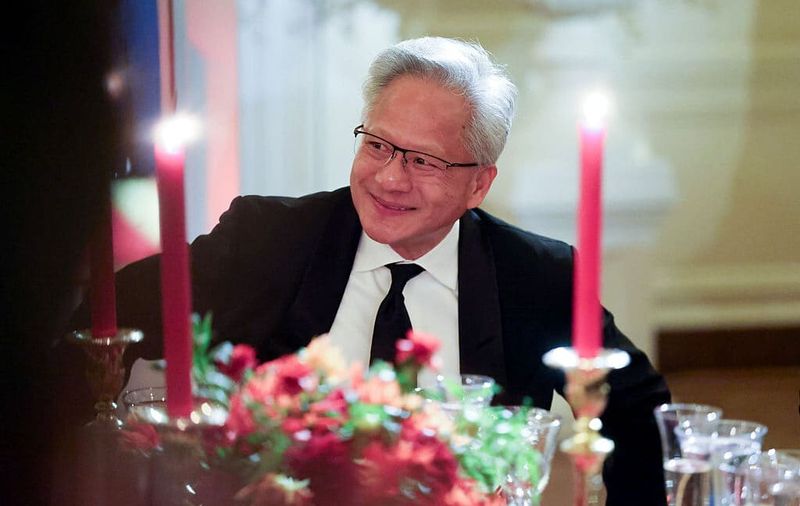
Two Silicon Valley CEOs Accept Tsinghua Advisory Roles Amid Export Curbs
Jensen Huang and Lisa Su join a university board that has historically provided a channel between Western tech executives and Beijing policymakers.
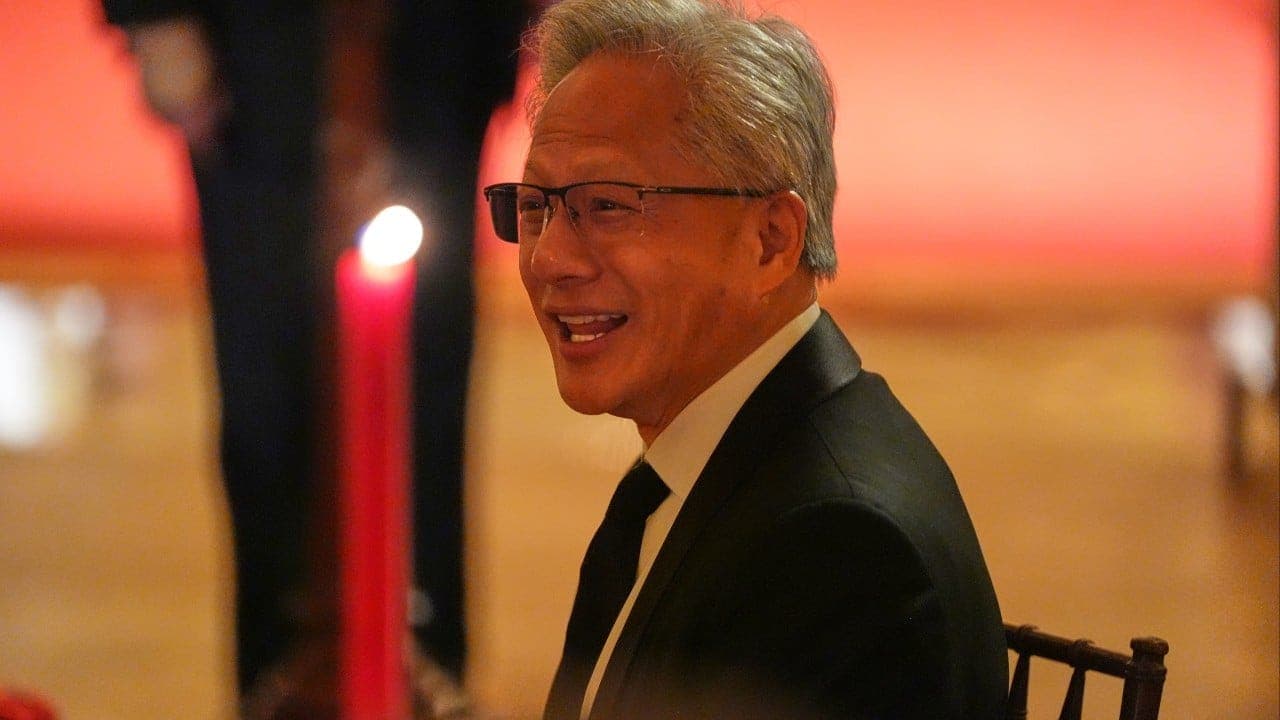
A Rare Institutional Bridge
Jensen Huang and Lisa Su, the chief executives steering two of the world's most important semiconductor firms, have accepted positions on the advisory board of Tsinghua University's School of Economics and Management. The appointments place both leaders within an institutional mechanism that has long served as a conduit between multinational executives and senior figures in China's government.
The board, historically composed of global business leaders and academics, convenes periodically to discuss economic policy, industrial strategy, and the interface between technology and governance. Huang, who founded Nvidia in 1993, and Su, who has led AMD since 2014, join Marc Pictet, senior managing partner of Swiss wealth manager Pictet Group, in the latest cohort of appointees.
At Opentechwire, we have tracked the composition of this particular board for several years. Its membership has often reflected the shifting priorities of Beijing's economic planning apparatus, and its meetings have offered rare face-time with ministers and Politburo-level officials. The timing of these two appointments is striking: they arrive as the US government continues to tighten restrictions on the sale of advanced chips and chip-making equipment to Chinese buyers.
The Policy Landscape
Washington's export controls, revised multiple times since October 2022, now prevent Nvidia and AMD from shipping their highest-performance graphics processing units and AI accelerators to customers in China without a licence. The regulations target chips capable of exceeding specific thresholds in computational density and interconnect bandwidth, metrics that define the hardware underpinning large-scale machine learning.
Both companies have responded by designing alternative products that sit just below the regulatory cut-offs. Nvidia introduced the A800 and H800 as China-specific variants of its A100 and H100 data-centre GPUs; AMD released the MI250 and later the MI300A in configurations tailored to comply with the rules. Yet even these workarounds face uncertainty. The US Commerce Department's Bureau of Industry and Security has signalled that it may tighten definitions again, narrowing the performance envelope within which modified chips can be sold.
For Huang and Su, the advisory board offers a forum in which to hear directly from Chinese policymakers about priorities in semiconductor self-sufficiency, domestic AI development, and the regulatory environment facing foreign firms. It also provides a visible signal of continued engagement, a gesture that matters in a market that still represents a significant share of revenue for both companies despite the export restrictions.
Tsinghua's Institutional Weight
Tsinghua University is not simply an academic institution. Its alumni populate the upper ranks of China's state-owned enterprises, its technology ministries, and its venture-capital ecosystem. The School of Economics and Management, established in 1984, has cultivated relationships with Western corporations for decades, offering programmes taught in English and co-operation agreements with business schools in the United States and Europe.
The advisory board itself was created in 2000 and has included, at various times, the chief executives of Apple, Goldman Sachs, BlackRock, and Volkswagen. Meetings typically occur once a year in Beijing, and attendees have historically been granted access to senior officials from the Ministry of Industry and Information Technology, the National Development and Reform Commission, and the People's Bank of China.
For multinational executives navigating China's regulatory complexity, the board serves as a listening post and, occasionally, a lobbying channel. It is not a decision-making body, but it does provide a structured setting in which to articulate concerns about market access, intellectual-property enforcement, and the predictability of policy changes.
The Semiconductor Calculus
Nvidia and AMD occupy asymmetric positions in the China market. Nvidia's data-centre revenue from the region peaked in fiscal 2023, then contracted sharply as the export controls took effect. The company has since sought to rebuild sales through compliant products, but faces intensifying competition from domestic Chinese GPU designers such as Biren Technology, Moore Threads, and the AI chip divisions of Alibaba and Baidu.
AMD's exposure is more diversified. The company sells server processors, client CPUs, and graphics cards in China, in addition to its Instinct line of AI accelerators. Its joint venture with Chinese partners, established in 2016 to develop x86 processors for the domestic server market, was wound down in 2020 amid regulatory friction. Since then, AMD has relied on direct sales through distributors and cloud-service providers.
Both firms are also watching Beijing's own semiconductor policy. China's "Big Fund" investment vehicles have channelled tens of billions of dollars into domestic chip design, fabrication, and equipment manufacturing. The government's goal is to raise the self-sufficiency rate for integrated circuits to 70 per cent by 2030, a target that would sharply reduce reliance on imports from the United States, South Korea, and Taiwan.
Whether that target is achievable remains an open question. China's leading-edge fabrication capacity lags by at least two process nodes, and its lithography equipment supply is constrained by Dutch export controls on ASML's extreme ultraviolet systems. Yet progress in mature-node production and in chip design has been faster than many Western observers anticipated three years ago.
The Broader Context
The decision by Huang and Su to join the Tsinghua board does not, in itself, alter the trajectory of US-China semiconductor competition. But it does illustrate the persistence of institutional ties even as trade barriers rise. Both executives are US citizens, and their companies are headquartered in California. Their products are subject to US export law, and their decisions are scrutinised by lawmakers in Washington who view semiconductor leadership as a matter of national security.
At the same time, China remains the largest consumer electronics market in the world, a hub for contract manufacturing, and a growing source of AI research. Disengagement is not costless. For Nvidia, which derives a substantial share of its revenue from data-centre customers, losing access to Chinese buyers entirely would represent a multi-billion-dollar revenue headwind. For AMD, which competes with Intel for x86 server share, the China market is a key battleground in its effort to expand beyond its traditional strongholds.
The advisory board positions allow both leaders to maintain a channel of communication without making policy commitments. They can listen, signal intent to remain engaged, and gather intelligence on the regulatory direction that will shape their product roadmaps for the next several years. Whether that channel proves useful will depend on decisions made in Beijing and Washington, not in Palo Alto or Santa Clara.
What Comes Next
The appointments arrive at a moment when both governments are reassessing their semiconductor strategies. The United States is deploying subsidies under the CHIPS and Science Act to reshore advanced fabrication, while simultaneously expanding the list of Chinese entities subject to export restrictions. China is accelerating its own fab construction, investing in alternative architectures such as RISC-V, and pushing state-owned enterprises to replace foreign chips in critical infrastructure.
In this environment, the role of a university advisory board is necessarily limited. It cannot resolve the underlying security concerns that drive export policy, nor can it bridge the gap between competing visions of technological sovereignty. But it can offer a venue for dialogue, a space in which executives and officials can articulate their interests and test the boundaries of what remains possible.
For Huang and Su, the calculus is pragmatic. They lead companies that depend on global markets, and they operate in an industry where supply chains cross dozens of borders. The advisory board is one node in a network of relationships that includes customers, regulators, research partners, and competitors. It is not a solution to the tensions between Washington and Beijing, but it is a recognition that those tensions will shape the semiconductor industry for years to come.