Sakana AI Bets on Industrial Edge to Break Japan's Foundation-Model Dependency
The Tokyo startup's forthcoming Sawara model targets on-premises deployment in factories and sensitive government systems, offering a counterweight to reliance on US and Chinese AI infrastructure.
A Dual Rationale for Domestic Pre-training
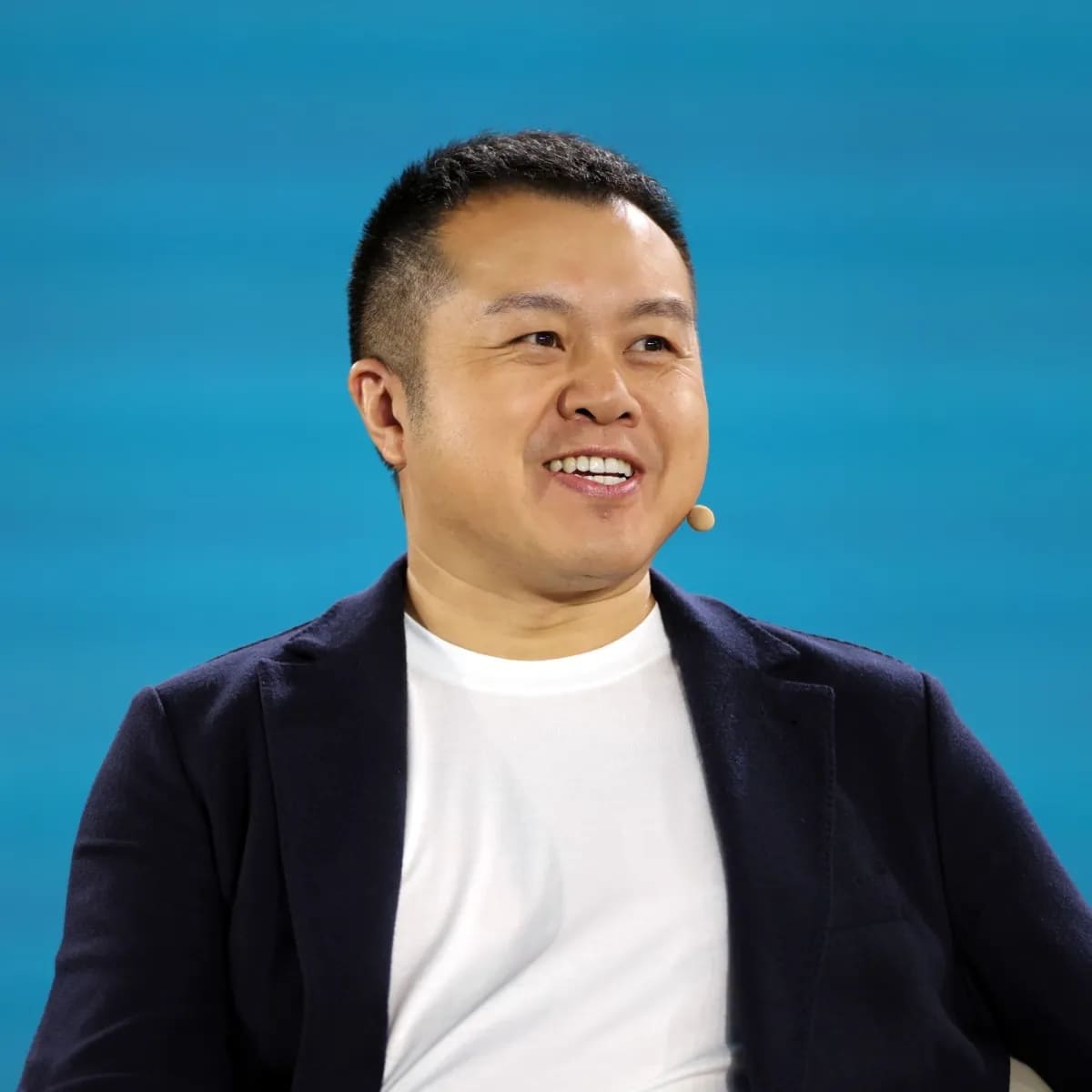
Sakana AI, a Tokyo-based startup co-founded by David Ha, has begun work this month on Sawara, a foundation model designed to address what the company frames as a two-fold challenge: long-term competitiveness in manufacturing and shorter-term gaps in cybersecurity infrastructure. The plan calls for a small-scale release in early 2027, followed by a larger variant. Ha describes the initiative as the final piece in Sakana's ambition to become what he terms a "full-stack" AI company, one that controls the entire pipeline from pre-training through deployment.
Japan's industrial base has long relied on precision engineering and lean production systems, yet the application of large language models and multimodal AI in factories remains constrained by latency, data residency requirements, and the difficulty of adapting foreign-trained systems to Japanese workflows. Ha argues that existing open-weight models carry implicit biases reflecting the priorities and political contexts of their creators, often US or Chinese labs. According to the company, those models may decline to answer questions about Japanese politics or produce responses misaligned with local business norms, a friction that becomes acute when enterprises seek to integrate AI into sensitive or regulated processes.
Sakana's earlier products illustrate the problem. Namazu, a Japanese-focused language model released earlier this year, fine-tunes open-weight architectures from Meta and DeepSeek to improve performance on translation, cultural reference, and agent tasks. Fugu, an orchestration layer launched approximately five months ago, assembles AI agents from multiple external models, including those developed by US labs. Yet neither product eliminates the dependency on foreign pre-training. Sawara is intended to close that gap by providing a domestically trained foundation that can be customised and audited end to end.
On-Premises Deployment as a Non-Negotiable
The emphasis on a smaller model reflects a specific technical and regulatory constraint. Cybersecurity applications in Japan, particularly those involving government agencies, mandate on-premises deployment. Cloud-based inference, even when encrypted, does not meet the audit and sovereignty requirements that ministries impose. Ha notes that the small Sawara variant will be optimised for edge and on-premises environments, where computational resources are limited and network connectivity may be intermittent or prohibited.
This requirement has already shaped Sakana's work with Japan's Ministry of Defence, which signed a research contract with the startup in July to explore AI-driven analysis and integration of multi-source intelligence. Separately, the company has collaborated with the Ministry of Internal Affairs and Communications on systems for detecting disinformation. Both engagements exposed the gap between commercial AI tooling and government specifications: the latter demand verifiable training data, the ability to strip out foreign dependencies, and the option to retrain or fine-tune models without sending data beyond organisational perimeters.
Ha acknowledges that domestic foundation models will not wholly displace foreign systems. Japan will continue to use products from OpenAI, Anthropic, and others in less sensitive contexts. Yet for defence, critical infrastructure, and certain regulatory workflows, the absence of a local alternative creates a single point of vulnerability. If export controls or geopolitical friction restrict access to US models, or if Chinese-trained systems face heightened scrutiny, organisations without domestic options face operational risk. Sawara is positioned as insurance against that scenario.
Manufacturing as the Long Tail
Beyond national security, Sakana's broader thesis centres on Japan's manufacturing sector, which accounts for a significant share of the country's exports and employs millions across automotive, electronics, robotics, and materials production. Ha describes physical AI, the application of machine learning to robotics and industrial automation, as the company's long-term focus. The vision is to embed Sawara into factory-floor systems that manage supply chains, predictive maintenance, quality control, and human-robot collaboration.
The challenge is that manufacturing environments differ sharply from the data-centre settings where most foundation models are trained and deployed. Factories generate vast volumes of sensor data, much of it unlabelled or structured in proprietary formats. Latency tolerances are measured in milliseconds, and downtime carries immediate financial cost. Training a model that understands Japanese technical documentation, local supplier networks, and the idiosyncrasies of domestic production standards requires both linguistic fine-tuning and domain-specific pre-training on industrial corpora.
Sakana's approach is to treat government contracts as a forcing function. The strict requirements imposed by ministries serve as a proxy for the demands that large manufacturers will eventually articulate as they move AI from pilot projects to production lines. If Sawara can meet defence-grade standards for auditability and on-premises deployment, the same architecture should translate to automotive plants, semiconductor fabs, and logistics hubs.
IPO Speculation and Strategic Patience
Reports earlier this month suggested that Sakana might pursue an initial public offering in Japan, though Ha states that no near-term listing is planned. The speculation followed coverage in Japanese and international financial outlets, which cited unnamed sources and proposed a valuation range. Ha describes the timing and figures as conjecture, adding only that the company expects to list in Japan when it does go public, a reflection of what he calls a "gravitational pull" toward the domestic market.
The choice of venue carries strategic weight. Japanese equity markets have historically valued hardware and manufacturing firms more generously than software startups, a function of investor familiarity and the country's industrial legacy. By anchoring its narrative around manufacturing competitiveness and government partnerships, Sakana positions itself closer to the former category. An IPO in Tokyo, rather than New York or Hong Kong, would also reinforce the company's claim to be a national champion, a framing that matters when courting government contracts and industrial partnerships.
Ha frames Sakana's growth not as a pure software play but as a co-evolution with Japan's export sectors. The company intends to expand internationally alongside Japanese manufacturers, embedding its models into the global operations of Toyota, Mitsubishi, Panasonic, and other conglomerates. This strategy sidesteps the need to compete head-to-head with OpenAI or Anthropic in consumer or general-enterprise markets, instead carving out a vertical where domain expertise and regulatory alignment create defensible moats.
The Limits of Autonomy
Yet the path to true autonomy remains incomplete. Even with Sawara, Sakana will depend on foreign semiconductor supply chains for training and inference hardware, on open-source frameworks largely maintained by US firms, and on the global research community for algorithmic advances. Foundation models require enormous compute, and Japan's domestic GPU capacity lags behind the United States and China. Unless the country invests in large-scale AI infrastructure, including power generation and cooling systems optimised for training clusters, Japanese labs will continue to rent capacity from cloud providers or ship workloads overseas.
Ha does not claim that Sawara will eliminate these dependencies. The model is described as a necessary but not sufficient step toward reducing Japan's exposure to foreign AI supply chains. The real test will come when the small version ships in early 2027: whether it can match the performance of foreign models on the specific tasks that matter to Japanese enterprises, whether it can be deployed at scale without prohibitive cost, and whether it can win the trust of government agencies and manufacturers who have spent decades relying on proven, if foreign, technology.
Sakana's bet is that sovereignty, in AI as in semiconductors, will eventually command a premium. For now, the company is threading a narrow path: building domestic capabilities without severing ties to the global ecosystem, courting government contracts without becoming a defence contractor, and positioning manufacturing competitiveness as both a market opportunity and a matter of national interest.