One Developer's Rust-Powered Bid to Reinvent Adobe's Creative Toolchain
Brandon Thomas is using Claude Opus 5.5 to build open-source clones of Photoshop, Premiere, and five other Adobe applications, promising perfect fidelity in what remains a deeply unfinished project.
From Controllable Generation to Full Suite Replication
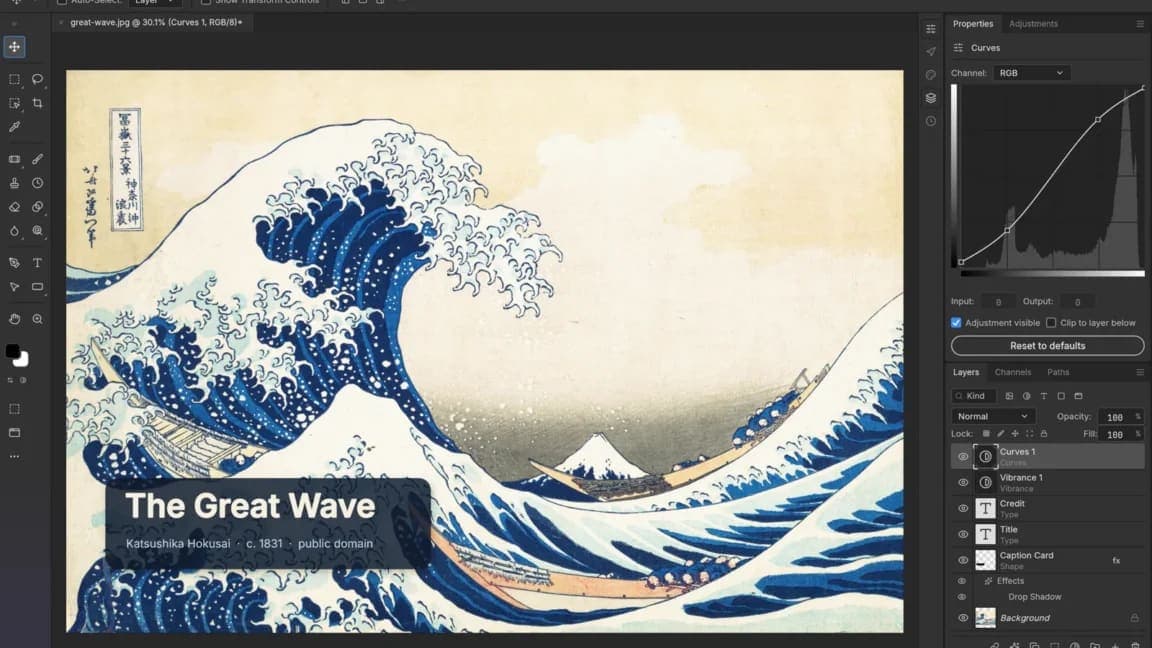
Brandon Thomas launched Artcraft in 2025 as a tool for post-generation editing of AI images and video, a niche that attracted artists seeking more control over generative output. Over the past weekend, the project took a sharp turn: Thomas announced seven applications that mirror the interface and feature set of Adobe Photoshop, Illustrator, Premiere, Lightroom, After Effects, InDesign, and Acrobat Pro. Each is written in Rust, with WebAssembly builds enabling browser-based use, and all carry open-source licences.
In a post to the /r/programming subreddit this week, Thomas described the work as a "clean-room replacement" effort powered by Anthropic's Claude Opus 5.5. The term refers to a reverse-engineering method in which one team documents the behaviour of proprietary software whilst a second team, isolated from the original code, implements equivalent functionality. Here, the large language model appears to serve as both teams, ingesting descriptions of Adobe's tools and generating Rust implementations that aim to match their behaviour without touching Adobe's intellectual property.
The technical approach is ambitious in scope and audacious in promise. Thomas has stated that the current "super early alpha" releases will eventually achieve "perfect fidelity" with Adobe's decades-old applications. That claim has drawn scepticism in developer communities, where commenters on Hacker News and GitHub have catalogued missing features, incomplete rendering pipelines, and interface elements that exist in name only.
The Economics of Creative Software Replacement
Adobe's Creative Cloud subscription model, which began its rollout in 2013, has long been a friction point for freelancers, small studios, and hobbyists. Monthly fees now range from US$14.99 for a single application to US$89.99 for the full suite, and annual commitments carry early-termination penalties. For users in markets where purchasing power is lower, those sums represent a material barrier to entry.
Free alternatives have existed for years. GIMP offers raster editing; Inkscape handles vector graphics; DaVinci Resolve provides professional video post-production. Yet none has replicated Adobe's full ecosystem or the muscle memory embedded in two decades of interface conventions. Artcraft's stated goal is to close that gap, not by inventing new paradigms but by cloning the old ones precisely enough that migration requires no retraining.
The economic logic is straightforward: if the interface and file-format compatibility are indistinguishable, switching costs vanish. But the execution risk is steep. Adobe's applications are the product of hundreds of engineer-years, intricate optimisations for colour management and GPU acceleration, and deep integration with proprietary formats such as PSD and INDD. A single developer, even one augmented by a frontier LLM, must navigate all of that complexity whilst avoiding patent and copyright landmines.
LLM-Assisted Reverse Engineering and Its Limits
Thomas's use of Claude Opus 5.5 represents a test case for how far code-generation models have come in replacing not just boilerplate but entire application architectures. Anthropic's Opus tier is trained to handle long context windows and multi-step reasoning, making it plausible that the model could ingest Adobe's public documentation, user manuals, and third-party tutorials, then emit Rust code that approximates the described behaviour.
What the model cannot do, however, is infer undocumented optimisations, proprietary algorithms, or the accumulated bug fixes that make mature software stable. Adobe's content-aware fill in Photoshop, for instance, relies on machine-learning models trained on internal datasets. Its Mercury Playback Engine in Premiere uses GPU scheduling heuristics refined over years of profiling. Replicating those features requires either access to equivalent training data and compute or acceptance that the clone will perform differently under load.
Early feedback from users who have tested the Artcraft alpha builds confirms these gaps. Brush dynamics in the Photoshop clone lack pressure sensitivity on some tablets. The Illustrator equivalent renders Bézier curves correctly but struggles with complex path operations. The Premiere clone can import video but cannot yet export in anything other than uncompressed formats, making it unusable for production work.
None of this is surprising for an alpha release announced days after its pivot. What matters is whether the trajectory points towards convergence with Adobe's feature set or whether the project will plateau as a proof of concept.
Open Source, Rust, and the Browser
Thomas's choice of Rust and WebAssembly carries strategic implications. Rust's memory safety and concurrency model make it well suited to the kind of high-throughput image and video processing that creative applications demand. WebAssembly, meanwhile, enables distribution without installers, a friction reducer for users wary of downloading executables from an unfamiliar source.
Running Photoshop-equivalent software in a browser tab also sidesteps platform fragmentation. Adobe maintains separate codebases for Windows and macOS, each with its own quirks. A WebAssembly build runs identically across operating systems, provided the browser's WebGPU implementation is mature enough to handle GPU-accelerated rendering. That assumption does not yet hold universally; Safari's WebGPU support lags behind Chrome and Edge, and Linux users reliant on Firefox face compatibility gaps.
The open-source licensing is both an asset and a constraint. It invites contributions from developers frustrated by Adobe's closed ecosystem, potentially accelerating feature parity. But it also means that Adobe, should it choose to, can monitor every commit, identify patent infringements, and prepare legal responses before the software gains critical mass.
The "Software Is Over" Thesis
In his Reddit announcement, Thomas framed Artcraft's pivot with the declaration that "software is over", a phrase that has circulated in AI-adjacent circles since large language models demonstrated the ability to generate functional code from natural-language prompts. The argument runs as follows: if describing what software should do is sufficient to create it, then the traditional software industry, with its layers of product managers, designers, and QA engineers, collapses into a tighter loop of specification and generation.
That thesis holds more weight in greenfield projects than in replicating mature, feature-dense applications. Adobe's tools are not just code; they are decades of user feedback encoded in thousands of edge-case behaviours. A clone that handles 95 per cent of workflows will still frustrate users who depend on the missing 5 per cent, and those users will not care whether the gap exists because the LLM could not infer the behaviour or because the solo developer lacked time to implement it.
Moreover, Adobe's competitive moat is not solely technical. The company has spent years building integrations with stock libraries, font services, cloud storage, and collaborative review tools. A standalone application, no matter how faithful to the original, cannot replicate that ecosystem without negotiating access to the same third-party services or building open alternatives from scratch.
What Comes Next
Thomas has not disclosed a timeline for moving beyond alpha status, nor has he detailed how he intends to fund ongoing development. Open-source creative tools have historically struggled with sustainability; Blender is the exception, sustained by a foundation and corporate sponsorships, whilst projects such as Krita and Inkscape rely on volunteer labour and modest donation streams.
Artcraft's visibility, amplified by its provocative framing and the novelty of LLM-assisted development, may attract contributors. But visibility also attracts scrutiny. Adobe's legal team has a record of defending its intellectual property, and whilst clean-room reverse engineering is a recognised defence, the burden of proof lies with the defendant. If Thomas cannot demonstrate that his process genuinely isolated him from Adobe's source code, the project risks an injunction before it reaches beta.
For now, Artcraft is a signal of how AI-assisted development is reshaping what a single developer can attempt. Whether it becomes a credible alternative to Adobe or a cautionary tale about the gap between ambition and execution will depend on the next six months. The alpha is public, the code is open, and the stakes are clear.