OpenAI Rewires ChatGPT Plug-Ins Into Embedded App Interfaces
The AI lab's latest developer tools aim to turn plug-ins into persistent, interactive workspaces inside ChatGPT, not just API bridges.
From API Hooks to Persistent Workspaces
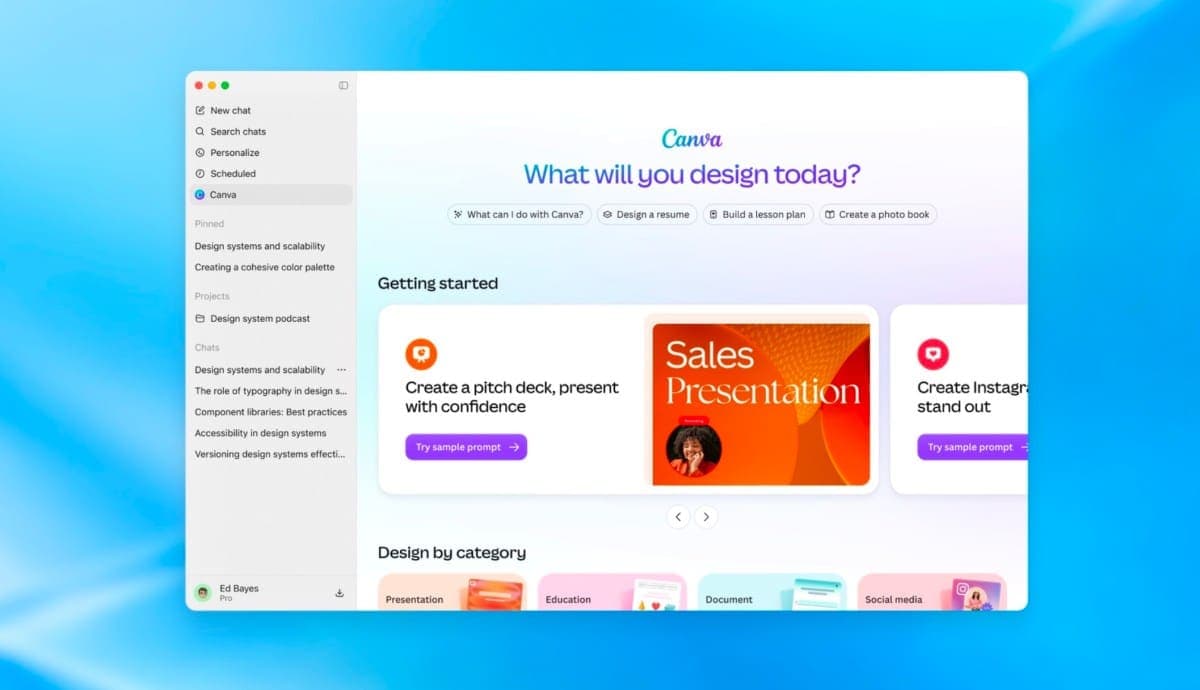
OpenAI introduced a new generation of plug-in architecture on Tuesday that gives third-party developers space to build what are effectively mini-applications inside ChatGPT. The shift moves beyond the existing plug-in model, where external services like Slack or Google Drive connect through APIs, toward interfaces that remain visible and interactive throughout a conversation.
The centrepiece is a dedicated sidebar slot for plug-in extensions. Developers can now design interactive panels that users open alongside the chat window, letting them manipulate files, adjust settings, or trigger actions without leaving the conversation. OpenAI has also opened support for custom file viewers, so applications that rely on proprietary formats can render them natively within ChatGPT.
At Opentechwire, we have tracked the expansion of large-language-model ecosystems from narrow API integrations to richer, stateful interfaces. This announcement suggests OpenAI is positioning ChatGPT less as a conversational front-end and more as a platform for lightweight application hosting, a strategy that puts it in direct competition with productivity suites and no-code tools.
Tooling to Speed Plug-In Development
OpenAI unveiled a Plugin Creator tool designed to lower the barrier for developers building extensions. The new submission flow promises clearer feedback during the approval process, and the directory ranking algorithm has been updated to surface plug-ins more intelligently, both in browsing and mid-conversation recommendations.
Users now grant access permissions on a per-plug-in basis, rather than approving a blanket set of scopes. That granular control addresses a recurring friction point in earlier plug-in implementations, where users were unsure which data a third-party service could reach.
The company has also integrated plug-in support into ChatGPT Sites, the lightweight website builder it launched earlier this year. A user can publish a site that embeds a plug-in, and colleagues who visit that site can interact with the plug-in using their own credentials and connected data. The model resembles collaborative workspace features in Notion or Airtable, but executed entirely through ChatGPT's interface layer.
Event-Driven Automations via MCP
OpenAI announced support for the MCP Events specification, a proposed standard that lets plug-ins trigger automations when specific events occur in a connected application. For example, a plug-in linked to a project-management tool could initiate a workflow when a task is marked complete, or a calendar plug-in could draft meeting notes the moment an event ends.
The MCP Events proposal is still under review by the broader developer community, but OpenAI's early adoption signals intent to make ChatGPT a hub for cross-application orchestration. Event-driven architectures are common in enterprise middleware, and bringing them into a conversational interface could appeal to teams already using ChatGPT for internal tooling.
OpenAI has also streamlined the user experience for managing automations. The updated interface lets users view active automations, edit triggers, and revoke permissions from a single panel, reducing the cognitive overhead that earlier versions imposed.
Implications for the Productivity Stack
The plug-in extensions and event-driven automations collectively represent a bid to make ChatGPT a persistent layer across work software. If developers adopt the new tools at scale, users could manage tasks, files, and workflows without switching tabs or opening standalone applications.
That ambition carries both opportunity and risk. On one hand, reducing context-switching can improve productivity, especially for teams that already rely on ChatGPT for drafting, summarising, and data lookup. On the other, concentrating multiple workflows inside a single interface raises questions about vendor lock-in, data portability, and the long-term viability of plug-ins if OpenAI changes its platform rules.
The competitive landscape is also shifting. Microsoft has embedded similar automation features in Copilot, and Google is building Duet AI extensions for Workspace. OpenAI's advantage lies in its first-mover position and the scale of ChatGPT's user base, but the window for differentiation is narrowing as incumbents roll out their own AI-native tooling.
Developer Adoption Will Decide the Outcome
The success of plug-in extensions hinges on whether developers see ChatGPT as a distribution channel worth investing in. Building an interactive panel requires more engineering effort than connecting an API, and maintaining parity with a standalone application adds ongoing overhead.
OpenAI has addressed part of that friction with the Plugin Creator tool, but the directory's discoverability remains a challenge. If the ranking algorithm does not surface high-quality plug-ins consistently, developers may struggle to reach users, and the ecosystem could fragment into a long tail of underutilised extensions.
The event-driven automation layer introduces another variable. If the MCP Events specification gains traction across multiple platforms, plug-ins built for ChatGPT could work elsewhere with minimal modification. If it does not, developers will need to maintain separate automation logic for each AI platform they support.
For now, OpenAI has laid the technical foundation for a more integrated plug-in ecosystem. Whether that foundation translates into a thriving developer community, or merely a feature set that productivity incumbents replicate, will become clearer over the next year as adoption data emerges and competing platforms release their own responses.