TSMC Insists on Full Factory Control in Texas Terafab Talks with Musk
The world's leading chipmaker confirms it is exploring Elon Musk's ambitious semiconductor proposal, but only if it retains complete operational authority over any facility.
Non-Negotiable Terms for Chipmaking Partnership
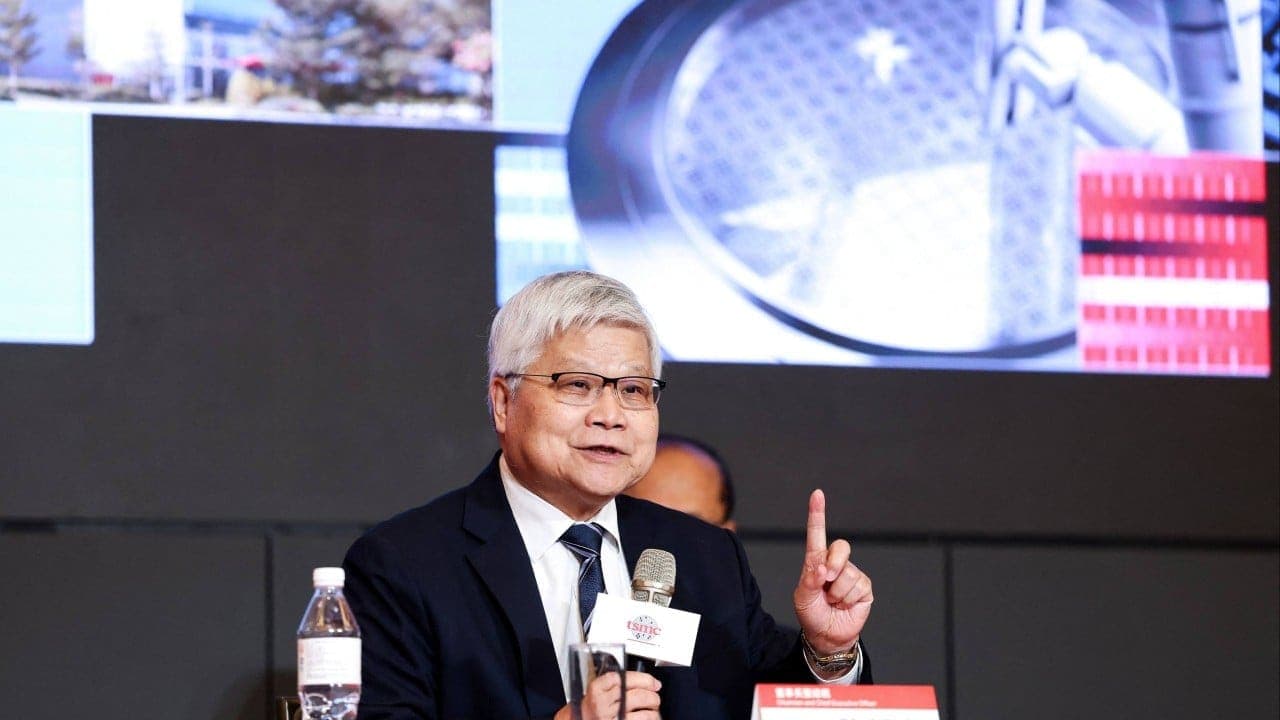
Taiwan Semiconductor Manufacturing Co has acknowledged it is exploring involvement in Elon Musk's proposed Terafab initiative in Texas, though the company's leadership has drawn a firm line on governance. Speaking during the third-quarter earnings call on 14 October, chairman and CEO C.C. Wei stated that any manufacturing plant associated with the project "has got to be run by TSMC."
The position reflects a fundamental tension in how advanced semiconductor production partnerships are structured. TSMC has built its dominance in contract chipmaking through tightly controlled fabrication processes, proprietary tooling sequences, and decades of accumulated manufacturing knowledge. Ceding operational authority would mean exposing those advantages to outside influence, something the Hsinchu-headquartered company has historically avoided even with its largest customers.
Wei's comments confirm that assessment teams have travelled to Texas to evaluate expansion possibilities beyond the company's existing US operations. The acknowledgment marks the first time TSMC has publicly discussed the Terafab concept, which Musk has framed as a large-scale semiconductor facility aimed at supporting compute-intensive applications, including artificial intelligence workloads and autonomous vehicle systems.
The Terafab Vision and Its Constraints
Musk's Terafab proposal centres on building a fabrication complex capable of producing chips at a scale and speed that would dwarf conventional facilities. The name itself suggests tera-scale ambitions, implying throughput or capacity measured in trillions of operations, transistors, or wafers depending on the metric. Such a plant would theoretically serve the growing silicon demands of Tesla's full self-driving systems, xAI's training clusters, and potentially other ventures within Musk's portfolio.
Yet the semiconductor industry operates under constraints that resist the kind of rapid vertical integration Musk has achieved in electric vehicles or rockets. Leading-edge chip production requires extreme ultraviolet lithography tools, each costing over USD 150 million and available only from ASML in the Netherlands. Cleanroom environments must maintain particle counts measured in parts per trillion. Yield optimisation, the process of ensuring that a high percentage of chips on each wafer function correctly, can take years to refine for a new process node.
TSMC's insistence on operational control is rooted in those realities. The company has spent more than three decades perfecting its manufacturing discipline, and its competitive edge rests on the ability to deliver high yields at advanced nodes such as 3-nanometre and the forthcoming 2-nanometre processes. Allowing an external partner to dictate production decisions, staffing, or equipment choices would introduce variables that could degrade performance and, by extension, TSMC's reputation with the broader customer base that includes Apple, Nvidia, AMD, and Qualcomm.
US Expansion and the Arizona Precedent
TSMC already operates a significant US footprint. The company's Arizona complex, anchored in Phoenix, is progressing through multiple phases. The first fab is expected to begin volume production of 4-nanometre chips in 2025, with subsequent facilities planned for 3-nanometre and eventually more advanced nodes. That project has encountered delays and cost overruns, in part due to the challenges of replicating TSMC's Taiwanese manufacturing culture and supply chain in a different regulatory and labour environment.
The Arizona experience informs Wei's caution. TSMC has had to navigate US export controls, workforce training gaps, and the complexities of coordinating with American construction timelines and permitting processes. The company committed over USD 40 billion to the Arizona buildout, a figure that reflects both the capital intensity of advanced fabs and the premium required to establish operations outside Taiwan.
Texas would present a different set of trade-offs. The state offers lower operating costs compared to Arizona, a more established industrial base in certain sectors, and a regulatory environment that has historically been friendlier to large-scale manufacturing projects. However, it also lacks the semiconductor ecosystem that has begun to coalesce around Phoenix, where suppliers and equipment vendors are setting up support operations in proximity to TSMC's fabs.
What Operational Control Means in Practice
When Wei says the plant must be run by TSMC, he is referring to a comprehensive set of managerial and technical responsibilities. This includes process engineering, where recipes for each fabrication step are fine-tuned; maintenance schedules for equipment that can cost tens of millions of dollars per tool; quality assurance protocols that determine whether wafers meet specification; and supply chain coordination with chemical suppliers, gas providers, and logistics partners.
It also encompasses human capital. TSMC has developed a hierarchical training system in which engineers spend years learning the intricacies of specific process modules before advancing to senior roles. The company's ability to transfer that knowledge to new fabs, whether in Nanjing, Kumamoto, or Phoenix, depends on maintaining a unified command structure. Joint ventures or partnerships that dilute decision-making authority risk fragmenting that knowledge transfer.
In practical terms, operational control would likely mean that TSMC selects the fab's leadership, approves capital expenditure, determines which process nodes to run, and decides which customers receive capacity allocation. Musk's entities might provide funding, secure land, or guarantee offtake agreements, but they would not direct day-to-day manufacturing or long-term technology roadmaps.
Strategic Calculations Behind the Dialogue
For TSMC, engaging with Musk's proposal serves several purposes even if no agreement materialises. It signals to US policymakers that the company is open to further expanding its American manufacturing base, which could influence future subsidies or regulatory support under programmes such as the CHIPS and Science Act. It also allows TSMC to gather intelligence on demand forecasts from one of the most ambitious consumers of semiconductors, information that can inform capacity planning regardless of whether a dedicated Terafab comes to fruition.
For Musk, a partnership with TSMC would provide access to the most advanced chipmaking capabilities available. While Tesla has designed its own AI training and inference chips, manufacturing those designs at scale requires a foundry partner with proven yield and reliability at leading nodes. Building an in-house fab would take years and billions in capital, with no guarantee of matching TSMC's performance. A partnership, even one with strict operational boundaries, could accelerate time to market for next-generation compute platforms.
Yet the gap between what each party seeks may be too wide. Musk has a track record of pushing for vertical integration and direct control over critical technologies, from battery cells to rocket engines. TSMC's model depends on being a neutral, highly specialised provider that serves dozens of customers without favouring any single one. A deal that preserves TSMC's operational independence might not deliver the strategic autonomy Musk desires, while a structure that gives Musk meaningful influence could undermine TSMC's core value proposition.
Broader Implications for US Semiconductor Strategy
The dialogue also reflects a broader recalibration of semiconductor manufacturing geography. For decades, the industry concentrated advanced production in Taiwan, South Korea, and to a lesser extent Japan, while the United States focused on design and equipment. Geopolitical concerns, particularly around Taiwan's status, have prompted a push to reshore critical manufacturing.
TSMC's cautious approach to US expansion, as evidenced by Wei's comments, underscores the difficulty of that transition. The company is willing to build fabs in America, but only on terms that preserve the organisational discipline that underpins its technological leadership. Policymakers hoping for a rapid, large-scale return of chipmaking to US soil must contend with the reality that the most capable manufacturers will not compromise their operational models simply to satisfy political or strategic preferences.
Whether the Terafab concept advances beyond preliminary discussions will depend on whether Musk and TSMC can reconcile their respective imperatives. At present, the chipmaker's position is unambiguous: participation is possible, but only if the factory remains, in every meaningful sense, a TSMC facility.