Oracle's Renewable Energy Pledge Sidesteps Core Question on New Mexico Data Centre
A 2-gigawatt green energy commitment does not alter the natural gas dependency at the heart of Project Jupiter, raising questions about matching programmes as climate policy.
A Matching Programme Without a Direct Link
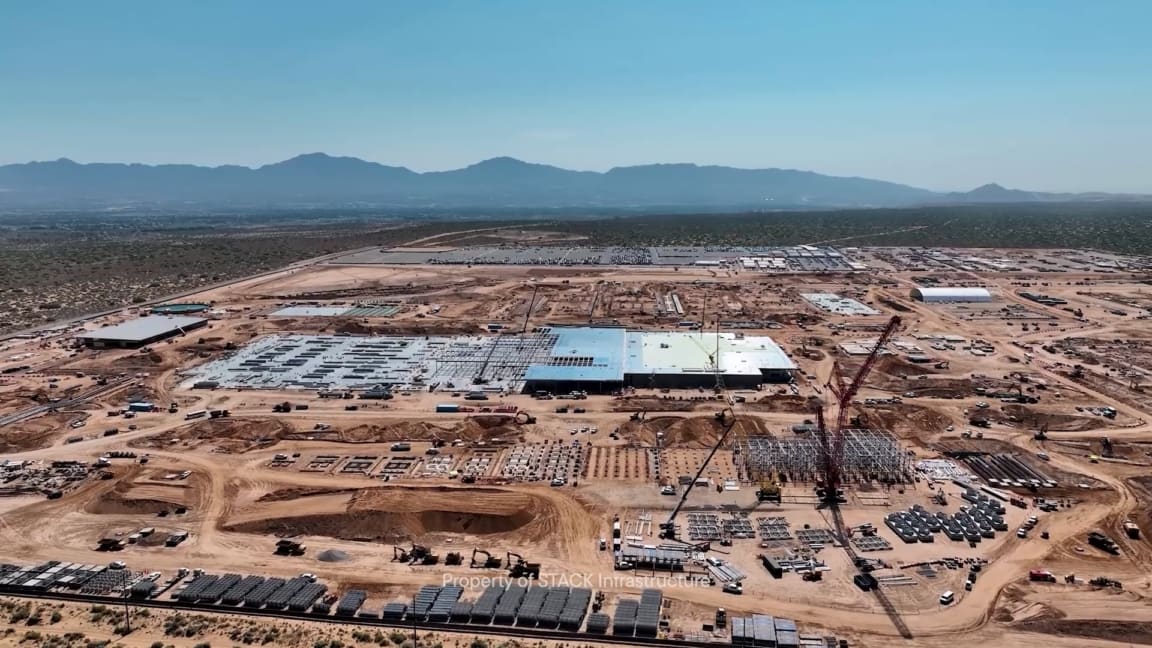
Oracle announced on 8 September that it is seeking proposals for 2 gigawatts of renewable energy projects in New Mexico, a move that coincides with mounting local opposition to its Project Jupiter data centre in Santa Teresa. The facility, being developed for OpenAI as part of the Stargate AI infrastructure initiative announced in 2025, carries a price tag of $165 billion and has sparked protests and legal challenges over its environmental footprint.
The renewable energy commitment, however, does not resolve the central tension. Project Jupiter will draw power from fuel cells that consume natural gas, and the 2 gigawatts of solar or wind capacity Oracle proposes to fund will not supply electrons directly to the data centre itself. Instead, the arrangement follows a matching model: renewable generation elsewhere in the grid offsets the fossil fuel consumption on-site.
Michael Thomas, chief executive of Cleanview, a data platform that tracks renewable energy and data centre developments, described the structure plainly. Writing on LinkedIn, he noted that the programme would be "synthetic in the sense that 2 GW of renewables wouldn't directly power the data centre." That distinction matters in communities where the immediate air quality, water use, and infrastructure burden of a large-scale facility remain local, even if renewable capacity grows elsewhere in the state.
Local Resistance and the Limits of Offsetting
Opposition to Project Jupiter centres on concerns that go beyond carbon accounting. Residents and advocacy groups in Santa Teresa have raised objections about the strain on local water resources, the expansion of natural gas infrastructure, and the pace at which the project has advanced through permitting processes. Court filings reflect those concerns, with legal challenges questioning whether environmental reviews have adequately addressed the cumulative impact of the data centre and associated energy infrastructure.
Oracle's renewable energy proposal may address one part of the climate equation, but it does not alter the on-the-ground reality. The data centre will still require substantial natural gas supply, and the fuel cells that convert that gas into electricity will still produce emissions at the site. Matching programmes defer the carbon balance to the grid level, a framework that satisfies some regulatory and corporate sustainability criteria but leaves unresolved the question of whether large-scale fossil fuel use in a specific location is appropriate.
At Opentechwire, we have tracked similar dynamics across Asia and North America as hyperscale data centre construction accelerates. The tension between corporate net-zero commitments and the physical infrastructure required to meet AI compute demand is becoming more pronounced. Matching programmes, renewable energy credits, and power purchase agreements all serve as tools for balancing emissions on paper, yet they do not eliminate the need for baseload capacity or the infrastructure that delivers it.
Why New Mexico, and Why Now
New Mexico offers several advantages for large data centre projects: land availability, proximity to transmission infrastructure, and a state government that has historically been supportive of energy and technology investment. The Stargate project, which encompasses Project Jupiter and other facilities, was positioned as a strategic initiative to expand US AI capabilities and reduce reliance on foreign semiconductor and cloud infrastructure.
Yet the state's appeal to developers also reflects its vulnerability. New Mexico has limited water resources in many regions, and its electricity grid, while interconnected with the broader Western grid, has faced challenges in integrating large new loads without triggering transmission constraints. The addition of 2 gigawatts of renewable capacity would diversify the state's generation mix and potentially ease some of those constraints, but the timing and location of that capacity matter.
If the renewable projects Oracle funds are sited far from Santa Teresa, or if they come online after Project Jupiter begins operations, the mismatch between local impact and offsetting benefit becomes more pronounced. That gap is not unique to this project, but it is especially visible in cases where a single facility represents a large share of regional energy demand.
The Broader Pattern in AI Infrastructure
Project Jupiter is not an isolated case. Across the industry, AI infrastructure developers are navigating a collision between the need for reliable, high-density power and the constraints of ageing grid infrastructure and tightening environmental standards. In some jurisdictions, data centre operators have turned to on-site generation using natural gas or diesel as a hedge against grid unreliability or permitting delays for renewable connections. In others, they have negotiated power purchase agreements that allocate renewable capacity to their operations, even when that capacity is located hundreds of kilometres away.
The economics of matching programmes make sense in a world where carbon is the primary metric. Renewable energy credits and grid offsets allow companies to report progress towards net-zero targets without waiting for the build-out of transmission infrastructure or storage capacity that would enable direct renewable supply. But the environmental concerns that drive local opposition are often more granular: air quality, water use, land use, and the cumulative burden of multiple industrial facilities in a single region.
Oracle's announcement may satisfy some stakeholders who prioritise carbon accounting, but it is unlikely to resolve the legal and political challenges facing Project Jupiter. The court battles and local protests reflect a broader scepticism about whether large-scale AI infrastructure projects are being developed with adequate attention to regional impacts, and whether the benefits of those projects are being distributed equitably.
What Comes Next
The outcome of the legal challenges in Santa Teresa will have implications beyond New Mexico. If local opposition succeeds in delaying or scaling back Project Jupiter, other jurisdictions may see similar resistance to large data centre projects, particularly those that rely on fossil fuel generation or matching programmes rather than direct renewable supply. Conversely, if Oracle and OpenAI navigate the opposition and proceed with the facility, it may establish a precedent for how matching programmes are evaluated in environmental reviews.
The 2-gigawatt renewable energy proposal, regardless of its limitations, represents a significant investment in New Mexico's generation capacity. If those projects move forward, they will add to the state's renewable portfolio and potentially create opportunities for other industrial users to access cleaner power. But they will not change the fact that Project Jupiter, as currently designed, depends on natural gas.
That dependence is not necessarily fatal to the project. Natural gas fuel cells offer higher efficiency than conventional combustion turbines, and they can provide the reliability and power density that AI workloads require. But in a regulatory and political environment where emissions from specific facilities are increasingly scrutinised, the distinction between on-site generation and grid-level offsets may become harder to defend. Oracle's announcement buys time and signals intent, but it does not eliminate the underlying tension between local impact and corporate climate commitments.