Qualcomm Pays Huawei for Patents in Rare Reversal of Tech Licensing Flow
A multi-year agreement covering 5G, computing and AI marks the first time the San Diego chipmaker has purchased intellectual property from its Shenzhen rival, signalling a shift in the balance of innovation.
A New Direction in Chip IP
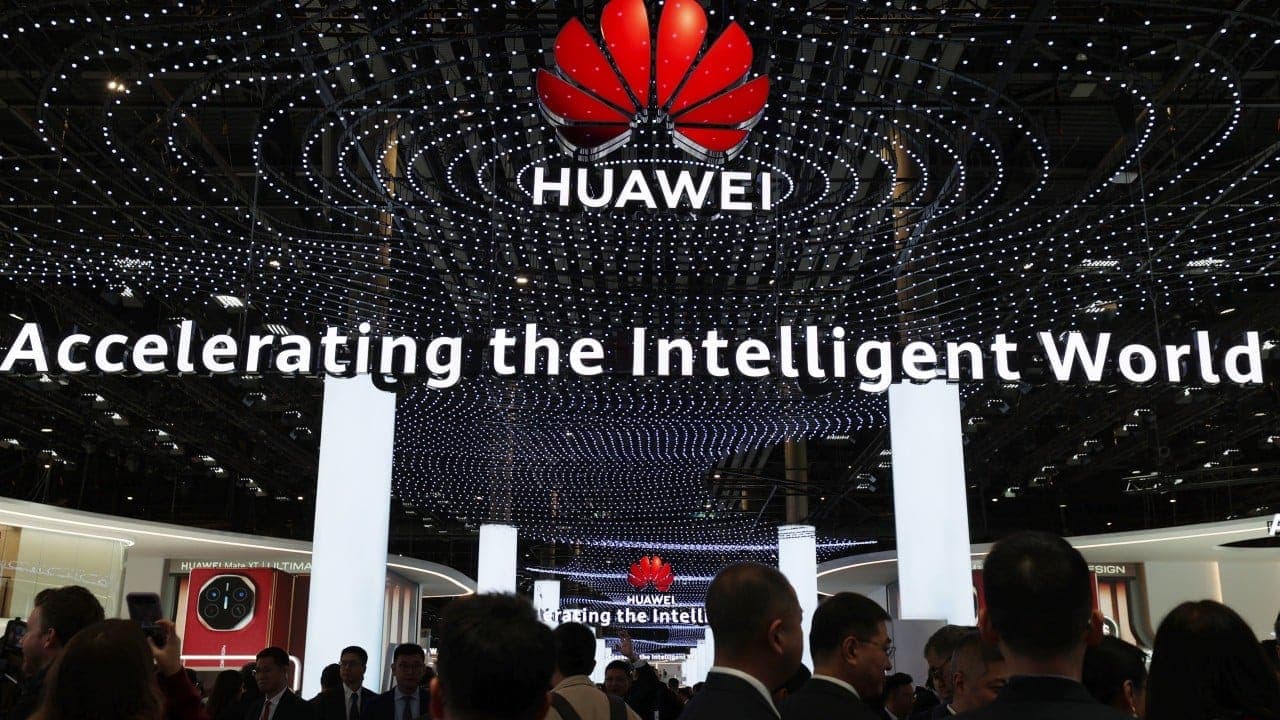
Qualcomm has agreed to pay Huawei Technologies for access to patents spanning wireless, compute and artificial intelligence technologies, marking the first instance in which the San Diego-based semiconductor giant has purchased intellectual property from the Shenzhen firm. The multi-year arrangement, disclosed by Huawei on 5 October, involves both cross-licensing of portfolios and Qualcomm's outright acquisition of specific US-registered patents held by Huawei.
The deal covers foundational technologies in 5G cellular systems, computing architectures, AI processing and networking infrastructure. Huawei confirmed that Qualcomm will pay licensing fees as part of the arrangement, though neither company disclosed financial terms or the precise number of patents involved.
For observers tracking the semiconductor industry's centre of gravity, the agreement represents a quiet but significant inversion. Qualcomm has historically been a net licensor, collecting royalties from device makers worldwide through its ownership of essential cellular standards patents. That a US chip incumbent now sees value in paying for Chinese IP, particularly in domains beyond radio access, suggests the gap in innovation capacity has narrowed in areas where Western firms once held uncontested leads.
Why the Deal Matters Now
At Opentechwire, we've tracked the rapid expansion of Huawei's patent estate since the company faced US export restrictions in 2019. Cut off from access to advanced chips and design tools from American suppliers, Huawei redirected resources into research and development, filing thousands of patents across wireless communication, semiconductor design and machine learning inference. By 2025, the firm held one of the largest 5G standard-essential patent portfolios globally, and its filings in AI accelerator architectures and energy-efficient compute had begun to draw attention from licensing analysts.
Qualcomm's decision to formalise a licensing relationship, rather than contest Huawei's claims or rely on cross-licensing alone, indicates that the Chinese company's IP is both broad enough and defensible enough to warrant payment. The inclusion of AI and compute patents is particularly notable: these are not legacy radio technologies where Huawei's strength was already acknowledged, but forward-looking domains where Qualcomm is positioning its Snapdragon and AI Engine products for edge inference and automotive applications.
The timing aligns with a broader recalibration of patent strategy among chip firms. As AI workloads move from centralised data centres to edge devices, processors must handle inference tasks with tight power and latency constraints. Architectures that reduce memory bandwidth bottlenecks, optimise tensor operations or manage thermal envelopes efficiently have become competitive differentiators. Huawei's years of building custom silicon for its own smartphones and cloud infrastructure, even under sanction, have yielded techniques that other designers now find worth licensing.
Cross-Licensing and Outright Acquisition
The structure of the agreement includes two distinct mechanisms. Under the cross-licensing component, both companies grant each other access to portions of their patent portfolios, allowing each to build products without fear of infringement suits from the other. This is standard practice in the semiconductor industry, where overlapping claims are common and litigation costs are high.
What distinguishes this deal is the second component: Qualcomm's purchase of specific Huawei patents registered in the United States. Outright acquisition transfers ownership, giving Qualcomm the ability to enforce those patents against third parties or incorporate them into its own licensing programmes. The fact that Huawei is willing to sell, rather than merely licence, suggests the Chinese firm may be prioritising cash flow and strategic positioning in the US patent system over long-term control of every asset.
Huawei's statement did not specify which patents are being sold, but the mention of "compute, AI, networking and other technologies" points to a portfolio spanning data-path optimisation, neural network quantisation, packet-switching efficiency and possibly power management for heterogeneous processors. These are precisely the areas where Qualcomm's roadmap for automotive, Internet of Things and PC processors depends on incremental gains in performance per watt.
Implications for the Licensing Landscape
The agreement sets a precedent that may reshape negotiations across the industry. If Qualcomm, a firm with one of the most valuable patent portfolios in wireless communication, has concluded that paying Huawei is preferable to designing around its claims, other chipmakers are likely to face similar calculus. Companies developing AI accelerators, radio modems or edge compute platforms may now anticipate licensing discussions with Huawei as part of their go-to-market planning.
For Huawei, the deal provides validation and revenue at a moment when its consumer device business outside China remains constrained by US sanctions. Licensing income does not depend on access to cutting-edge manufacturing nodes or supply chains; it flows from the strength of the patent itself. By demonstrating that a leading US firm will pay for its IP, Huawei strengthens its position in negotiations with other manufacturers, particularly those in Asia and Europe seeking to deploy 5G infrastructure or build AI-capable handsets.
The move also complicates the narrative that US export controls have crippled Huawei's technological competitiveness. While the company has indeed lost market share in smartphones and faced delays in advanced chip production, its research output has remained robust. The willingness of a US incumbent to license and acquire its patents suggests that innovation has continued, and that the knowledge embedded in Huawei's engineering teams retains commercial value even when the company cannot freely access the latest fabrication processes.
What Comes Next
Neither Qualcomm nor Huawei has indicated whether the agreement includes provisions for future patent filings or joint development. The deal's multi-year term implies ongoing payments, but the structure may be front-loaded if the outright acquisitions represent a significant portion of the total value.
Industry analysts will be watching for signs that other major chipmakers follow suit. If Qualcomm's licensing payments to Huawei become a recurring line item, competitors such as MediaTek, Samsung and Intel may reassess their own exposure to Huawei's portfolio. At the same time, regulators in both the US and China will monitor whether such agreements facilitate technology transfer or merely formalise existing use.
For now, the deal stands as a marker of how far the balance has shifted in semiconductor intellectual property. The flow of licensing fees, once reliably westward, now moves in multiple directions. And in a sector where control of foundational patents translates to strategic leverage, that shift carries consequences well beyond the two companies involved.