Pudu Robotics Eyes European Manufacturing as Humanoid Push Targets Global Markets
Shenzhen-based robotics firm generates four-fifths of revenue outside China while plotting factory expansion and entry into humanoid sector against established rivals
Export-Heavy Revenue Profile Drives Location Strategy
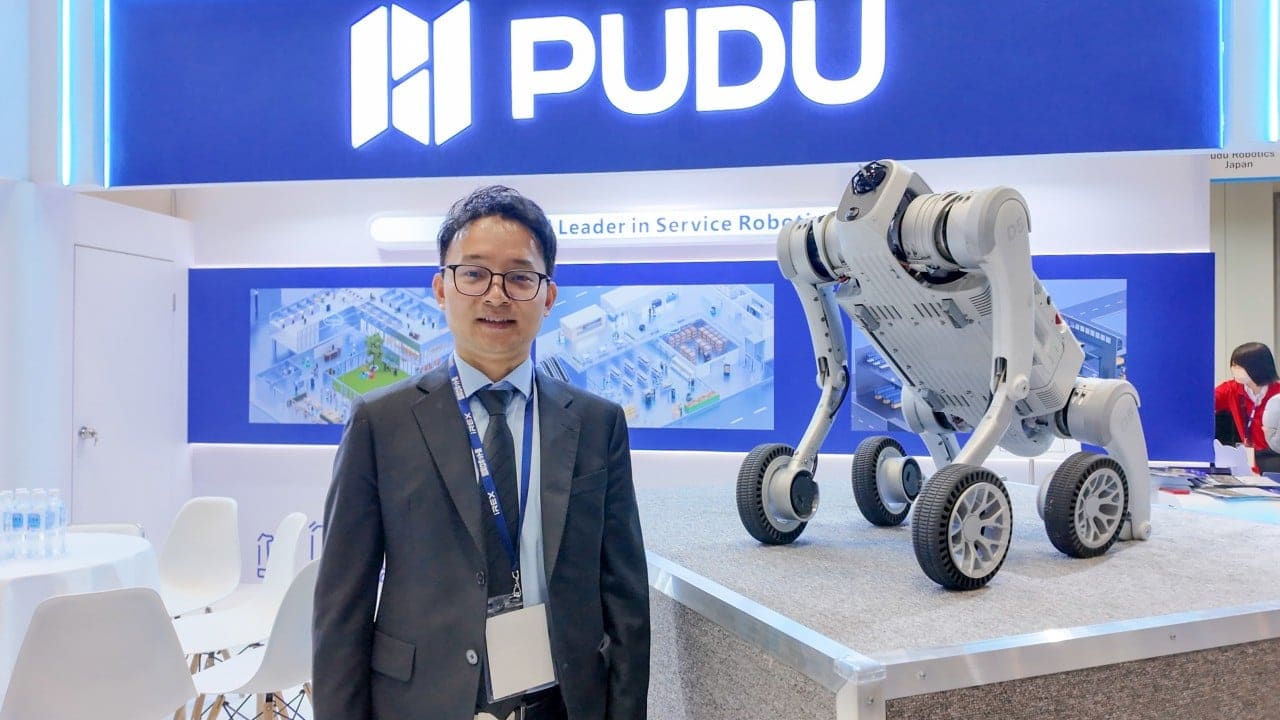
Pudu Robotics, a Shenzhen-based manufacturer of commercial service robots, derives approximately 80 per cent of its revenue from international markets, according to founder and chief executive Felix Zhang Tao. That concentration of overseas demand is now shaping the company's infrastructure decisions, with Europe emerging as a focal point for potential manufacturing operations.
The export-weighted revenue structure stands in contrast to many Chinese robotics firms, which typically prioritise domestic deployment before venturing abroad. Pudu's trajectory reflects both the early saturation of certain service-robot categories in China and the firm's capacity to navigate regulatory and operational requirements across multiple jurisdictions. Europe represents the company's largest overseas region by sales volume, a position that Zhang says warrants closer examination of local production.
Establishing manufacturing capacity inside the European Union would allow Pudu to shorten delivery lead times, reduce freight exposure, and potentially sidestep tariff structures that have complicated cross-border robotics trade in recent years. For a company whose growth depends on serving restaurants, hotels, and healthcare facilities across dozens of countries, proximity to end-users carries operational weight. The question is whether unit economics justify the fixed-cost burden of a second production base, particularly as the firm channels capital into humanoid development.
Humanoid Ambitions in a Crowded Field
Pudu's move into humanoid robotics places the company alongside a cohort of established players and well-funded newcomers, each pursuing variations on bipedal, dexterous machines intended for tasks that wheeled service robots cannot easily handle. Zhang characterised Tesla as a "long-term" competitor, acknowledging the visibility that Tesla's Optimus project has brought to the category. High-profile demonstrations and Elon Musk's public commitments have accelerated awareness among potential enterprise buyers, even as production timelines remain uncertain.
The competitive landscape also includes Boston Dynamics, which has spent two decades refining bipedal locomotion and manipulation; Agility Robotics, whose Digit platform is already undergoing pilot deployments in logistics warehouses; and Figure AI, which has attracted investment from Microsoft and other technology incumbents. In Asia, firms such as Unitree and Fourier Intelligence are iterating on lower-cost humanoid prototypes, testing use cases that range from elder care to light manufacturing.
What separates these efforts is less the hardware architecture than the target application and go-to-market strategy. Pudu's existing customer base spans hospitality and food service, sectors in which tasks are relatively structured and environments are semi-controlled. Translating that installed base into humanoid adoption will depend on whether the firm can deliver machines that handle variable tasks at a price point that improves on human labour, a threshold that remains elusive for most humanoid platforms.
Service-Robot Foundation and Market Penetration
Pudu built its revenue base on wheeled delivery and cleaning robots deployed in restaurants, hotels, and medical facilities. These machines navigate predictable indoor environments, transporting trays, linens, or medical supplies along fixed or semi-fixed routes. The value proposition rests on labour cost arbitrage and consistent uptime, particularly in markets facing service-worker shortages or rising wage floors.
Over the past three years, Pudu has shipped units to more than 60 countries, a distribution footprint that required the company to adapt to divergent safety standards, power configurations, and after-sales service expectations. In Europe, CE marking and compliance with the Machinery Directive added certification overhead; in North America, UL listing and adherence to Americans with Disabilities Act accessibility guidelines shaped product design. That regulatory fluency is an asset as the company evaluates humanoid launches, where safety certification processes are still being defined by national authorities.
The firm's international traction has been aided by partnerships with hospitality chains and healthcare networks that operate across multiple countries, allowing Pudu to amortise integration costs over larger fleets. Repeat orders from these anchor customers have provided revenue visibility, though margin pressure has intensified as competitors from China and South Korea have entered the same segments with comparable hardware at lower price points.
European Manufacturing Calculus
Potential European production would involve trade-offs beyond tariff avoidance. Labour costs for assembly and quality control are higher in the EU than in Guangdong province, where Pudu currently operates its main facility. Offsetting that differential requires either automation of the assembly line itself or a product mix skewed toward higher-margin units that justify the added expense.
Inbound component supply presents a second variable. Motors, sensors, and battery cells for Pudu's robots are largely sourced from suppliers in China, South Korea, and Japan. Shipping those components to a European assembly site adds freight and inventory-holding costs, unless the company can cultivate a European supplier base for critical subsystems. The EU's push to build domestic battery and semiconductor capacity may ease that challenge over time, but availability and cost competitiveness remain uncertain in the near term.
Local production can also serve as a signal to government and enterprise buyers wary of supply-chain concentration. Several European healthcare systems and municipal governments have instituted procurement preferences for locally assembled equipment, driven by resilience concerns amplified during the pandemic. A European facility would allow Pudu to compete for those contracts without triggering origin-related disqualification.
Humanoid Economics and Application Fit
Humanoid robots remain expensive to produce, with current prototypes carrying bill-of-materials costs in the tens of thousands of dollars before assembly, software, and distribution. Achieving price parity with human labour requires either substantial scale economies or task-specific designs that strip out unnecessary degrees of freedom. Pudu's experience with cost reduction in wheeled robots offers a template, though the mechanical complexity of bipedal locomotion and multi-fingered manipulation presents a steeper challenge.
The firm's existing customer segments offer natural testing grounds. In hotels, humanoids could handle room-service delivery that involves opening doors, pressing elevator buttons, and placing items on furniture, tasks that wheeled robots manage poorly. In healthcare, humanoids might assist with patient transfers or fetch items from cabinets, supplementing nursing staff during peak periods. The economic case depends on utilisation rates and the willingness of facility operators to redesign workflows around robotic capabilities.
Competition from other form factors complicates the humanoid pitch. Collaborative robotic arms mounted on mobile bases can perform many manipulation tasks at lower cost and with simpler control stacks. Exoskeletons augment human workers rather than replace them, a model that some enterprises find culturally and operationally easier to adopt. Pudu's humanoid strategy will need to articulate why bipedal platforms offer advantages that justify their incremental cost and complexity.
Revenue Diversification and Capital Intensity
Expanding into humanoids while exploring European manufacturing introduces capital demands that will test Pudu's financing structure. The company has raised multiple funding rounds, though it has not disclosed total capital raised or current valuation. Humanoid development requires sustained investment in mechatronics, perception algorithms, and simulation infrastructure before generating meaningful revenue, a timeline that can strain cash flow if service-robot sales decelerate.
Diversification also carries execution risk. Pudu's engineering and product teams have deep expertise in wheeled platforms and indoor navigation, but humanoid control involves different skill sets, particularly in balance, gait planning, and high-degree-of-freedom manipulation. Recruiting that talent in Shenzhen is feasible, given the concentration of robotics engineers in the Pearl River Delta, but integrating new capabilities without diluting focus on the core business demands careful organisational design.
The firm's export orientation provides some insulation from domestic market volatility, but it also exposes Pudu to currency fluctuations, trade policy shifts, and geopolitical friction. A European manufacturing footprint could mitigate some of those risks, though it introduces new dependencies on EU regulatory stability and labour relations.
Forward Outlook and Sector Dynamics
The global market for commercial service robots is projected to grow as labour shortages persist in developed economies and as hardware costs decline through volume production. Humanoids represent a potential step-change in addressable tasks, but widespread adoption hinges on performance reliability and total cost of ownership, metrics that remain unproven at scale.
Pudu's dual focus on geographic expansion and product-category diversification reflects a bet that early positioning in humanoids and proximity to key markets will compound into durable competitive advantage. Whether that bet pays off depends on execution across hardware, software, regulatory navigation, and customer education, a multidimensional challenge that has humbled incumbents and startups alike.
Zhang's comments position the humanoid effort as a long-term initiative rather than a near-term revenue driver, a framing that suggests internal timelines extending several years. In the interim, the company's ability to sustain growth in wheeled robots while investing in next-generation platforms will determine its capacity to compete as the sector matures and consolidates.