Trust Fractures as Beijing AI Startup Silently Harvests Developer Code
Zhipu AI's coding assistant uploaded workspace files without consent, exposing a governance gap in China's rush to ship generative tools
The Discovery That Stopped a Build
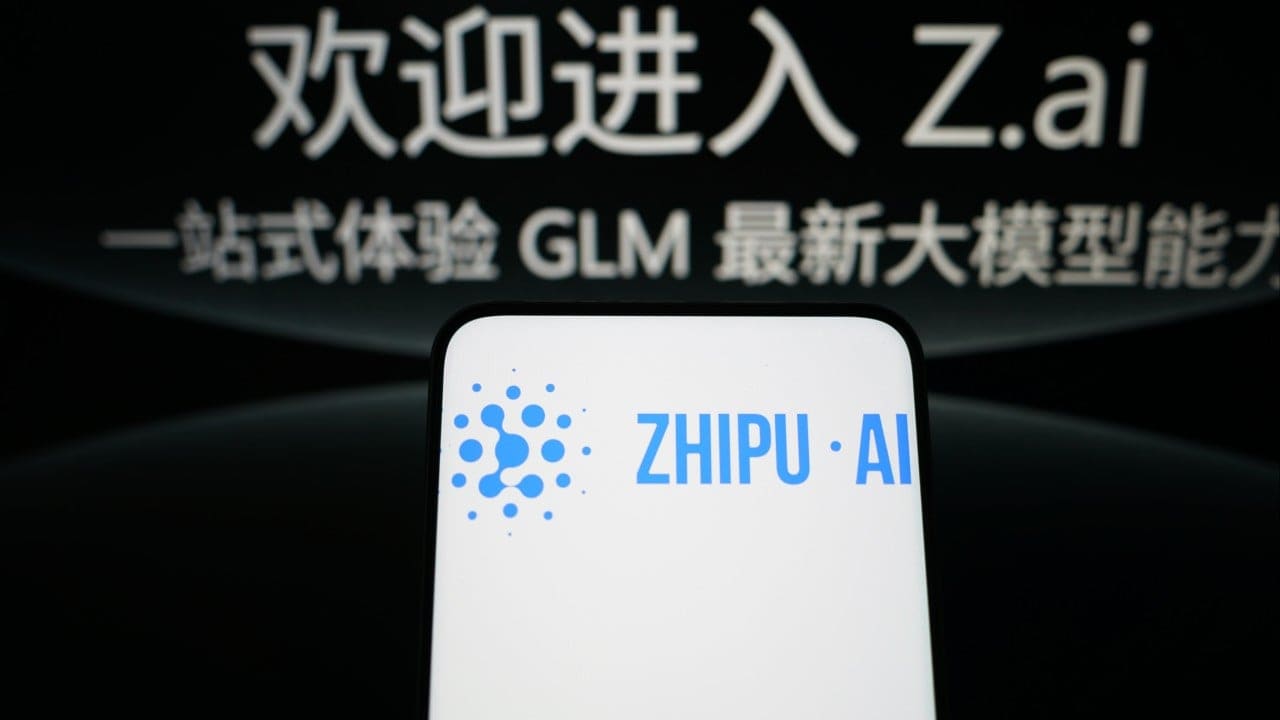
A developer in Shenzhen was mid-sprint when network monitoring flagged an anomaly: ZCode, the coding assistant from Beijing-based Zhipu AI, was transmitting workspace files to external servers. No permission dialog had appeared. No opt-in checkbox had been ticked. The tool had simply begun siphoning data the moment it spun up, according to multiple accounts circulating on Chinese developer forums in late August.
Within 72 hours, forensic audits by other users confirmed the behaviour was not isolated. ZCode's telemetry pipeline was sweeping up local file paths, code snippets, and directory structures, bundling them into HTTPS requests bound for Zhipu's backend infrastructure. The company, a spinout from Tsinghua University that counts Alibaba and Tencent among its backers, had shipped a feature without the consent layer that developers in regulated environments consider non-negotiable.
Zhipu AI issued a public apology on 20 September and deployed a patch that disabled the silent upload mechanism. Yet the damage to credibility may prove harder to reverse. At Opentechwire, we have tracked at least four comparable incidents across Asian AI vendors in the past 18 months, each one eroding the implicit contract between toolmakers and the engineers who depend on them. Zhipu's misstep is notable not because it is unique, but because it arrived at a moment when Beijing's own regulators are tightening data-export rules and enterprises are re-evaluating which models they allow inside the perimeter.
Why Silent Telemetry Is a Line in the Sand
In conventional software, anonymised crash reports and usage pings have become table stakes. Developers tolerate them because the data flow is disclosed, scoped, and often configurable. Generative coding assistants occupy a different threat surface. They sit inside the integrated development environment, where proprietary algorithms, API keys, customer records, and unreleased features all live in plain text. A tool that phones home with workspace context is, in effect, exfiltrating intellectual property.
The risk calculus changes sharply when the vendor operates under a jurisdiction with mandatory data-sharing obligations. China's National Intelligence Law compels organisations to assist state security work when requested. Whether or not Zhipu ever receives such a request, the legal scaffolding means that any data reaching Chinese servers is, in principle, accessible to authorities. Multinational enterprises and defence contractors have baked this assumption into procurement policies for years; now individual developers are internalising the same logic.
ZCode's silent upload violated a second, less technical norm. In the open-source and DevOps cultures that dominate Asia's tier-one tech hubs, transparency around data handling is a proxy for engineering maturity. A startup that cannot gate telemetry behind informed consent signals either negligence or intent, and neither interpretation builds confidence. Zhipu's apology acknowledged "insufficient communication" but stopped short of explaining why the upload feature was enabled by default or what internal review process, if any, approved the architecture.
The Velocity Trap
Zhipu AI is hardly a fringe player. The company's GLM family of large language models powers chatbots, search augmentation, and enterprise co-pilots across mainland China. It raised USD 340 million in a Series B round last year, according to filings reviewed by Opentechwire, and has positioned itself as a domestic alternative to OpenAI's Codex and GitHub Copilot. ZCode entered private beta in June, targeting Python and JavaScript workflows, and was slated for general availability this quarter.
Speed-to-market pressures in China's generative AI sector are extreme. Regulatory guidance from the Cyberspace Administration of China requires that new algorithmic recommendation services register and undergo security assessments, but enforcement remains patchy, and venture investors reward founders who ship features faster than compliance can keep pace. The result is a cohort of tools that feel powerful in demo environments and brittle in production, where data governance, auditability, and user agency matter as much as inference latency.
Zhipu's engineering team likely viewed telemetry as a training feedback loop: real-world code samples improve model fine-tuning, and faster iteration compounds competitive advantage. That logic is sound in the abstract. It breaks down when the samples belong to someone else and the consent mechanism is either absent or so opaque that users miss it. The company's patch disables upload by default and introduces an explicit toggle, a design pattern that should have shipped on day one.
Ripple Effects Across the Stack
The immediate fallout has been concentrated among early adopters. Several Chinese SaaS companies that piloted ZCode have paused rollout pending internal security reviews, according to postings on V2EX and developer Slack channels. One fintech engineer in Hangzhou told colleagues that his firm's information security team had blacklisted Zhipu's domains at the firewall level, a move that effectively kills any future evaluation regardless of product improvements.
Reputation damage in developer tools compounds quickly because the user base is both vocal and interconnected. A single incident can poison perception across an entire product category. In Southeast Asia, where Zhipu had begun courting partners in Singapore and Jakarta, the timing is particularly awkward. Governments in the region are drafting cross-border data frameworks inspired by GDPR, and local enterprises are wary of vendors whose home-market behaviour suggests casual treatment of privacy.
Zhipu's competitors stand to benefit, but they face the same structural incentives. Bytedance's Coze, Baidu's Comate, and a dozen smaller coding assistants all rely on usage telemetry to refine their models. The question is whether the ZCode controversy prompts a sector-wide shift toward transparent, user-controlled data pipelines, or whether it simply raises the cost of getting caught.
What Comes Next
Zhipu AI has not disclosed whether any uploaded data will be deleted from training corpora or audit logs, nor has it committed to third-party security certification. The apology framed the issue as a communication failure rather than a design flaw, language that suggests the underlying philosophy around data collection may remain unchanged.
For developers weighing whether to trust ZCode again, the calculus hinges less on the patch itself and more on what the incident reveals about governance. A company that enables silent uploads in a coding tool either lacks internal checks or consciously chose to bypass them. Neither possibility inspires confidence, and in a market where GitHub Copilot, Tabnine, and Codeium offer comparable functionality with clearer privacy postures, the switching cost is low.
The broader lesson extends beyond one startup. As generative AI moves from research curiosity to operational dependency, the industry's tolerance for "move fast and ask forgiveness" is narrowing. Data governance is no longer a compliance footnote; it is the foundation on which trust, and ultimately adoption, is built. Zhipu's stumble is a reminder that in the race to ship intelligence, the vendors who forget to ship consent will find themselves running alone.