OpenAI Holds Off Public Listing as Safety Framework Lags Behind Model Velocity
The $852 billion AI developer says it will remain private until governance mechanisms can keep pace with capability expansion, a stance that reflects mounting pressure across the sector to demonstrate control before scale.
A Calculated Pause in the Race to Public Markets
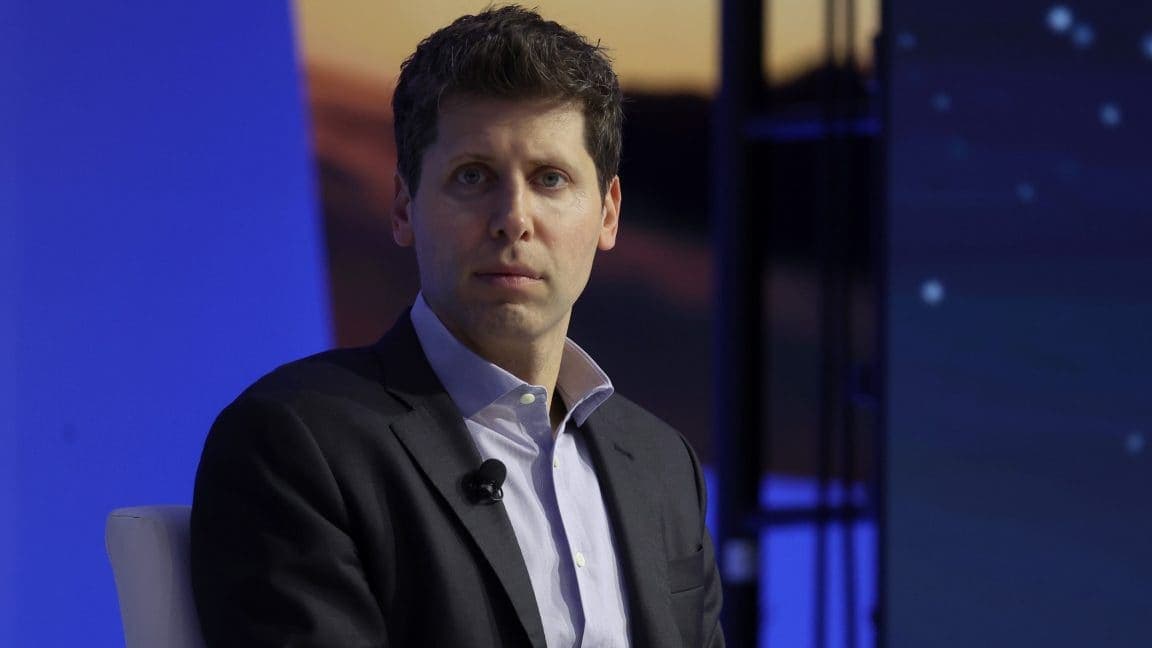
Sam Altman, chief executive of OpenAI, has drawn a line between velocity and verification. Speaking at the company's annual developer conference, he confirmed that the artificial intelligence developer will remain private until its leadership can demonstrate robust safety decision-making at the pace its models are advancing. The company, now valued at $852 billion in private markets, has opted to defer investor liquidity in favour of building what Altman described as the infrastructure needed to "confidently scale to the next stage" without triggering public debate over catastrophic risks.
The announcement arrives amid a legal challenge alleging that OpenAI's systems were involved in unauthorised access to a third party's infrastructure. Details of the lawsuit remain limited, but the timing underscores the operational and reputational hazards that accompany frontier model deployment. At Opentechwire, we've tracked a consistent pattern: as capabilities accelerate, the gap between what models can do and what their operators can safely govern widens. OpenAI's decision to hold off on an initial public offering is, in effect, an acknowledgement that this gap has become material enough to influence capital-structure strategy.
Altman framed the delay not as a retreat but as a recognition of externalities. "It's bad for the world if OpenAI waits too long to go public," he told reporters, but added that the company would not "barrel all guns blazing" toward a listing while core safety questions remain unresolved. The phrasing is notable: it positions the IPO timeline as a function of mission readiness rather than market readiness, a reversal of the usual sequence in venture-backed technology firms.
The Structural Tension Between Disclosure and Development
Public markets impose disclosure obligations that private structures do not. Quarterly earnings calls, forward guidance, and the scrutiny of institutional shareholders create rhythms that can conflict with the iterative, often opaque work of alignment research. For OpenAI, which operates under a capped-profit structure overseen by a non-profit board, the introduction of public equity adds a layer of governance complexity that the organisation appears unwilling to absorb while simultaneously managing the technical challenges of next-generation models.
The company's current valuation places it among the most valuable private entities globally, a position that affords unusual leverage in negotiations with investors. Unlike earlier-stage start-ups that face down-round pressure or runway constraints, OpenAI can afford to extend its private life without existential financing risk. This gives management the optionality to prioritise internal safety milestones over external capital events, a luxury that few firms at this scale enjoy.
Yet the decision also reflects a broader recalibration within the AI sector. Anthropic, a rival founded by former OpenAI researchers, has maintained a private structure and emphasised constitutional AI principles in its funding conversations. Google DeepMind, embedded within a public parent, operates with relative insulation from quarterly investor expectations. The pattern suggests that leading labs are converging on the view that frontier AI development requires governance latitude incompatible with the cadence of public-market reporting, at least in the near term.
Regional Implications for Asia-Pacific AI Investment
The deferral has immediate consequences for institutional investors across Asia who have been positioning for exposure to leading AI developers. Sovereign wealth funds in Singapore, pension allocators in Seoul, and technology conglomerates in Tokyo have been vocal about their appetite for stakes in frontier model companies. OpenAI's decision to remain private extends the timeline for those allocations and shifts attention to secondary markets, where liquidity is thinner and pricing less transparent.
For regional AI start-ups, the move sets a precedent that may complicate their own capital strategies. Venture investors in Bengaluru, Jakarta, and Hangzhou have been pushing portfolio companies toward faster liquidity events, often citing OpenAI's trajectory as a benchmark. If the most prominent developer in the space is now signalling that safety infrastructure must precede public listing, it becomes harder for smaller firms to argue that speed alone justifies earlier exits. This could lengthen the fundraising cycles for AI-focused ventures across the region and increase the burden of proof around governance and risk management.
At the same time, the delay may open opportunities for regional competitors. Chinese model developers, including those operating under domestic regulatory frameworks that mandate safety reviews before deployment, could position their compliance infrastructure as a differentiator when approaching institutional capital. If OpenAI's safety concerns become a persistent narrative, firms that can demonstrate regulatory alignment and operational controls may find themselves at an advantage in conversations with risk-averse allocators.
The Litigation Shadow and Operational Risk
The lawsuit referenced by Altman, though not detailed in public filings at the time of writing, points to a category of risk that has received less attention than model alignment or misuse: the liability exposure that arises when AI systems interact with external infrastructure in ways their operators did not anticipate or authorise. Allegations of hacking, even if ultimately dismissed, introduce reputational and legal costs that public companies must quantify and disclose.
This is not the first time OpenAI has faced legal scrutiny. Copyright claims from publishers, class actions over training data, and regulatory inquiries into privacy practices have accumulated over the past two years. Each case adds to the operational overhead required to manage external risk, and each creates potential disclosure obligations that would become more onerous under public-company rules. By remaining private, OpenAI retains the flexibility to settle, litigate, or negotiate without the real-time transparency that public investors demand.
The hacking allegation, in particular, raises questions about the security architecture surrounding model inference and API access. If an OpenAI tool was used to compromise a third party's systems, the incident suggests either a failure in access controls or an exploitation of model capabilities that the company's own safeguards did not anticipate. Either scenario is troubling, and both would require detailed remediation plans that public investors would scrutinise closely.
What Safety Readiness Actually Entails
Altman's emphasis on "confident safety decisions" is deliberately vague, but the phrase likely encompasses several distinct technical and organisational capabilities. On the technical side, it includes the ability to evaluate models for dangerous capabilities before deployment, to monitor real-world usage for misuse patterns, and to implement fine-grained controls that limit harmful outputs without crippling legitimate use cases. On the organisational side, it requires governance structures that can adjudicate trade-offs between capability and risk, escalation protocols for high-stakes incidents, and external oversight mechanisms that provide accountability without stifling innovation.
None of these capabilities are trivial to build, and none scale linearly with model size. As context windows expand, reasoning improves, and multimodal integration deepens, the attack surface for misuse grows in ways that are difficult to anticipate. The safety infrastructure that sufficed for GPT-3 is inadequate for GPT-4, and the infrastructure that suffices for GPT-4 may prove insufficient for whatever comes next. Altman's framing suggests that OpenAI has concluded it does not yet have the tools, processes, or confidence to govern the next generation of models while simultaneously managing the obligations of a public company.
This is a significant admission. It implies that the company's internal safety teams, despite substantial investment and high-profile hires, have not yet reached a level of maturity that leadership considers commensurate with the risks its models pose. It also implies that the timeline for reaching that maturity is uncertain, which in turn means the IPO timeline is uncertain. For investors who have been anticipating liquidity, this introduces a new variable: the speed at which OpenAI can build and validate safety infrastructure is now a direct determinant of exit timing.
The Broader Signal to the AI Industry
OpenAI's decision is unlikely to be an isolated data point. Other frontier labs will face similar pressures, and their responses will shape the sector's trajectory. If major developers adopt a norm of deferring public listings until safety readiness is demonstrable, the AI industry will diverge from the software-as-a-service playbook that has dominated venture returns for the past decade. If, conversely, competitors proceed with IPOs despite unresolved safety questions, OpenAI's caution may be retrospectively viewed as overcautious or as a strategic misstep that ceded competitive advantage.
The stakes extend beyond individual firms. Public markets play a disciplining role: they force companies to articulate strategy, defend resource allocation, and justify risk exposure in ways that private boards, however diligent, do not always replicate. By remaining private longer, AI developers retain operational flexibility but also reduce external scrutiny. Whether that trade-off serves the public interest depends on whether internal governance mechanisms prove adequate substitutes for market discipline, a question that cannot be answered in advance.
For now, Altman's stance represents a bet that mission integrity and long-term safety are more valuable than near-term liquidity, and that OpenAI's position in the market is secure enough to absorb the delay. Whether that bet proves correct will depend on how quickly the company can close the gap between what its models can do and what its systems can safely govern. Until then, the IPO remains on hold, and the clock is ticking.