Oklahoma Court Declares Automated Plate Tracking Unconstitutional
A federal ruling challenges warrantless use of passive surveillance networks that record vehicle movements across entire regions, raising questions about the limits of law enforcement technology.
A Fourth Amendment Question
A federal court in Oklahoma has ruled that a sheriff's deputy violated constitutional protections when searching a commercial automated licence plate reader database without obtaining a warrant. Judge Sara Hill of the United States District Court suppressed evidence obtained through the warrantless search, finding that the deputy lacked justification beyond the fact that the vehicle carried an out-of-state registration.
The case centred on a traffic stop in Tulsa, where a deputy used a networked camera system to track a woman's vehicle movements. After querying the database and reviewing her travel history, the deputy searched her car and allegedly found 41 kilogrammes of methamphetamine. Judge Hill ordered all evidence excluded under the "fruit of the poisonous tree" doctrine, a legal principle that bars the use of evidence derived from constitutional violations.
At Opentechwire, we've tracked the expansion of passive surveillance infrastructure across North America, Europe, and parts of Asia over the past five years. What began as discrete municipal contracts has evolved into regional networks capable of logging millions of vehicle movements daily. This ruling marks one of the first times a federal court has directly confronted the constitutional implications of that architecture.
The Surveillance Architecture
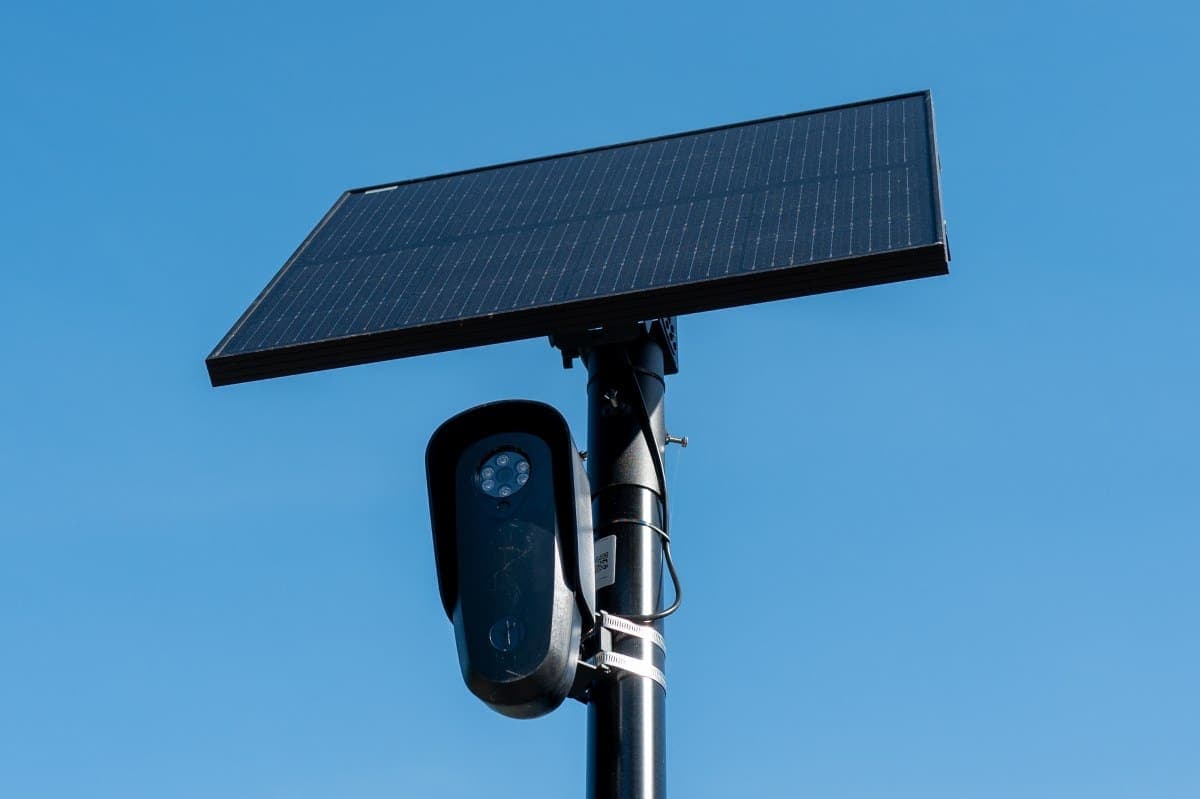
Automated licence plate reader systems operate through networks of cameras mounted on street poles, patrol cars, and highway gantries. Each camera photographs passing vehicles, extracts the registration number using optical character recognition software, and uploads the data along with time, location, and often a photograph to a centralised database.
The systems differ fundamentally from targeted surveillance. Rather than monitoring a specific suspect, they record every vehicle that passes within camera range, building a searchable archive of movements across entire cities or regions. Law enforcement agencies can then query the database retroactively, reconstructing weeks or months of travel history for any registration number.
In her ruling, Judge Hill emphasised this indiscriminate nature. The technology "collects information about all vehicles that pass by any network-connected camera at all times, and it serves up the information to law enforcement on demand," she wrote. That continuous, passive collection transforms the constitutional calculus, even though the cameras only observe vehicles in public spaces where drivers have limited privacy expectations.
The distinction matters. Courts have long permitted officers to follow suspects on public roads or record observations during traffic stops. But Judge Hill argued that aggregating those observations across an entire surveillance network, storing them indefinitely, and making them searchable crosses a constitutional threshold. "Tracking people's location becomes constitutionally problematic when law enforcement can indiscriminately and passively catalogue your whereabouts over an extended period of time and then use that information for any purpose whenever convenient," she wrote.
Precedent and Limits
The ruling does not establish binding precedent beyond the specific case. As a district court decision, it does not compel other courts to follow the same reasoning. Yet it arrives at a moment when judges, legislators, and privacy advocates across multiple jurisdictions are questioning the legal foundations of passive surveillance infrastructure.
Judge Hill's analysis drew on Carpenter v. United States, a 2018 Supreme Court decision that required warrants for accessing historical mobile phone location data from telecommunications carriers. In that case, the court found that the comprehensive nature of cell-site location information gave it "an intimate window into a person's life," triggering Fourth Amendment protections despite occurring in public spaces.
The Oklahoma ruling extends that logic to vehicle tracking. While a single observation of a car on a public road reveals little, the accumulation of those observations over weeks creates a detailed portrait of someone's movements, associations, and routines. That aggregated data, Judge Hill concluded, demands the same warrant protection the Supreme Court required for mobile phone records.
The legal landscape remains unsettled. Courts in other jurisdictions have reached different conclusions, and no appellate court has yet issued a definitive ruling on whether automated plate reader searches require warrants. The technology has expanded faster than the legal framework designed to regulate it.
Political Convergence
Opposition to warrantless plate tracking has emerged from across the political spectrum, creating unusual coalitions between privacy advocates, civil libertarians, and lawmakers who typically diverge on surveillance questions. Multiple state and local governments have cancelled contracts or imposed restrictions on how law enforcement agencies can use the technology.
In the United States, Florida and Texas have both curtailed their use of networked plate readers. On 5 October 2026, Senator Bernie Sanders introduced federal legislation that would prohibit agencies receiving federal funds from using automated licence plate reader systems. The proposed Block Flock Act would effectively bar the technology from federal law enforcement and create financial pressure on state and local agencies to abandon it.
The convergence reflects broader unease about the asymmetry between surveillance capabilities and legal constraints. As camera networks have grown denser and retention periods have lengthened, the gap between what the technology enables and what courts have explicitly authorised has widened. Judge Hill's ruling attempts to narrow that gap by imposing a warrant requirement, but the question remains unsettled in most jurisdictions.
Commercial Pressures
The legal and political challenges have begun to affect the commercial surveillance sector. Multiple vendors have reportedly restructured operations in response to contract cancellations and legislative restrictions. Some have offered voluntary employee buyouts as a mechanism to reduce headcount without formal redundancies.
Company executives have attempted to position the technology as a balance between public safety and privacy concerns. At industry events, leaders have acknowledged cases where officers misused the systems, including documented instances of personnel tracking romantic partners or conducting searches without legitimate investigative justification. Those acknowledgements, while notable, have not stemmed the wave of cancellations or legislative proposals.
The commercial model depends on scale. Surveillance networks become more valuable as they expand, covering more roads and retaining data for longer periods. But that same scale intensifies the constitutional concerns Judge Hill identified. A system that tracks every vehicle in a small town raises different questions than one that tracks every vehicle across an entire state or region.
As contracts expire and legislatures impose restrictions, vendors face a narrowing market. Some jurisdictions have moved to delete historical data and disconnect cameras. Others have imposed strict limitations on retention periods or query justifications. The result is a fragmented landscape where the same technology operates under radically different rules depending on location.
What Comes Next
Judge Hill's ruling will almost certainly face appeal. Prosecutors will argue that excluding 41 kilogrammes of methamphetamine from evidence creates an unacceptable public safety cost. They may also challenge the extension of Carpenter to vehicle tracking, arguing that cars in public spaces receive less constitutional protection than mobile phone location data.
Even if the ruling stands, its immediate effect remains limited. District court decisions bind only the parties before the court and do not compel other judges to reach the same conclusion. For the warrant requirement to spread, appellate courts will need to adopt similar reasoning, or legislatures will need to codify it in statute.
Yet the ruling signals a shift in judicial thinking about passive surveillance. For years, courts applied analogue-era precedents to digital-era technologies, treating networked camera systems as an incremental extension of traditional policing. Judge Hill's decision recognises that the shift from targeted observation to comprehensive, retrospective tracking represents a difference in kind, not merely degree.
The architecture is already in place. Across North America, Europe, and parts of Asia, millions of cameras feed millions of data points into searchable databases every day. The legal question is no longer whether that infrastructure exists, but under what constraints it will operate. Judge Hill has proposed one answer: treat it like the powerful surveillance tool it is, and require a warrant.
Whether other courts, legislators, and jurisdictions follow remains the open question. The technology will not disappear. But the terms under which law enforcement can deploy it are finally receiving the scrutiny the scale of the system demands.