California Sets New Accountability Standards for Disabled Robotaxis
Senate Bill 1246 requires local incident support and imposes penalties when autonomous vehicles obstruct emergency responders for more than 30 minutes
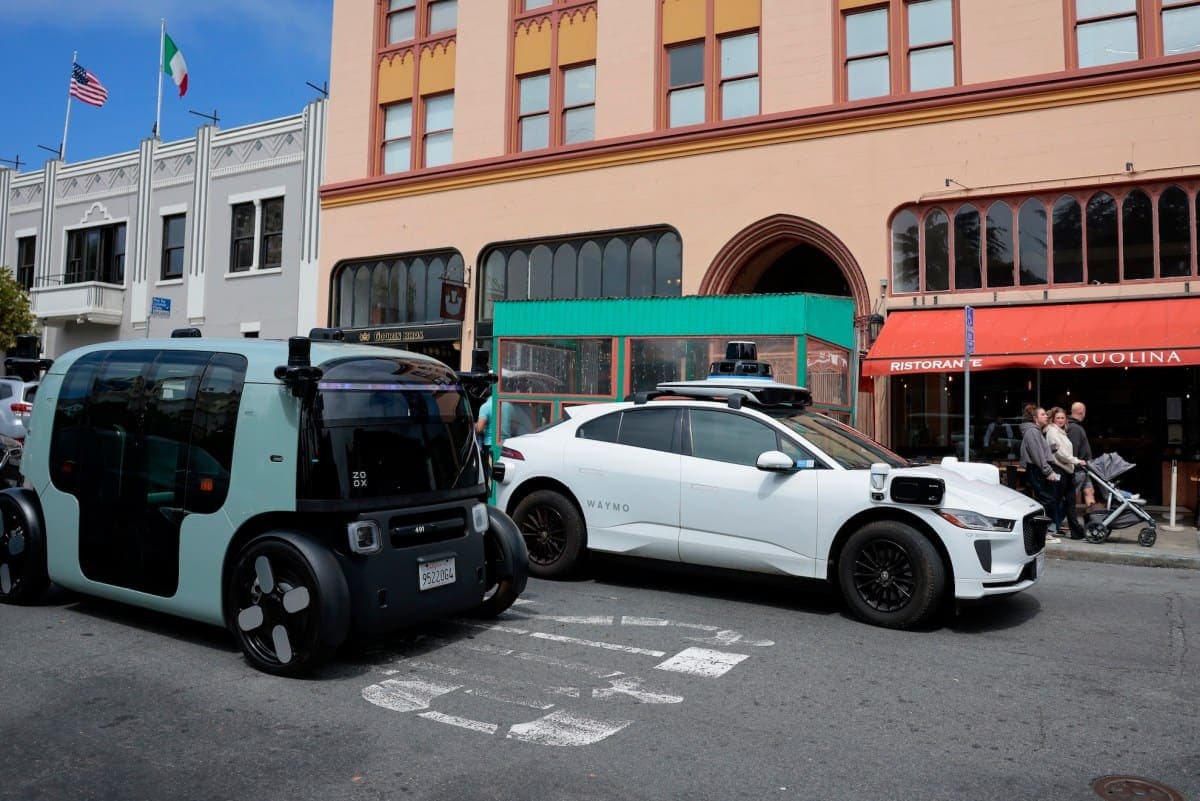
The On-Street Reality Behind the Law
In San Francisco today, autonomous vehicles from Waymo navigate city streets by the hundred, most trips passing without incident. Yet the operational reality has been less smooth than the technology demos suggest. Robotaxis have driven into active crime scenes, stalled in intersections during system failures, and in several documented cases required firefighters or police officers to physically relocate the vehicles themselves. These disruptions, whilst still relatively uncommon, represent a category of failure unique to autonomous systems: machines that can stop working in precisely the places where human judgment would move them out of harm's way.
California Governor Gavin Newsom signed Senate Bill 1246 into law this week, establishing what may become the template for how governments manage the friction between autonomous fleets and public safety operations. The statute takes effect in July 2028.
What the Statute Requires
The law mandates that autonomous vehicle developers operating in California deploy local incident technicians capable of responding to accidents and obstructions. These are not remote operators but physical personnel stationed within the jurisdictions where robotaxis operate. When a vehicle becomes disabled or obstructs emergency responders, the company must provide on-ground support.
Penalties attach if a robotaxi blocks police, fire, or ambulance services for longer than 30 minutes. The legislation does not specify the fine structure; that responsibility falls to California's Department of Motor Vehicles, which regulates autonomous vehicles statewide and will draft implementing rules before the 2028 effective date.
The statute also imposes nationality requirements on remote operators. Any person remotely piloting or supervising an autonomous vehicle must hold a US driver's licence and be based within the United States. During system-wide failures, operators must notify municipal and county governments of vehicle locations and operational status.
Why Local Presence Matters
At Opentechwire, we've tracked the operational model most robotaxi companies have adopted: centralised remote assistance centres, often hundreds of kilometres from the vehicles they supervise. This architecture works well for routine edge cases like interpreting ambiguous lane markings or navigating temporary construction. It breaks down when a vehicle loses connectivity, suffers a hardware fault, or simply parks itself in the middle of a roadway during a software crash.
First responders in San Francisco and Phoenix have reported cases where they waited over an hour for a company technician to arrive, or received instructions to push the vehicle manually. The latter is not a trivial task; most electric robotaxis weigh upwards of 2,000 kilograms and lack a neutral gear accessible without special tools. Senate Bill 1246 tries to eliminate that wait by requiring companies to pre-position technicians within response range.
The 30-minute threshold is revealing. It suggests California lawmakers consider half an hour an acceptable delay; anything beyond that crosses into unacceptable obstruction. Whether that window proves too generous or too tight will depend on how dense companies make their technician networks and how reliably those technicians can navigate the same congested streets the robotaxis just blocked.
Jurisdictional Notification and the System-Failure Scenario
The requirement to notify local governments during system-wide outages addresses a scenario that has already occurred. In one incident last year, a software update caused multiple robotaxis to converge on a single intersection in San Francisco, creating a traffic snarl that lasted for hours. City officials learned about the problem from residents posting videos online, not from the company operating the vehicles.
Real-time notification during fleet-wide failures gives municipalities the ability to reroute traffic, dispatch traffic officers, and coordinate with the company on remediation. It also creates a paper trail, useful for enforcement and for assessing whether a company's incident response met statutory requirements.
The US Operator Requirement
The statute's insistence that remote operators be US-based and hold US licences is both a labour provision and a regulatory simplification. Companies with global operations might otherwise route remote assistance to staff in lower-cost markets, as is common in other technology sectors. The law forecloses that option, ensuring operators are subject to US employment law and familiar with US traffic regulations.
This provision also makes enforcement straightforward. The DMV can audit a company's remote operations centre and verify operator credentials without navigating international legal frameworks. Whether it meaningfully improves safety is less clear; a competent remote operator in Bengaluru with California traffic training might perform identically to one in Sacramento. But the legislature has decided that jurisdictional simplicity and domestic employment outweigh those considerations.
What the Law Does Not Solve
Senate Bill 1246 will not prevent robotaxis from becoming disabled. It will not stop them from entering construction zones they should avoid, or from misinterpreting the hand signals of a police officer directing traffic. The core technical challenges that cause these disruptions, ranging from perception errors to planning failures to connectivity dropouts, remain the responsibility of the companies building the systems.
What the law does is assign clear accountability when those failures occur. If a Waymo vehicle blocks a fire truck responding to a structure fire, and no Waymo technician arrives within 30 minutes, the company faces a penalty. If Zoox suffers a system-wide failure and does not notify the City of Los Angeles, it is in violation. These are not safety regulations in the sense of requiring specific technical safeguards. They are service-level agreements enforced by statute.
The Federal Vacuum and State Experimentation
The US federal government has so far declined to set comprehensive operational standards for autonomous vehicles, leaving states to experiment. California's approach is prescriptive: it defines specific obligations and attaches penalties. Other states may choose lighter-touch regimes, or wait to see whether California's model reduces incidents before adopting similar rules.
Texas, Arizona, and Nevada have all welcomed robotaxi pilots with relatively minimal regulation, positioning themselves as friendly jurisdictions for companies that find California's requirements burdensome. If Senate Bill 1246 proves effective without driving operators out of the state, those jurisdictions may face pressure to adopt comparable standards. If it imposes costs without measurably improving outcomes, California may find itself at a competitive disadvantage for hosting the next wave of autonomous deployment.
The DMV's rulemaking process over the next 18 months will determine much of the law's practical impact. Penalty levels, audit procedures, and definitions of terms like "local incident technician" will shape whether companies view compliance as a minor operational adjustment or a significant new cost centre.
A Template, Not a Solution
Senate Bill 1246 reflects a particular moment in the maturation of autonomous vehicle technology: common enough to cause recurring problems, not yet reliable enough to avoid them. The statute does not attempt to dictate how the technology should work. It dictates how companies must behave when the technology fails.
Whether other states adopt California's model will depend less on the elegance of the legislation than on the data it produces. If incident response times improve and obstruction durations fall, the case for replication strengthens. If companies comply on paper but outcomes remain unchanged, the law will be remembered as well-intentioned but insufficient. Either way, it marks a shift from permissive pilot programmes to regulated commercial service, and that shift is likely irreversible.