Nvidia Holds Course on Open AI Models Despite Leadership Upheaval
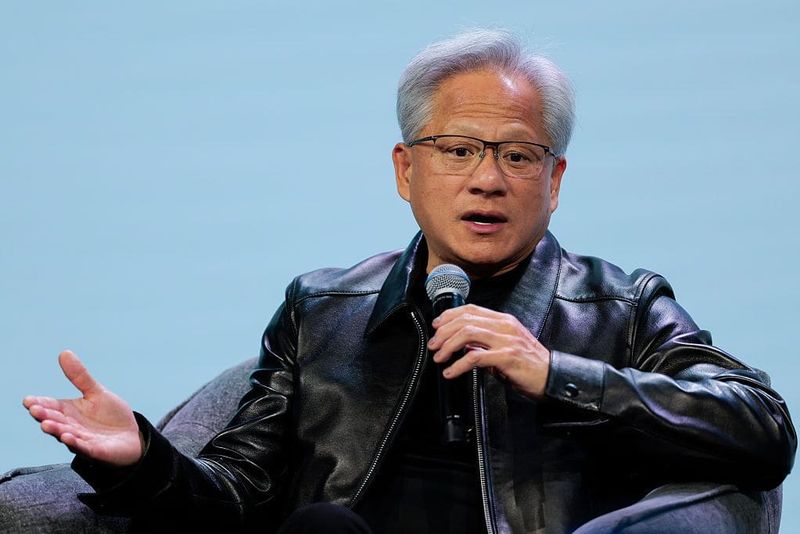
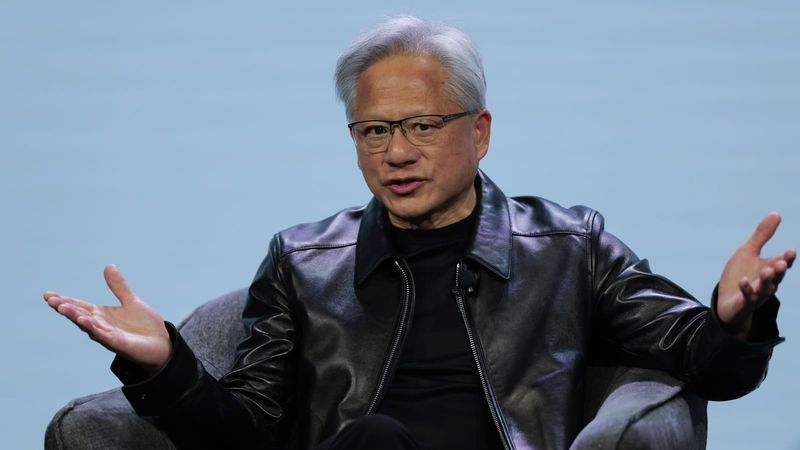
Interim chief Colette Kress tells analysts the chipmaker will proceed with its $12.9 billion Hugging Face deal and continue backing open-weight models, even as founder Jensen Huang faces Congressional testimony over personal conduct.
Continuity Message in First Post-Huang Earnings Call
Nvidia's interim chief executive, Colette Kress, used Tuesday's quarterly earnings call to assure analysts that the company will maintain its support for openly accessible artificial intelligence models, a strategic pillar championed by departing founder Jensen Huang. Kress told listeners that Nvidia remains dedicated to building what she described as a thriving ecosystem of open models, enabling nations, enterprises, and sectors to develop their own AI capabilities.
The remarks represented Kress's first public address to Wall Street since Huang resigned last week following revelations about extramarital relationships, including one with an executive at Singapore-based Megaspeed who is suspected of intelligence ties to China. Huang is scheduled to testify before the United States Congress by Thanksgiving, and the Securities and Exchange Commission has opened an investigation into whether Nvidia's investor disclosures were misleading.
The leadership crisis had raised immediate questions about whether Nvidia would retreat from Huang's vocal advocacy for open-weight models, a category of AI systems whose parameters are publicly available for modification and fine-tuning. Kress's prepared remarks appeared designed to quash that speculation.
Hugging Face Acquisition Remains on Track
Kress confirmed that Nvidia intends to complete its acquisition of Hugging Face, the platform for sharing and deploying open-source AI models that the chipmaker agreed to buy in September for $12.9 billion. If finalised, the deal would rank as Nvidia's second-largest acquisition in its history.
Hugging Face serves more than 118 million developers and 200,000 companies, hosting tens of thousands of model weights, datasets, and applications. The platform has become a de facto hub for researchers and engineers working outside the closed ecosystems of OpenAI, Anthropic, and Google DeepMind.
Kress said Nvidia plans to scale Hugging Face's infrastructure and make AI "more open, more capable, and more accessible." She did not elaborate on integration timelines or organisational structure, and analysts did not press for details during the question-and-answer portion of the call.
The acquisition had been closely associated with Huang's vision. Hugging Face chief executive Clément Delangue called Huang's departure "a sad day" and pledged to intensify his own efforts to defend open-source AI. Kress's remarks suggest Nvidia's board views the deal as strategically sound regardless of who occupies the corner office.
Token Volume Surge Points to Adoption Momentum
Kress cited usage data to argue that open models are accelerating enterprise and developer adoption of AI. She pointed to a 35-fold year-on-year increase in weekly token volume on OpenRouter, a routing service that aggregates access to multiple large language models. Over the past three months alone, token volume on the platform grew 3.5-fold, she said.
Token volume measures the number of input and output tokens processed by models, a proxy for how intensively developers are querying and deploying AI systems. The figures Kress cited suggest that open models are capturing a growing share of inference workloads, particularly among developers who value the ability to self-host, customise, or audit model behaviour.
OpenRouter supports both proprietary and open-weight models, but the sharp recent acceleration aligns with the release of several high-capability open models from Meta, Mistral AI, and Nvidia itself. The platform allows developers to switch between models without rewriting code, lowering the friction of experimentation.
Nemotron Family Gains Traction Among US Developers
Kress highlighted Nvidia's Nemotron family of open-weight models, which the company has positioned for long-running agentic AI systems and reasoning tasks. She described Nemotron as the most widely used open model from a United States-based provider on OpenRouter, and said it has become a starting point for developers building custom intelligence.
The Nemotron models were developed under Huang's direction as part of a broader effort to ensure Nvidia's software stack extended beyond closed, proprietary frameworks. By releasing open-weight models optimised for its own hardware, Nvidia can steer developers toward architectures that perform best on its GPUs, reinforcing demand for its chips even as inference shifts to open ecosystems.
Kress said the Nemotron foundation is "empowering the ecosystem," a phrase that echoes Huang's frequent argument that open models democratise AI and reduce dependence on a small number of gatekeepers. Whether that rhetoric translates into sustained investment under new leadership remains an open question, but Kress's emphasis on developer adoption suggests the business case for open models has internal support beyond Huang's personal advocacy.
Strategic Rationale for Open Models in a Closed Market
Nvidia's commitment to open-weight models sits in tension with the broader industry trend toward closed, API-only systems. OpenAI, Anthropic, and Google have all tightened access to their most capable models, citing safety concerns and competitive advantage. Yet Nvidia's position as a hardware vendor gives it different incentives.
By supporting open models, Nvidia ensures that a larger pool of developers and enterprises can build AI applications without negotiating access to proprietary APIs. Those applications still require compute, and Nvidia's GPUs dominate the training and inference market. Open models also reduce the risk that a single software vendor, such as OpenAI, could exert leverage over Nvidia's customer base or develop its own custom silicon to bypass Nvidia's chips.
The Hugging Face acquisition extends this logic. By owning the infrastructure where open models are discovered, shared, and deployed, Nvidia can shape the tooling and optimisation paths that developers follow. It also gains visibility into which models and techniques are gaining traction, informing its own hardware roadmap.
Kress's remarks suggest Nvidia views open models not as an altruistic side project but as a core pillar of its competitive moat. That calculation appears unlikely to change even as the company navigates a leadership transition and regulatory scrutiny.
Regulatory and Governance Clouds Linger
The earnings call took place against a backdrop of uncertainty. Huang's scheduled Congressional testimony will focus on his relationship with the Megaspeed executive, whom US intelligence officials suspect of espionage activities. The nature of any information Huang may have shared, and whether Nvidia's board was aware of the relationship, remain unclear.
The SEC investigation centres on whether Nvidia's disclosures to investors adequately reflected risks related to Huang's conduct or potential conflicts of interest. The company has not commented publicly on the scope of the inquiry, and Kress did not address it during the call.
For now, Nvidia's message to investors is one of continuity. Kress's reaffirmation of the open-source strategy, the Hugging Face deal, and the Nemotron roadmap suggests the board believes the company's technical and commercial trajectory can withstand the turbulence at the top. Whether that confidence is justified will depend on how quickly Nvidia can resolve the governance questions and whether Kress or another permanent successor can command the same influence Huang wielded over the company's direction.
What Comes Next for Open AI Ecosystems
Nvidia's stance carries weight beyond its own balance sheet. The company's chips power the majority of AI training and a growing share of inference workloads, giving it outsized influence over which software paradigms succeed. If Nvidia continues to fund open-weight model development, host open infrastructure through Hugging Face, and optimise its hardware for open ecosystems, the competitive landscape will tilt in favour of transparency and developer control.
Conversely, any retreat from that posture, whether driven by new leadership or regulatory pressure, would hand an advantage to closed-model providers who can lock customers into proprietary stacks. Kress's remarks suggest Nvidia understands that calculus and intends to stay the course, at least for now.
The token volume figures she cited, and the adoption of Nemotron among US developers, indicate that open models are not a niche concern but a growing segment of production AI workloads. How Nvidia integrates Hugging Face, scales its open-model offerings, and navigates the governance fallout from Huang's departure will shape the balance of power in AI infrastructure for years to come.