Nvidia Board Rejects Jensen Huang's Bid to Return as Chief Executive
Chairman Harvey C. Jones says the chipmaker will not reinstate its founder following his resignation over conduct violations and ties to a woman accused of Chinese intelligence links
Board Closes Door on Founder's Comeback
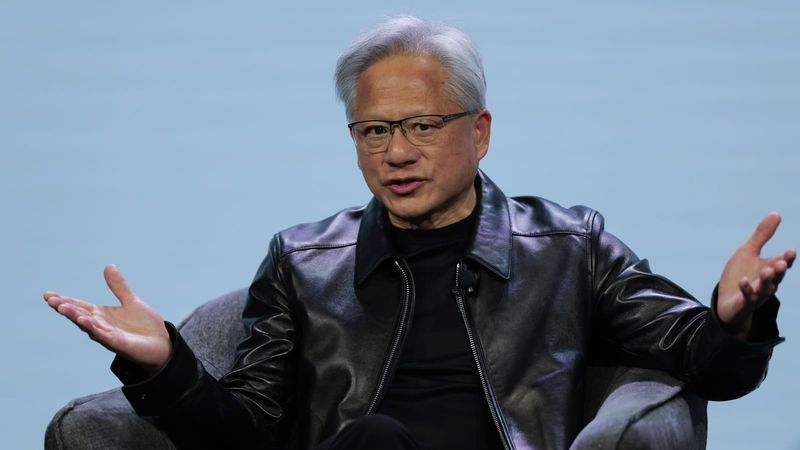
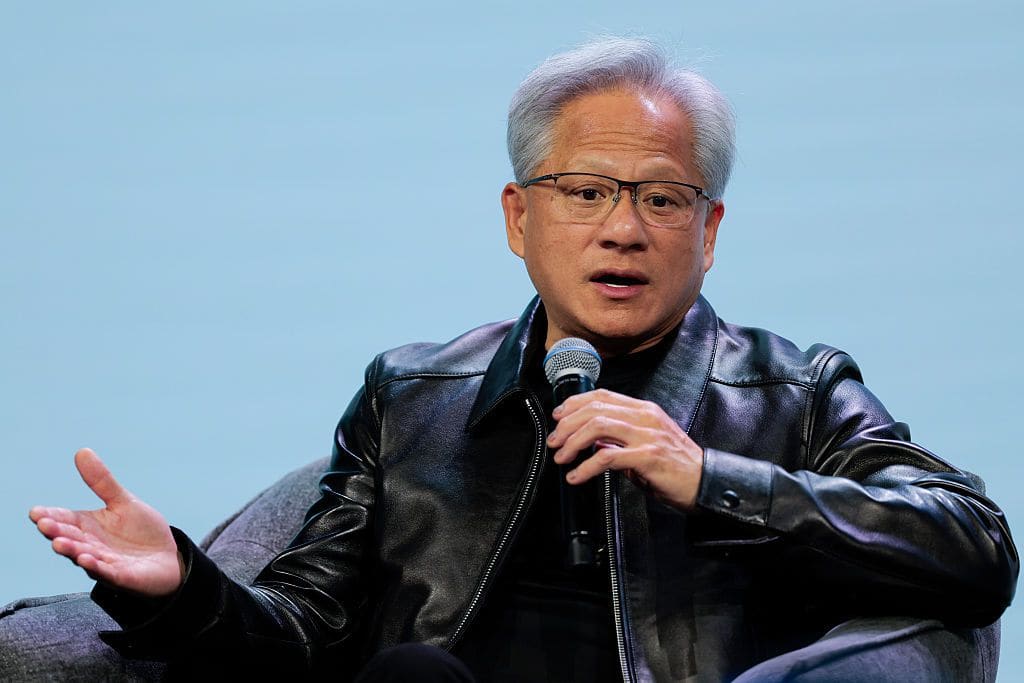
Nvidia's board of directors has shut the door on any prospect of reinstating Jensen Huang, the company's founder and former chief executive, despite a public appeal from Huang himself that invoked support from employees, investors and business partners. Chairman Harvey C. Jones made the position clear during the chipmaker's earnings call on Tuesday, stating that leadership had no intention of reversing the resignation that Huang tendered last week.
Jones outlined the sequence of events that led to Huang's departure. On 12 November, the board disclosed that Huang had voluntarily stepped down from his roles as president, chief executive and board member after the discovery of personal behaviour that violated the company's code of conduct, standards and cultural expectations. The board accepted the resignation unanimously and has moved forward with a search for a permanent successor, Jones said.
The statement came hours after Huang posted on X that he had witnessed widespread calls for his return since leaving the company. He wrote that if the board determined his comeback served the interests of shareholders, employees, the company and the United States, he would be prepared to resume the chief executive role. The board's swift and unequivocal response suggests little appetite for revisiting a decision that has already triggered multiple investigations and raised questions about governance at one of the world's most valuable technology companies.
The Conduct Violations and Intelligence Concerns
Huang's resignation followed revelations that he had engaged in multiple extramarital affairs, including a relationship with a woman whom US intelligence officials suspect of working for China's Ministry of State Security. The woman, Alice Huang, previously held a position at Megaspeed and has maintained a close association with the Nvidia founder over a period of years.
The nature of that relationship has drawn scrutiny from critics who worry it may have shaped Nvidia's commercial and strategic decisions regarding China, a market that has been central to the company's growth in data-centre processors and artificial intelligence accelerators. US intelligence agencies have expressed concern that Alice Huang's ties to the Ministry of State Security could have given Beijing insights into Nvidia's technology roadmap, product plans or export-control strategies at a time when Washington has tightened restrictions on advanced semiconductor sales to Chinese customers.
The affair has also prompted an independent investigation by Nvidia's board into Huang's activities and a separate probe by the Securities and Exchange Commission into the company. Both inquiries are ongoing, and neither has yet published findings. The dual investigations underscore the seriousness with which regulators and the board are treating the matter, particularly given Nvidia's role in supplying the chips that underpin large language models, computer vision systems and other AI workloads across the technology industry.
Interim Leadership and the Search for a Successor
In the immediate aftermath of Huang's departure, the board appointed Colette Kress as interim chief executive. Kress, who also serves as Nvidia's chief financial officer and executive vice president, has been with the company since 2013 and has overseen its financial operations through a period of explosive revenue growth driven by demand for graphics processing units in AI training and inference.
Jones said on Tuesday that the board is evaluating both internal and external candidates for the permanent chief executive role. The search comes at a moment of heightened uncertainty for Nvidia and the broader AI sector. Investors have poured capital into companies building foundation models, inference infrastructure and AI-native applications, and much of that investment rests on the assumption that Nvidia's product pipeline will continue to deliver performance gains and supply will meet demand.
Any prolonged leadership vacuum or misstep in the succession process could unsettle customers who rely on Nvidia's roadmap to plan their own capital expenditure cycles. Hyperscale cloud providers, AI labs and enterprise buyers typically lock in orders months in advance, and any signal that Nvidia's strategic direction is in flux could prompt them to hedge by diversifying their chip suppliers or delaying purchases.
Regional Implications and Export-Control Dynamics
The scandal has particular resonance in Asia, where Nvidia's products are integral to the AI ambitions of governments and companies from Seoul to Singapore to Shenzhen. South Korea's semiconductor ecosystem, anchored by Samsung and SK Hynix, supplies high-bandwidth memory modules that pair with Nvidia's GPUs, and any disruption to Nvidia's supply chain or product cadence would ripple through those partnerships.
In China, Nvidia has navigated a complex regulatory environment shaped by US export controls that restrict the sale of its most advanced chips. The company has developed modified versions of its products to comply with those rules whilst retaining access to a market that accounted for a significant share of its data-centre revenue before the controls tightened. The revelation that Huang maintained a relationship with a woman suspected of intelligence ties raises questions about whether those interactions influenced Nvidia's approach to compliance, product segmentation or engagement with Chinese regulators.
Singapore, home to a growing number of AI research labs and cloud infrastructure projects, has also emerged as a critical market for Nvidia. The city-state's government has invested in national AI compute capacity, and local startups and multinational subsidiaries rely on Nvidia's hardware to train and deploy models. Any perception that Nvidia's leadership was compromised by foreign intelligence concerns could prompt customers in the region to scrutinise their vendor relationships more closely or seek alternative suppliers, though few credible alternatives exist at Nvidia's performance tier.
The Broader AI Industry at a Crossroads
The timing of Huang's departure is particularly awkward for the AI industry, which is grappling with questions about the sustainability of current investment levels, the path to profitability for foundation-model developers and the geopolitical fragmentation of supply chains. Nvidia has been the primary beneficiary of the AI boom, with its data-centre revenue surging as companies raced to acquire the compute capacity needed to train ever-larger models.
Yet that growth has also made Nvidia a focal point for concerns about concentration risk. A handful of hyperscale cloud providers account for the bulk of Nvidia's sales, and those customers are increasingly investing in their own chip-design efforts to reduce dependence on external suppliers. Google, Amazon and Microsoft have all announced custom accelerators for AI workloads, and whilst those chips do not yet match Nvidia's performance in most benchmarks, they represent a long-term competitive threat.
Huang's exit injects a new variable into that competitive landscape. If the board selects a successor who lacks Huang's technical vision or his relationships with key customers, Nvidia could lose momentum at precisely the moment when rivals are gaining ground. Conversely, a well-executed transition could reassure the market that Nvidia's product roadmap and customer partnerships are resilient enough to withstand leadership changes.
Governance Questions and Shareholder Scrutiny
The episode has also raised governance questions that extend beyond the immediate conduct violations. How long did the board know about Huang's relationships before taking action? Were there earlier warning signs that went unaddressed? And what oversight mechanisms, if any, were in place to monitor potential conflicts of interest or security risks associated with executives' personal associations?
Institutional investors, who have seen Nvidia's market capitalisation soar over the past two years, are likely to press for answers. Proxy advisory firms may scrutinise the board's composition and independence in the lead-up to the next annual meeting, and shareholder proposals calling for enhanced oversight or disclosure could gain traction if the investigations reveal lapses in governance.
The SEC probe adds another layer of complexity. Regulators will examine whether Nvidia made timely and accurate disclosures about risks related to Huang's conduct and whether any material information was withheld from investors. If the commission finds violations, it could impose fines, require remedial measures or refer matters for criminal investigation, though such outcomes remain speculative at this stage.
What Comes Next
For now, Nvidia is operating under interim leadership whilst the board conducts its search. Kress has the technical and financial acumen to steer the company through the immediate turbulence, but the permanent appointment will be closely watched by customers, competitors and regulators alike. The board's decision to rule out Huang's return removes one source of uncertainty, but it also forecloses the option of reverting to a known quantity with deep institutional knowledge and industry relationships.
The company's next earnings call, product launch or strategic announcement will offer clues about whether the transition is proceeding smoothly or whether cracks are beginning to show. In the meantime, the investigations by the board and the SEC will continue, and their findings could reshape the narrative around Huang's tenure and the circumstances of his departure.
The AI industry, for its part, will be watching to see whether Nvidia can maintain its technical edge and customer trust without the founder who built it into a dominant force. The answer will have implications not just for Nvidia's shareholders, but for the entire ecosystem of companies that depend on its hardware to power the next wave of artificial intelligence.