Nvidia Chief Withdraws from AI Events as Personal Scandal Triggers Security Review
Jensen Huang's abrupt cancellations follow admission of affair and internal probe into potential intelligence compromise, sending ripples through an industry built on his leadership
Sudden Retreat from Public Stage
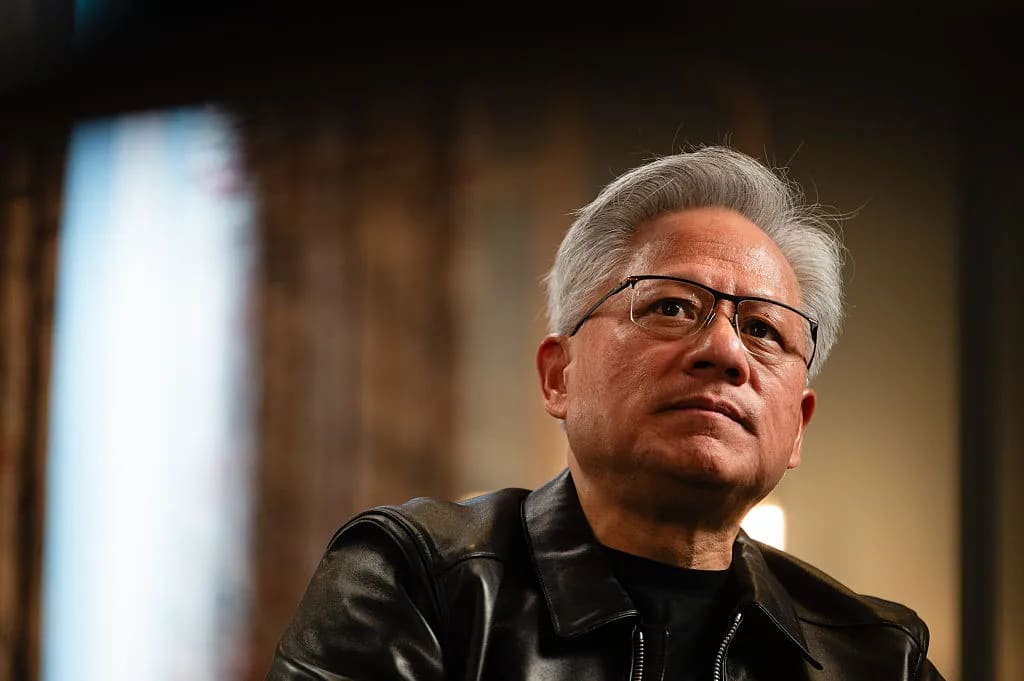
Jensen Huang will not appear at the ElevenLabs Summit scheduled for 12 November in New York, the voice AI company confirmed on 10 November. The Nvidia chief executive has withdrawn from several other scheduled industry appearances, including the Anthropic CEO Forum, marking an unusual public retreat for a figure who has become synonymous with the current AI boom.
ElevenLabs, which counts Nvidia among its investors, announced the cancellation without offering a replacement speaker. The withdrawal coincides with Huang's public acknowledgement of an extramarital relationship and the launch of an internal Nvidia investigation examining whether that relationship posed security risks to the company.
In a memorandum sent to Nvidia employees, Huang wrote that he owed his family and colleagues an apology. He acknowledged being unfaithful to his wife and stated that his actions had caused harm to his spouse and children. The memo offered no justification for his conduct.
The investigation centres on whether the relationship involved an individual with ties to Chinese intelligence services. Nvidia has not disclosed the timeline of the relationship, the identity of the person involved, or what specific security concerns prompted the formal review.
Industry Exposure at a Critical Juncture
The timing compounds the stakes. Nvidia's market capitalisation has climbed past $3 trillion on the strength of its AI accelerators, which have become essential infrastructure for training and deploying large language models. Companies across Asia, Europe and North America depend on its H100 and newer H200 chips to power everything from chatbots to autonomous vehicle systems.
Huang's visibility has been central to that momentum. Over the past eighteen months he has appeared at dozens of conferences, delivered keynote addresses at major technology events, and maintained a schedule that positioned him as the public face of AI infrastructure. His leather-jacket-clad presentations have drawn crowds that rival product launches from consumer electronics giants.
The sudden cancellations interrupt that narrative. ElevenLabs Summit was expected to draw executives from across the voice AI sector, a segment where Nvidia's chips underpin real-time inference workloads. Anthropic, the AI safety-focused lab behind Claude, has relied on Nvidia hardware for model training and has counted the chipmaker as both supplier and strategic partner.
Neither ElevenLabs nor Anthropic has commented on whether Huang's absence will affect their respective events or their business relationships with Nvidia. Both companies have diversified their supplier base in recent quarters, exploring alternatives from AMD and custom silicon from cloud providers, though Nvidia remains the dominant choice for cutting-edge workloads.
Security Questions in a Geopolitical Minefield
The investigation into potential intelligence compromise arrives as Nvidia navigates intensifying scrutiny over its China operations. United States export controls imposed in 2022 and tightened in 2023 restrict the sale of advanced AI chips to Chinese customers, forcing Nvidia to design lower-specification variants for that market.
Those restrictions have not eliminated Nvidia's exposure. The company continues to derive significant revenue from China-compatible products, and its supply chain includes manufacturing and assembly partners across the Taiwan Strait. Any suggestion that sensitive information about chip architecture, customer deployments or future roadmaps might have been accessible to foreign intelligence services would draw immediate attention from regulators in Washington, Brussels and allied capitals.
Corporate espionage in the semiconductor industry is well documented. In recent years, prosecutions in the United States have involved employees at multiple chip companies accused of transferring trade secrets to China-linked entities. The stakes are particularly high for AI accelerators, where architectural details and software optimisations represent billions of dollars in research investment and confer competitive advantage measured in training-time reductions and inference efficiency.
Nvidia has not stated whether it has briefed government agencies on the internal investigation. Standard practice in cases involving potential intelligence compromise would typically involve coordination with the Federal Bureau of Investigation or the Department of Commerce, particularly if classified or export-controlled information were involved. The company's silence on that front leaves open whether the review is precautionary or responding to specific evidence of compromise.
Leadership Stability Under the Microscope
Huang founded Nvidia in 1993 and has served as chief executive for more than three decades, an unusually long tenure even by Silicon Valley standards. The company's transformation from a graphics-card maker serving gamers into the backbone of the AI industry has been closely tied to his technical vision and strategic bets on parallel computing architectures.
That concentration of influence now poses risks. Nvidia's board has not indicated whether it is considering leadership changes, and no succession plan has been publicly disclosed. The company's bylaws do not require the chief executive role to be held by the founder, but Huang's technical credibility and relationships with hyperscale cloud customers have been viewed as irreplaceable assets.
Investors have not yet delivered a verdict. Nvidia's share price declined modestly in after-hours trading following the initial reports but remained well above levels seen earlier in the year. Options markets showed a slight uptick in implied volatility, suggesting uncertainty about near-term developments but no panic.
The reaction contrasts with leadership crises at other technology firms, where personal scandals or security lapses have triggered immediate sell-offs and board interventions. The muted response may reflect confidence in Nvidia's product pipeline and competitive moat, or simply a wait-and-see posture as more details emerge.
Ripple Effects Across the AI Ecosystem
Huang's withdrawal from public events creates a vacuum at a moment when the AI industry faces mounting questions about energy consumption, model safety and the concentration of compute power. His voice has carried weight in debates over open-source models, export policy and the pace of capability improvements.
The ElevenLabs Summit, focused on voice synthesis and real-time audio processing, was expected to showcase applications built on Nvidia's inference platforms. Voice AI has emerged as a significant workload category, with latency requirements that favour the high-throughput, low-latency characteristics of Nvidia's latest architectures. Huang's absence removes a marquee draw and a signal of Nvidia's commitment to the segment.
The Anthropic CEO Forum, meanwhile, gathers leaders from AI labs, cloud providers and regulatory bodies to discuss safety protocols and alignment research. Huang's participation would have offered insight into how Nvidia views its responsibilities as the primary supplier of infrastructure to labs pursuing artificial general intelligence. His absence may be interpreted as a retreat from those conversations, or simply as a necessary step while the investigation proceeds.
Other scheduled appearances remain uncertain. Nvidia has not issued a blanket statement about Huang's availability for public engagements, leaving organisers of upcoming conferences in Asia and Europe without clarity on whether commitments made months ago will be honoured.
What Comes Next
The contours of Nvidia's internal investigation remain opaque. Corporate reviews of this nature can take weeks or months, depending on the scope of the inquiry and whether external counsel or forensic specialists are involved. If the probe finds no evidence of security compromise, Huang may return to public life with reputational damage but no material consequences for the company.
If evidence emerges of unauthorised disclosures or access to sensitive information, the fallout would extend far beyond Huang personally. Customers would demand assurances about the integrity of their deployments, regulators would scrutinise Nvidia's security practices, and competitors would seize the opportunity to position themselves as safer alternatives.
The company's next earnings call, scheduled for late November, will offer the first formal opportunity for executives to address investor questions. Until then, the industry is left to parse scant public statements and weigh the stability of a company that has become indispensable to the AI economy.
Huang's memorandum to employees closed with a commitment to focus on his family and the company. Neither he nor Nvidia's board has specified what that focus entails, or how long the current pause in public engagements will last.